
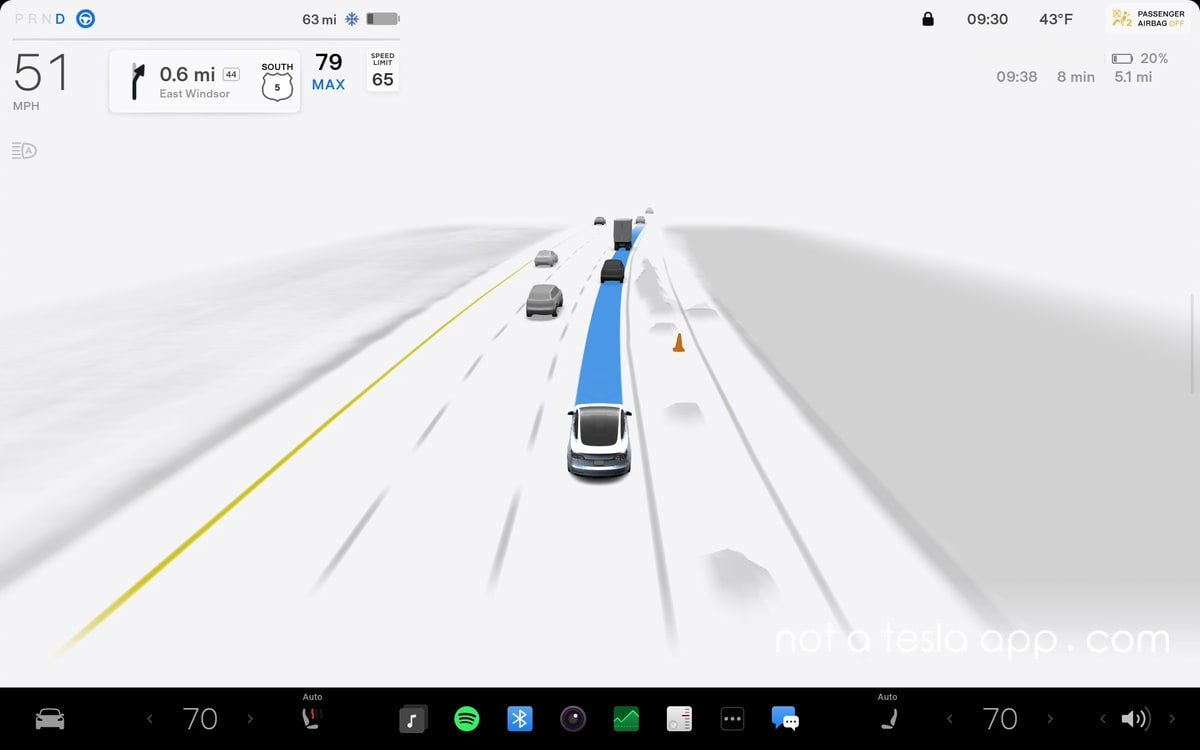

Tesla is revising how Full Self-Driving (FSD) manages speed. AI chief Ashok Elluswamy confirmed that fixed maximum-speed controls will not return in upcoming software builds. Instead of drivers setting a hard cap, Tesla is training neural networks to infer driver preferences and choose appropriate speeds automatically.
When prominent FSD tester @DavidMoss said on X that he hopes “Max Speed control never comes back to Tesla FSD,” Elluswamy responded: “Max speed control is an anti pattern. We are working on better learning of user’s implied preferences.”
The Problem With Fixed Speed Caps and Mapping Data
Leaving speed selection entirely to software presents real-world challenges. Public map data and GPS speed limits are sometimes inaccurate or out of date, and posted limits in North America often diverge from actual traffic flow, particularly in the U.S. It is common for traffic on a 55 mph highway to move at around 75 mph. If FSD strictly follows an incorrect map-based limit instead of matching prevailing traffic, the car may travel slower than surrounding vehicles, frustrating drivers and prompting manual overrides.
In recent updates, Tesla has moved away from a fixed Max Speed setting and shifted to Speed Profiles that let drivers choose general personalities such as Sloth, Chill, Standard, Hurry, and Mad Max. These profiles are intended to align speed and driving assertiveness with user preference.
Manual speed controls have also attracted regulatory scrutiny. Sweden recently urged the EU to reject FSD over speeding concerns, citing the manual speed offset toggle that allows driving above the posted limit. France has also raised concerns about the same capability.
Learning Implied Driver Preferences
Rather than relying on hardcoded inputs, upcoming builds are designed to learn how fast a driver prefers to travel based on how the vehicle is handled. As Elluswamy indicated, Tesla is building systems that derive implied preferences directly from human behavior.
This approach aligns with earlier indications from Elon Musk that FSD will remember driver habits and interventions. For example, if a driver presses the accelerator because FSD is proceeding too slowly, the system can record that preference and aim to match that pace on future trips along the same road.
No specific release date has been provided, but these neural network enhancements could arrive alongside major software milestones. Tesla’s Robotaxi vehicles are already running early builds of the next major architectural FSD upgrade, version 15, which will feature 10x as many parameters as current builds and could underpin these personalized speed models.


Partager:
Tesla Semi Expansion Confirmed for Europe
SpaceX Partners With Nvidia For Starmind AI Satellites