
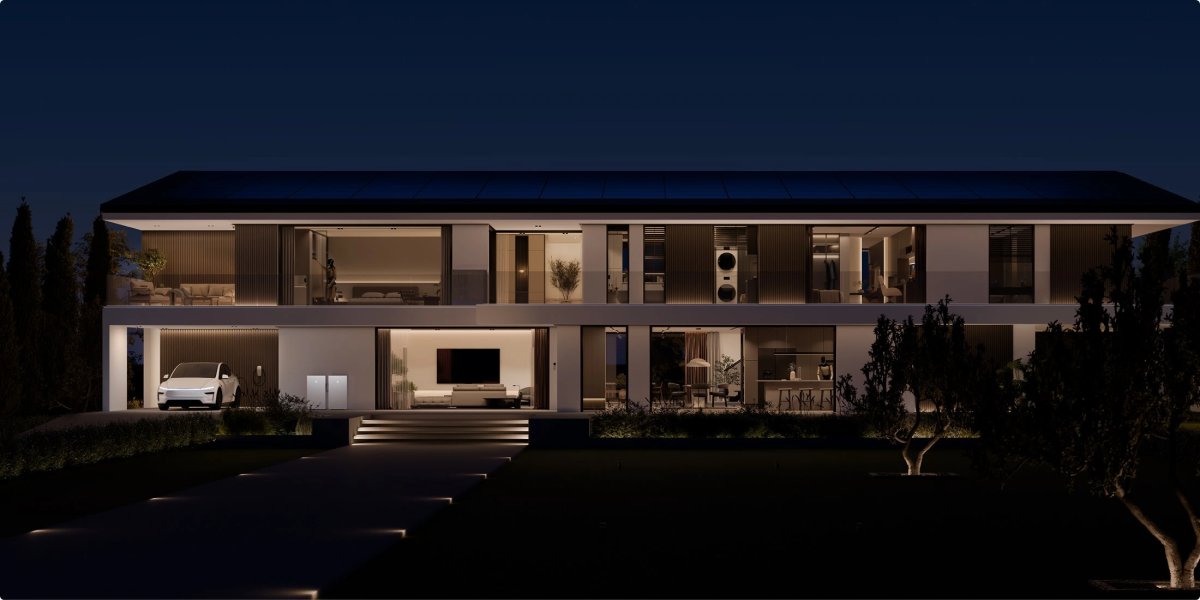
Tesla is making a significant move to unify its energy ecosystem, expanding beyond vehicles to transform how homes are powered. A new branding effort connects Powerwall and Solar products, EV charging, and whole-home energy management into one intelligent network.
Tesla has officially introduced Tesla Home, a comprehensive home energy management system (HEMS) that now comes standard with every Powerwall. It combines on-device monitoring with cloud-based optimization so owners can oversee energy production and usage from a single interface.

The supporting software update is rolling out with the latest Tesla app update, version 4.58.6, which started reaching customer devices this Monday.
Your Energy, Optimized by AI
The system’s decision-making is driven by a new AI-powered automation engine called Opticaster. According to Tesla, “Opticaster is the AI optimization software that powers Tesla Home. It automatically decides where to source your energy from and how to use it in your home.”
Rather than relying on fixed schedules, Opticaster builds custom plans based on your energy generation, consumption, utility plan, and environment. Tesla noted that Opticaster “assesses your energy usage and the weather forecast to predict your home’s solar generation and energy consumption.” It then aims to save automatically by prioritizing solar or stored energy when utility rates are high, and charging your Powerwall and EV from solar or the grid when prices are low.

Tesla Home functions as a learning system, continually analyzing household energy usage, solar output, and local utility prices to improve optimization and forecasting. With over-the-air software updates, its capabilities will continue to evolve. This continues a long-running push toward deeper AI integration and feature consolidation for Tesla’s energy products, following recent additions such as the AI-powered “System Status” feature for Powerwall.

Changes Inside the Tesla App
The energy section of the Tesla mobile app has been refreshed alongside Tesla Home. Owners will notice a cleaner interface once version 4.58.6 arrives. A dedicated Home Controls menu now centralizes your connected products and their settings (via @brandonee916).
This is primarily a user interface streamlining. Controls such as the Max Backup toggle, off-grid modes, and manual backup reserves—previously spread across different sub-menus—are now gathered in one place. The app’s Settings have also been reorganized into clear sections: Home Settings, Your Products, and Site Configuration.

The updated dashboard also lets you choose primary energy goals, grouping Powerwall Operational Modes into two options. Selecting Self-Powered directs the system to run your home on stored clean energy after sunset to reduce grid use. Choosing Savings hands control to Opticaster, which adjusts grid consumption in real time against fluctuating utility rates to minimize your overall electric bill.

Tesla Home also debuts smart breaker integration, bringing direct support for physical smart breakers into the app. You can schedule or disable major appliances and decide which should remain powered during outages. In a blackout, for example, you can automatically shut off a high-load device such as an electric heat pump to conserve Powerwall backup for essentials like lighting and refrigeration.
There are also indications that Tesla is working on adding home heat pump control to the app for more granular energy management. While this control isn’t part of Tesla Home at launch, the arrival of smart breaker toggles suggests direct HVAC management could be close behind.
Real-Time Savings with Wall Connector Smart Charging
The update introduces smarter vehicle charging as well. The refreshed Tesla Wall Connector management interface adds an automated charging algorithm that works dynamically with your local electricity provider, presumably powered by Opticaster.

Instead of manually guessing a cost-saving charging window, Opticaster can read your specific utility rate plan and automatically select the cheapest hours—often overnight—to charge your EV. Tesla Home then targets finishing the charge right before your utility’s morning price increase.
Bringing these products and features together under one automated dashboard shows Tesla is approaching home hardware as a long-term platform, similar to its vehicles. As Opticaster learns from your household and the wider grid, it should keep improving its day-to-day predictions and optimizations.








Partager:
Tesla Robotaxi Service Starts Testing in New Orleans
SpaceX Unveils New xAI Logo