
Tesla Model 2/Q: The $25,000 Car That Never Was
For years, a truly affordable mass-market electric vehicle was the goal for many Tesla followers. Enthusiasts referred to it as the Model 2 or Model Q, while company leaders often described it as a $25,000, lower-cost model intended to be an entry-level commuter for mainstream households.
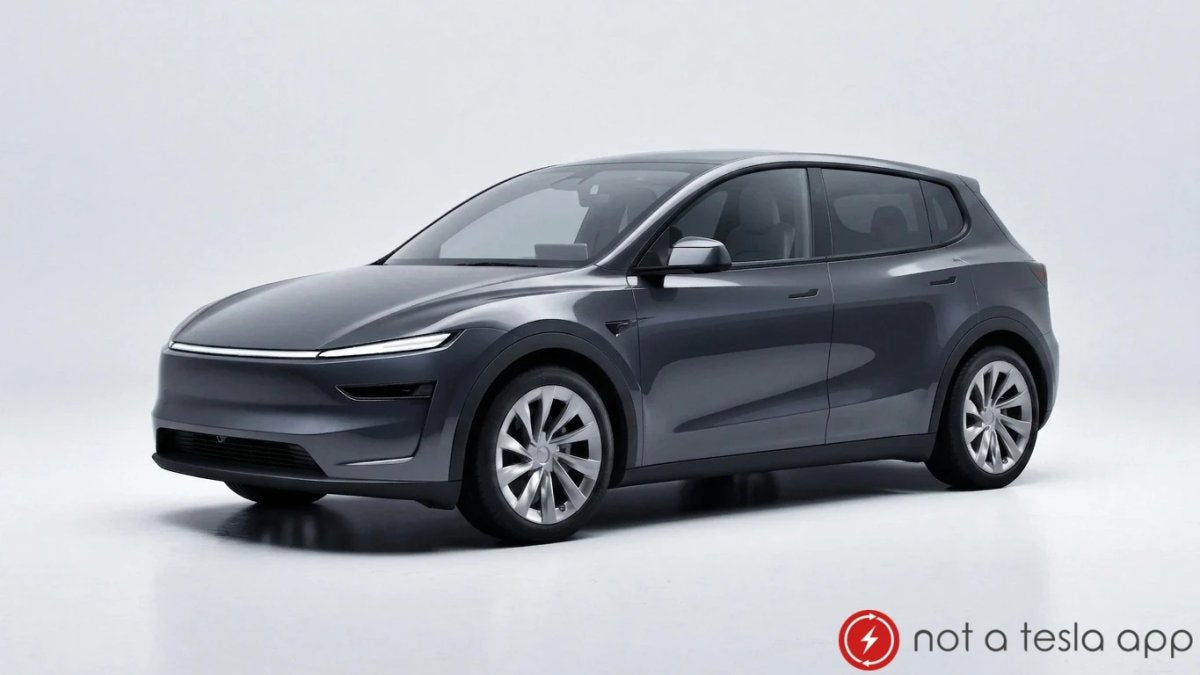
That vision faded as priorities changed. A recent X post from Tesla enthusiast @DominicBRNKMN shared concept images of a possible Model 2/Q, showing a short, ultra-compact design influenced by the post-Juniper refresh Model Y.


The Death of the $25k Tesla
Despite strong interest in a $25k EV featuring Tesla’s futuristic design language, the vehicle is unlikely to reach production. Tesla reportedly halted internal plans to build it in early 2024, shifting focus to autonomous ride-hailing with the Robotaxi service and the purpose-built Cybercab, along with robotics.
For a long time, the public expected a smaller, less expensive mini-crossover as a counterpart to premium passenger cars. The Model 2 was tracked by the community for years and frequently came up during quarterly earnings calls. For much of its rumored development, it was thought to be a compact take on the Model Y with pared-back premium cabin features to hit a lower price.

Economic realities also intervened. Aggressive competition from Chinese automakers such as BYD brought a wave of very low-priced entry-level EVs to global markets. Pursuing profit on a traditional $25k subcompact became a major risk, nudging Tesla toward a path where it already had a head start—autonomy.
The “Standard” Strategy Shift
With the $25k target effectively on hold, Tesla pursued another way to lower the entry price. Over the past year, Elon Musk and company leaders hinted at more affordable EVs. Many assumed that meant the $25k model was imminent, but the approach instead centered on trimming existing vehicles.
Rather than create a brand-new subcompact, engineering reduced cost and content in current models. This led to the “Standard” Rear-Wheel Drive configurations of the Model 3 and Model Y, which launched last fall and are now sold simply as the Model 3 RWD/AWD and Model Y RWD/AWD. The entry-level Model 3 debuted at $36,990, still well above the sought-after $25,000 mark.
As for entirely new consumer cars, there are no active rumors of an ultra-affordable compact in development. Earlier this spring, Musk teased a new SUV he said would be ”way cooler than a minivan,” aimed at a different audience than an urban hatchback.
Fulfilling the Prophecy Through Cybercab?
Although the $25k compact appears shelved, its engineering basis may persist. Reports around the cancellation suggested the low-cost platform would continue, with the Cybercab also built on it. Musk has maintained that the Cybercab would make a $25k vehicle unnecessary once Tesla committed to a robotaxi.


The driverless initiative has moved quickly. Mass production officially began in April at Gigafactory Texas, the same site once slated for the Model 2. Tesla recently started testing production Cybercab units on public roads in Austin without steering wheels, pedals, or other manual driving controls. With final validation vehicles actively mapping streets without human controls, indications point to a public launch soon.

There is also a potential twist that could indirectly validate the Model 2/Q concept. Musk has said Tesla will eventually sell the Cybercab to consumers, and if manufacturing costs fall sufficiently, it could end up meeting the original $25,000 goal. Reaching that price will be difficult, particularly since it was recently revealed that the Cybercab features a next-generation FSD computer not yet available in Tesla’s mainstream lineup. If production economics are solved, the autonomous two-seater could become the spiritual successor to the inexpensive family car that never materialized.




Partager:
Tesla FSD Is More Energy Efficient Than Human Drivers
Tesla Cybercab Has New Ultra-Efficient Powertrain, 4680 Batteries, 48V & More