
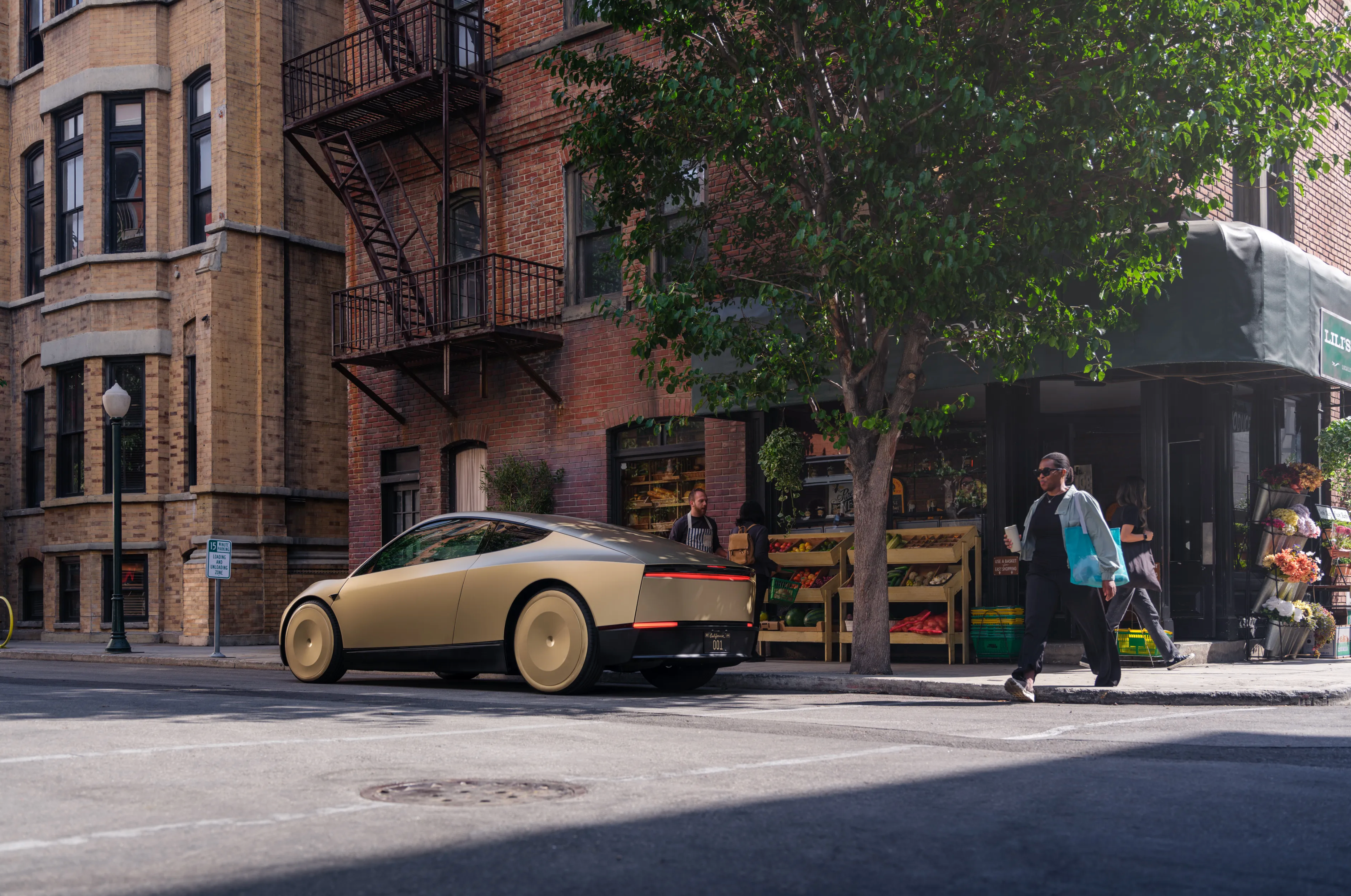

It's finally happening, and it's happening much faster than anyone anticipated: "I just saw a Cybercab testing in San Francisco!"
For years, Tesla's fully autonomous robotaxi was dismissed as vaporware, a distant promise always "one year away." But here's what the skeptics don't want you to know: real-world Cybercab units are officially hitting public roads, and the transition to a driverless future is unfolding right before our eyes.
⚡ Quick Answer
Real-World Sightings
Cybercabs have been spotted testing in San Francisco and on major highways like I-75, indicating active fleet validation.
FSD Integration
The Cybercab runs on Tesla's latest Full Self-Driving (FSD) architecture, leveraging advanced vision-only neural networks.
Regulatory Progress
International approvals are accelerating, with regulators like Lithuania approving FSD before software is even fully ready.
Timeline Impact
The transition from testing to a commercial ride-hailing network is projected to begin in select markets within 12-18 months.
Over the past week, Tesla subreddits have erupted with excitement and speculation. What began as a series of blurry spy shots has quickly solidified into concrete evidence of a coordinated, real-world testing campaign. Tesla is no longer just simulating autonomy in closed environments; they are validating the Cybercab on some of the most challenging public roads in North America.
Here's what you need to know. We've analyzed the latest Reddit discussions, regulatory filings, and software updates to break down exactly what the Cybercab sightings mean for current Tesla owners, future buyers, and the broader EV ecosystem. No fluff.

The Sightings: From San Francisco to I-75
The Reddit community has become a decentralized intelligence network for tracking Tesla's secret projects. In the past 72 hours, multiple independent sightings of the Cybercab have been documented and shared across r/TeslaMotors and r/TeslaLounge.
Real Owner Quote: "Saw a Cybercab testing in SF today. No steering wheel, no pedals, just navigating traffic like a pro. It looks incredibly futuristic in person, much smaller than a Model 3 but with a massive presence." — Reddit user, May 2026
While San Francisco has long been the battleground for autonomous vehicle companies like Waymo and Cruise, Tesla's presence there with a steering-wheel-less vehicle is a massive statement of intent. San Francisco's dense, unpredictable urban environment is the ultimate test for autonomous driving software.
But the testing isn't limited to urban centers. Another user reported seeing a Cybercab driving on Interstate 75. Highway testing at high speeds presents a different set of challenges, particularly around long-range perception and high-speed merging maneuvers. The dual-track testing program shows that Tesla is aiming for a versatile autonomous solution from day one.

Under the Hood: FSD v14.3.3 and Vision-Only Hardware
The Cybercab's rapid deployment is fueled by significant leaps in Tesla's Full Self-Driving (FSD) software. The recent release of FSD v14.3.3 has introduced several key features that are critical for driverless operations, including a live, intervention-free streak counter and major improvements to Actually Smart Summon (ASS).
FSD v14.3.3 Capabilities
- Live intervention-free streak tracking for continuous improvement
- Enhanced Actually Smart Summon for tight parking lot navigation
- Improved night vision and extreme glare handling
- Smoother, more human-like deceleration and lane changes
Cybercab Hardware Advantages
- Zero mechanical controls (no steering wheel, no pedals)
- Inductive wireless charging (no physical charge port)
- Optimized camera placement for 360-degree high-resolution coverage
- Simplified interior designed for maximum passenger volume
One of the most fascinating technical discussions on Reddit centered on why Tesla's vision-only system is performing so well in challenging conditions. Unlike competitors who rely heavily on expensive LiDAR and HD mapping, Tesla's neural networks have trained on billions of miles of real-world driving data. This allows the system to "see" through extreme glare and darkness by predicting light patterns and object behaviors much like a human driver does.
The Regulatory Battle: A Surprise Win in Europe
Technology is only half the battle; regulatory approval is the gatekeeper of the autonomous future. Historically, Europe has been notoriously strict regarding autonomous driving, often lagging years behind the US in permitting hands-free systems. However, a recent regulatory breakthrough has blindsided the industry.
Real Owner Quote: "Lithuanian regulators approving FSD before the software was even fully ready is wild. It shows that governments are starting to realize that delaying this tech has a real human cost in terms of traffic safety." — Reddit user, May 2026
This regulatory shift in Lithuania is a massive signal. It suggests that European regulators are becoming more proactive, establishing legal frameworks for autonomous operations ahead of time so that once the software meets safety thresholds, deployment can happen immediately. For Tesla, this reduces the regulatory bottleneck and opens up a clear path to global scaling.
What This Means for Current Tesla Owners
Many current Tesla owners are asking: "Does the Cybercab make my Model 3 or Model Y obsolete?" The short answer is no. In fact, the development of the Cybercab directly benefits existing owners. The neural networks being optimized for the Cybercab are the exact same networks powering FSD on consumer vehicles.
1. Software Parity
Every mile of testing data collected by the Cybercab fleet directly improves the FSD software running on your Model 3, Y, S, or X. You get the benefits of robotaxi-grade validation without buying a new car.
2. Tesla Network Integration
Tesla's long-term plan is to allow consumer vehicles with FSD to join the Tesla Network ride-hailing app. Your personal vehicle could eventually earn passive income for you alongside the dedicated Cybercab fleet.
3. Hardware Longevity
Tesla's commitment to vision-only autonomy means that even older Hardware 3 and Hardware 4 vehicles continue to receive major software updates, preserving their value and capability over time.
Decision Framework: Buy Now or Wait for Cybercab?
✓ Buy a Consumer Tesla Now
- You need a personal vehicle for daily commuting today
- You want the flexibility of manual controls (steering wheel/pedals)
- You want to take advantage of current EV tax credits and incentives
- You want a multi-purpose vehicle with more cargo space
- You want to participate in early FSD beta testing programs
✓ Wait for the Cybercab Network
- You live in a dense urban area with high parking costs
- Your monthly ride-hailing costs are lower than a car payment
- You have no interest in ever driving manually
- You want a highly optimized, low-cost per-mile transport solution
- You want to avoid vehicle maintenance, insurance, and charging hassles
The Bottom Line
The Cybercab is no longer a concept car—it is a fleet-validation reality.
The recent sightings in San Francisco and on I-75 prove that Tesla is aggressively pushing toward a commercial launch. Backed by the rapid software iterations of FSD v14.3.3 and surprising regulatory momentum in Europe, the timeline for true driverless ride-hailing has shrunk dramatically.
Whether you are a current owner enjoying the rapid improvements of FSD on your own vehicle, or an investor watching the birth of a multi-trillion-dollar autonomous network, one thing is clear: the autonomous revolution is here, and it's running on Tesla Vision.
Last updated: May 25, 2026


Partager:
Tesla FSD Learns to Slow Down for Police [VIDEO]
Tesla’s Dry Cathode Breakthrough Could Drastically Reduce Battery Costs