

Tesla’s Full Self-Driving software is expanding beyond consumer vehicles to Class 8 commercial freight. During the Q2 earnings call on Wednesday, Elon Musk confirmed that the Tesla Semi is slated to receive FSD in the near future.
"We expect to get self-driving working on the Tesla Semi probably around the end of this year or early next year," Musk said during the call. "I just don’t want it to be a distraction on the march of nines of safety for self-driving on the Model 3/Y and Cybercab. It will definitely be working next year."
Based on Musk’s remarks and the ongoing scale-up at Tesla’s Semi factory in Nevada, next year appears to be the more likely timeframe. Musk emphasized keeping engineers focused on FSD for the Model 3/Y and the Cybercab robotaxi for now, and said Tesla aims to have FSD ready for the Semi as high-yield manufacturing begins. This confirmation follows sightings of Tesla Semi units testing on public roads with ground-truthing equipment, which is typically used for FSD validation.
Built for Autonomy
When Tesla unveiled the refreshed Semi last fall with an autonomy-ready tag, it set the stage for this software rollout. The Semi could be the first new vehicle line to gain FSD support since the software rolled out to the Cybertruck in 2024 (the upcoming Cybercab doesn’t count since it will launch with autonomy built-in from day one).
Tesla’s refreshed Class 8 electric truck is available as a Standard Range model with 325 miles of range and a Long Range variant offering 500 miles while fully loaded at 82,000 lbs. It uses a three-motor drivetrain on the rear axle, supported by 10 external cameras and an internal cabin camera. While those cameras currently power active safety features like automatic emergency braking, they will eventually enable FSD on the Semi, bringing it in line with Tesla’s consumer fleet.


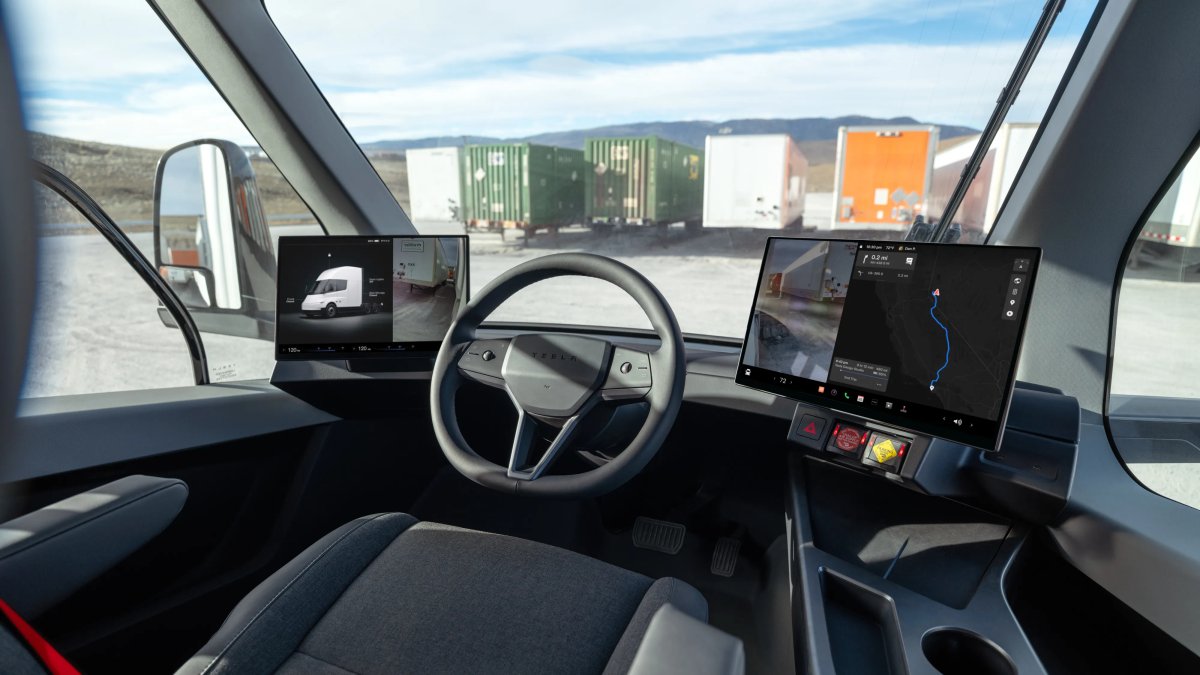
Inside, the new cabin features a driver-centric layout with two 16-inch touchscreens flanking a central driving position, redesigned side windows that drivers can now reach out of, integrated wireless phone chargers, and repositioned cup holders based on freight fleet feedback.
Easing Driver Strain and Transforming Freight
In the short term, FSD (Supervised) on the Semi is intended to reduce the physical toll on truck drivers who traverse long highway stretches across the U.S., improving safety and reducing strain on long-haul routes.
As the technology advances toward unsupervised autonomy, Musk said it could help alleviate the ongoing truck driver shortage. With customer orders stacking up and assembly lines ramping in Nevada, extending Tesla’s autonomous driving features to commercial haulers could quickly reshape long-distance freight operations.



Partager:
Tesla Robotaxi Hits 380K Unsupervised Miles, Names Next Markets
Tesla Robotaxis Are Running FSD V15