
Tesla has completed a major, previously undisclosed transaction in artificial intelligence, finalizing the acquisition of an unnamed AI hardware company for nearly $2 billion.
The confirmation appeared in regulatory filings, highlighted on X by Cern Basher (@CernBasher), Chief Investment Officer at Brilliant Advice. According to Tesla’s latest 10-Q filing, the deal was executed during the second quarter for $1.95 billion in common stock and equity awards.
Tesla made an acquisition* of an "AI hardware company" in Q2 for $1.95 billion.
— Cern Basher (@CernBasher) July 24, 2026
*They announced it in their Q1 filing when they said: "In April 2026, the Company entered into an agreement to acquire an AI hardware company for up to $2.00 billion in Tesla common stock and equity… pic.twitter.com/4jBDw0PLRS
When the acquisition was first disclosed in April, it was described as a transaction worth up to $2 billion. Of the finalized $1.95 billion total, $1.73 billion is tied to performance milestones and service conditions, while $222 million was allocated to a specific “patent and related developed technology” asset. The filing states the remainder will be recognized as defined stages of the successful deployment of the company’s technology are completed.
A Rare Move Outside In-House Development
Acquisitions of external tech firms are uncommon for Tesla, which typically relies on vertical integration and building its technology stack internally. That includes internal efforts to develop AI chips such as the TERAFAB project with partners like SpaceX and Intel.
Across its history, Tesla has acquired only around ten companies, with most deals focused on battery technology or manufacturing automation. Paying $222 million upfront for patent rights indicates the target holds specialized intellectual property that could not be replicated in-house or sourced elsewhere within Elon Musk’s broader portfolio, which also includes SpaceXAI (formerly xAI).
Who Did Tesla Actually Buy?
Because the filings do not disclose the company’s name, speculation has centered on DensityAI, a startup formed by former members of Tesla’s Dojo supercomputer team that builds specialized accelerators and full-stack systems for large language model inference.
Another possibility discussed is Atomic Semi, a semiconductor tooling and mini-fab startup co-founded by Jim Keller.
What Will the Tech Be Used For?
Stepping outside current internal pipelines — and beyond the broader corporate ecosystem — points to a very specific hardware need.

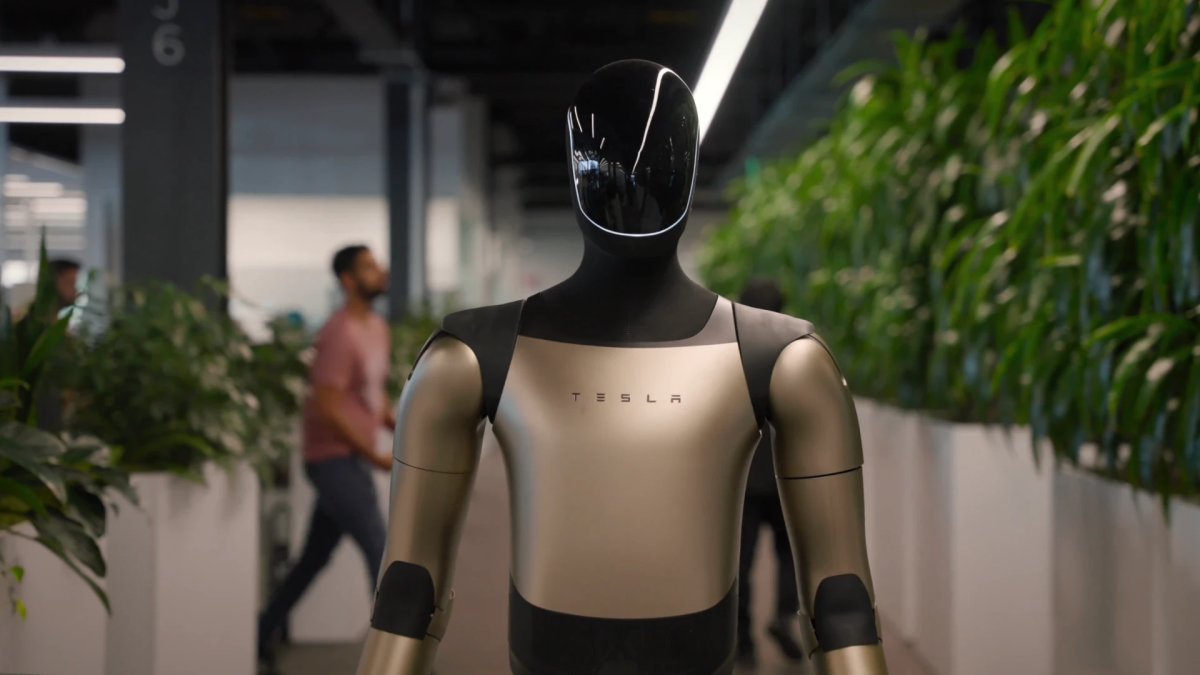
The newly acquired intellectual property could underpin custom silicon for Tesla’s Optimus humanoid robot by providing the real-time processing it requires. Alternatively, the technology could support the next-generation Full Self-Driving models aimed at achieving unsupervised autonomy. Regardless of the final application, obtaining custom hardware patents and the company that created them marks a major acceleration in Tesla’s broader AI ambitions.




Partager:
Tesla FSD v14 Lite Has Trouble Seeing Objects While Reversing [VIDEOS]
Tesla Hints at Bringing Robotaxi Service to South America