
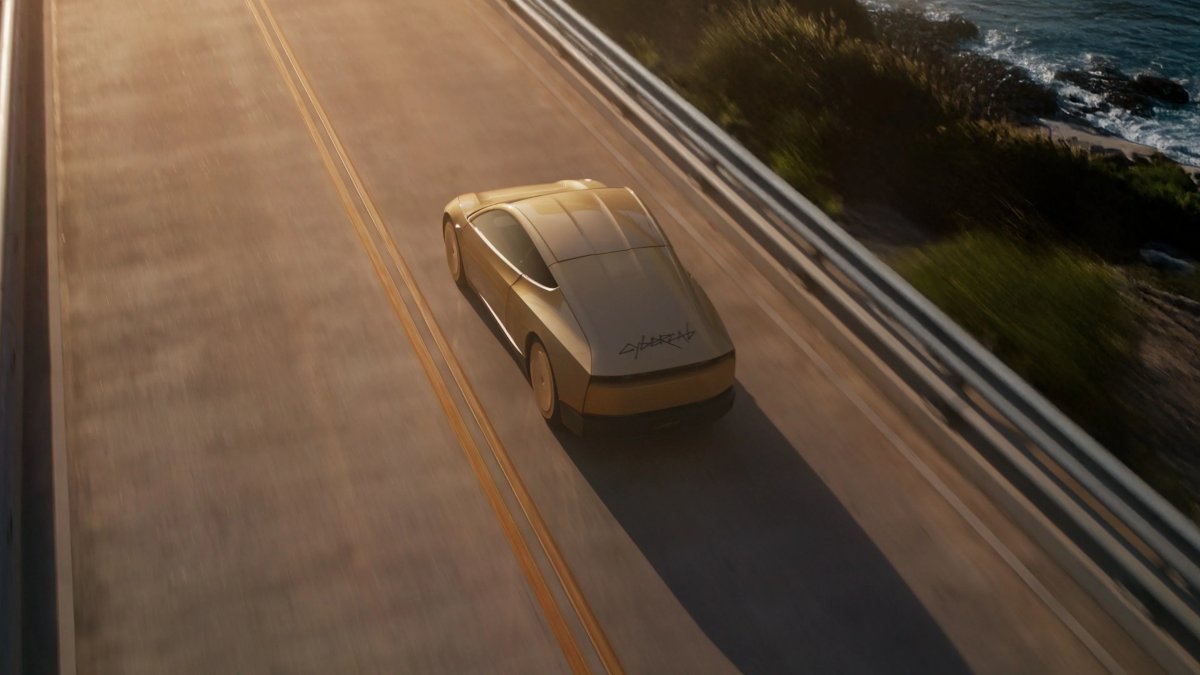

Tesla is outfitting its dedicated robotaxi to maintain highly precise awareness of its location at all times. For a vehicle intended to navigate busy city streets without human input, consumer-grade positioning is insufficient. New details point to a significant hardware change in the upcoming Cybercab to deliver pinpoint location accuracy.
According to information from a reliable source, production Cybercab units use a more powerful dual GPS setup. It is not yet confirmed whether this refers to a dual-band system that tracks multiple satellite frequencies simultaneously, or two separate GPS modules for redundancy and stronger triangulation. Either way, the source says this arrangement provides more accurate positioning than current consumer vehicles.
Building Redundancy for Level 4 Operations
This high-precision positioning hardware is being deployed to support autonomous driving. Documentation for Cybercab explicitly identifies the vehicle as running an SAE Level 4 'Autonomous Mode.' When the system manages the full driving stack without human backup controls, precise telemetry is essential.


The upgraded GPS joins other custom computing enhancements in Cybercab. The platform also includes an unreleased, next-generation FSD computer with more RAM than anything in Tesla’s current lineup.
Adding backup tracking systems is a proven approach for autonomous fleets. The “Project Halo” Model Y vehicles that currently provide public rides on Tesla’s Robotaxi network also include additional communications and telematics hardware in the rear, located inside what many refer to as a "black box" in the rear window. This hardware supplies GPS redundancy and improves location tracking, and likely also includes communications equipment to keep the driverless vehicles connected with remote Robotaxi Support.
Cybercab validation vehicles have previously been seen driving with a Starlink dish attached. While Starlink would provide stronger connectivity and company leadership has hinted that the robotaxi may eventually include it, that is likely still some time away, and the final implementation is expected to be more elegant.


Moving Fast Toward a Public Reveal
Satellite redundancy and ultra-precise positioning are priorities because Cybercab is designed to operate without a steering wheel, pedals, or traditional physical controls. The software must be confident about both the road and the exact lane position, particularly in dense urban canyons or heavily forested areas where satellite signals can reflect.
Tesla is advancing toward a public launch at a rapid pace. Cybercab mass production started at Gigafactory Texas back in April, and validation teams have been collecting real-world data for months. Just last week, Tesla started testing steering wheel-less Cybercabs in Austin on public streets, bringing the fleet closer to its official debut.




Partager:
Tesla Cybercab Has New Ultra-Efficient Powertrain, 4680 Batteries, 48V & More
Tesla's 6-Seat Model Y L Spotted in Germany Ahead of European Launch