

Tesla hat diese Woche bekannt gegeben, dass das Unternehmen weltweit die Marke von 80.000 Supercharger-Ladeplätzen überschritten hat und damit seine Führungsposition als Betreiber des weltweit größten Schnellladenetzes weiter festigt.
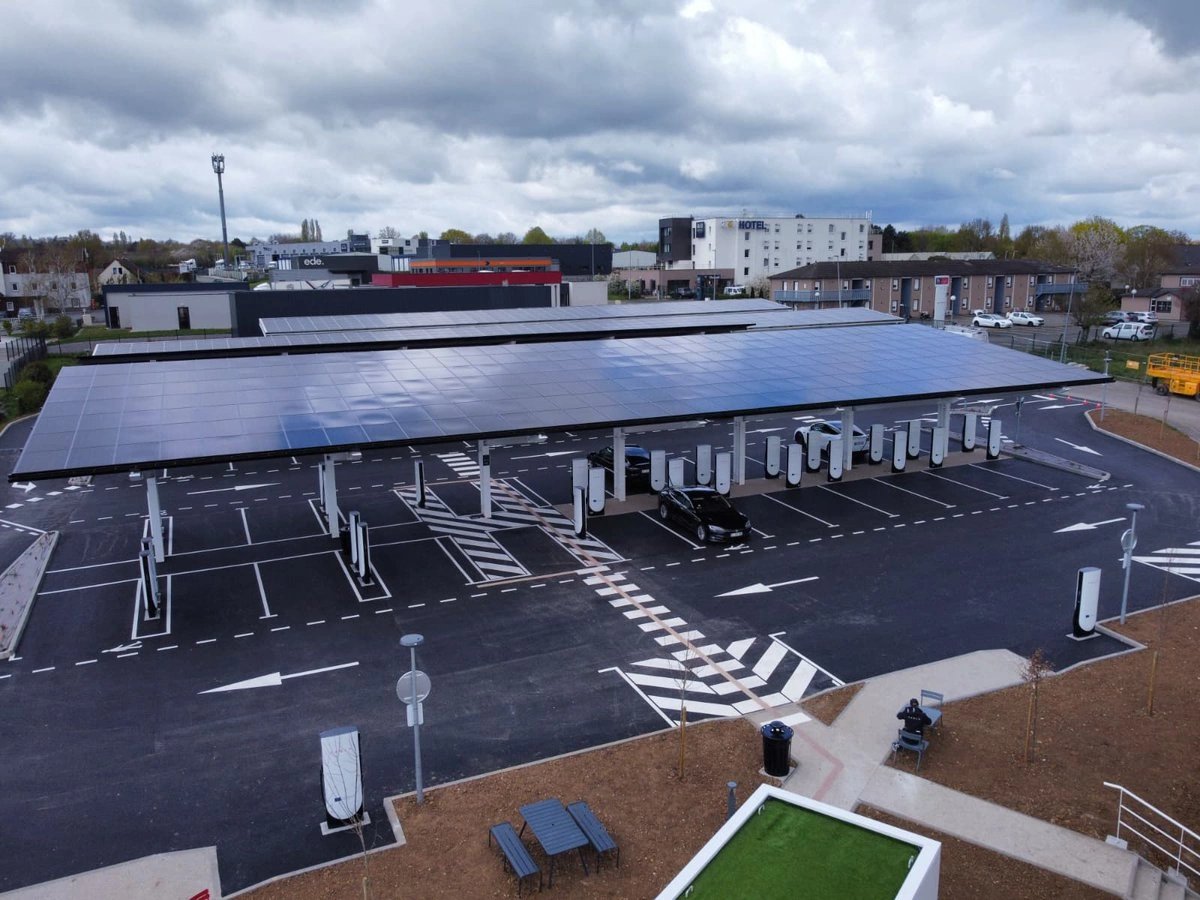
Der 80.000. Ladeplatz wurde an einem erweiterten Standort in Frankreich in Betrieb genommen. Der Standort befindet sich in der 3 Rue Louis Chappée, Saint‑Saturnin. Dort wurden kürzlich 28 Ladeplätze hinzugefügt, sodass nun insgesamt 48 zur Verfügung stehen. Zudem ist der Standort jetzt mit Solar-Überdachungen und sanitären Anlagen ausgestattet – was ihn zu einem idealen Zwischenstopp für Reisende in Europa macht.

Ein beeindruckendes Wachstumstempo
Der erste Tesla Supercharger ging im September 2012 in Betrieb, und das Unternehmen erreichte im November 2022 die Marke von 40.000 Ladeplätzen. Der Sprung von 40.000 auf 80.000 Ladeplätze dauerte dann weniger als vier Jahre, was darauf hindeutet, dass das Netzwerk heute fast dreimal so schnell wächst wie in seinem ersten Jahrzehnt.

Aktuelle Zahlen für das erste Quartal 2026 zeigen 53 Millionen Ladevorgänge, eine abgegebene Energiemenge von 1,8 TWh und 2.500 neu hinzugekommene Ladeplätze innerhalb von nur drei Monaten. Im Durchschnitt liefert das weltweite Supercharger-Netzwerk mittlerweile etwa 20 GWh Energie pro Tag.
Neue Technologien treiben Expansion voran
Tesla hat die Produktion in seinem Werk in New York vollständig auf V4-Supercharger-Schaltschränke umgestellt. Diese V4-Einheiten sind kostengünstiger in der Bereitstellung und können bis zu acht Ladeplätze versorgen – die doppelte Kapazität im Vergleich zu V3. Zukünftig werden alle neuen Supercharger-Standorte vollständig auf V4 basieren, einschließlich der Schaltschränke der nächsten Generation sowie V4-Ladesäulen mit längeren Kabeln und integrierten Zahlungsterminals, da sich das Netzwerk für andere Marken öffnet.
Das Unternehmen hat zudem „Folding Unit“-Supercharger eingeführt. Diese vorgefertigten Systeme sind 20 % günstiger und doppelt so schnell zu installieren, was es Tesla ermöglicht, komplette Ladeparks auf Parkplätzen zu errichten und in einem Bruchteil der üblichen Zeit in Betrieb zu nehmen.
Mit Blick auf die nächsten 80.000 Ladeplätze priorisiert Tesla Standorte mit hohem Verkehrsaufkommen und hoher Ladeleistung. Da immer mehr Cybercabs und Tesla Semis auf die Straße kommen, wird die Nachfrage nach 500-kW- und Megawatt-Ladung steigen. Die Hardware steht bereit – nun stellt sich nur noch die Frage, wie schnell die verbleibenden Regionen abgedeckt werden können.









Teilen:
Tesla stellt neue UI-Funktionen für FSD in Europa vor
Teslas ferngesteuertes Robotaxi ist die perfekte Lösung für den autonomen Verkehrsstillstand