
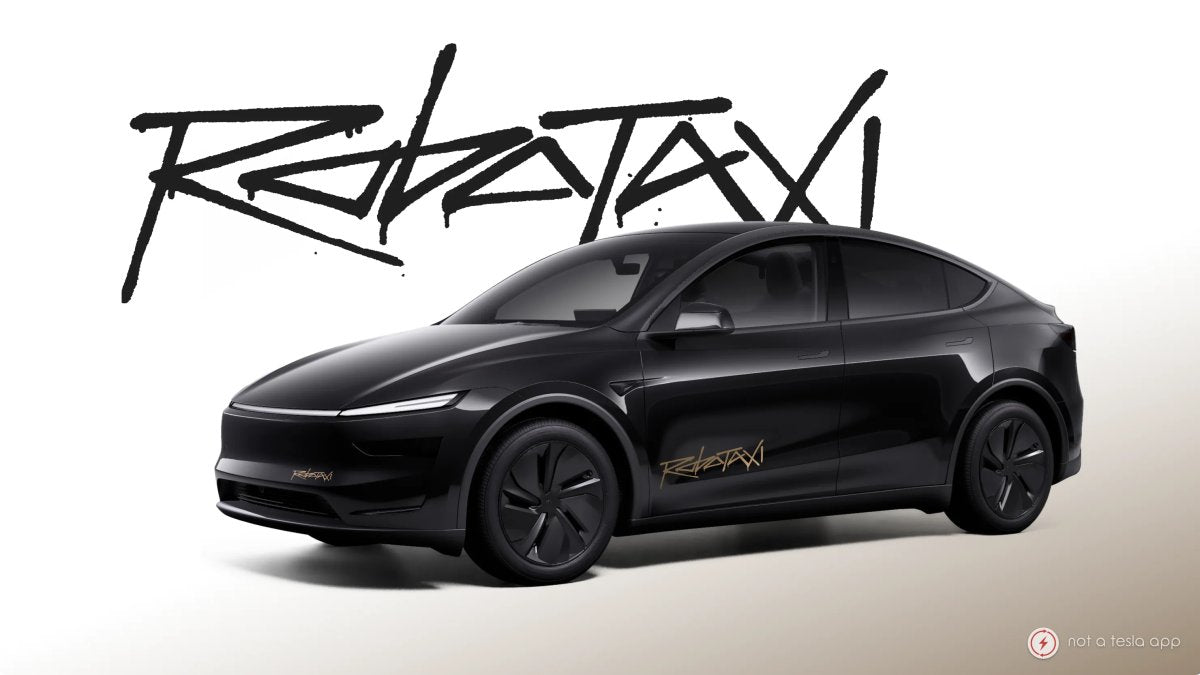
How Tesla's Robotaxi Will Deal With First-Responders, Police and Collisions

Transitioning from supervised autonomy to a fully commercial driverless network requires more than advanced neural networks; it also demands a comprehensive framework for edge cases and emergencies. Tesla has published its Robotaxi First Responder Interaction Plan for Arizona, detailing how the company intends to coordinate with first responders.
The plan classifies the upcoming Robotaxi fleet as an SAE Level 4 autonomous system and explains how these vehicles will navigate restricted areas, interact with police, and operate in severe weather.
Navigating Active Emergencies
Like current versions of FSD (Supervised), the Robotaxi stack is trained to automatically yield to emergency vehicles with lights and sirens.
If police need the vehicle to stop, it will automatically pull over when a police vehicle with active lights is behind it. On divided highways and in high-speed zones, the Robotaxi may take longer to yield while it searches for a safe location to pull over.
At incident scenes, FSD uses vision to recognize and respond to first responders' physical hand signals. Robotaxi will also be able to follow newly established routes defined by cones, just as FSD does today.
Tesla’s First Responder Support Team
To prevent the driverless fleet from interfering with major emergencies, Tesla has created a dedicated Robotaxi First Responder Support team. Police dispatchers can work with this team to set up temporary geofences that completely block robotaxi vehicles from routing through accident scenes or around restricted zones.
What Happens in a Collision
If a Robotaxi is involved in a collision, the vehicle runs an automated safety sequence. After stopping, it rapidly flashes its hazard lights. A visual indicator informs first responders that the high-voltage system is secure and the vehicle is safe to approach.
At the same time, the doors unlock, the windows roll down, and two-way audio connects the cabin directly to a remote Robotaxi Support agent.
Tesla Support can remotely move the vehicle or grant first responders access to it. First responders must be in uniform and ready to display a badge at the vehicle’s B-pillar, where a Tesla representative verifies them.
For accident reconstruction, Tesla will provide authorities with telemetry, including camera recordings, system diagnostics, and Event Data Recorder information.
Weather Sandbox
While FSD is highly capable, Tesla is launching the Level 4 network within clearly defined safety boundaries. The Operational Design Domain section of the plan specifies the environmental conditions in which the fleet can operate.
Robotaxi is approved for operation day and night and can comfortably handle fog, light to moderate rain, and snow. However, the system has strict operational limits in extreme weather.
Tesla states that the autonomous fleet is not intended to operate during flooding events, icy conditions, or hurricane-strength winds, and it can avoid areas of inclement weather issued by public safety alerts under the control of Tesla.



Teilen:
Tesla to build pre-assembled Megachargers for the Semi
Tesla Reveals Cybercab Specs in New EPA Filings