
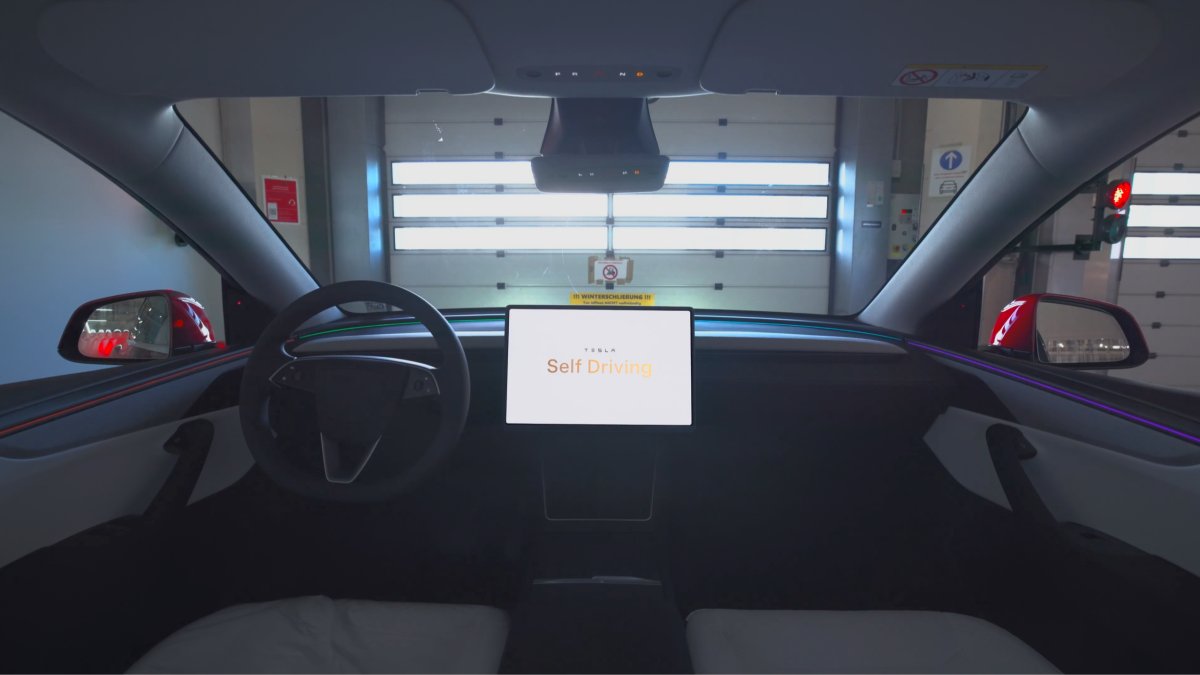

Tesla vehicles have been driving themselves off factory lines and into delivery lots since last year, streamlining logistics on the factory floor. The company also marked a milestone last year by autonomously delivering its first vehicle to a customers doorstep from Gigafactory Texas. That capability is now being applied further into the final assembly process.
Lars Moravy, Teslas Vice President of Engineering, said in an interview with Herbert Ong that Full Self-Driving now handles the very end of factory validation. New vehicles navigate the bumps, squeaks, and rattles (BSR) section of the production line entirely on their own. This BSR course serves as the last validation track before cars are cleared to leave the factory, a step they also complete autonomously.
As the car runs the BSR course, built-in cabin microphones listen for issues and report findings back to engineering. Moravy added that Tesla is developing a specialized AI system called "Full Self-Hearing" to automatically identify these minor imperfections prior to delivery.
Factory teams are also deploying internal AI agents across engineering, supply chain, service, and manufacturing quality control. This complements early-life failure testing that validates new components and manufacturing processes for Teslas products.
Cybercab Production Scaling
Moravy shared additional details about the Cybercab robotaxi, saying its production lines are expected to scale far beyond current market estimates. Approximately 90% of the Cybercab manufacturing line is fully automated.

With this level of efficiency, Tesla may ultimately produce more Cybercabs than any other vehicle model in its history. For reference, the Model Y has reached roughly four million units produced to date.
Moravy also suggested that Starlink could eventually be integrated into the Cybercab to ensure cellular reception for the fully autonomous vehicle in rural areas. Satellite internet integration has long been rumored for Tesla vehicles and remains one of the most requested features. A production Cybercab has previously been seen testing with a Starlink dish mounted on its roof.

Optimus Assembly Lines Take Shape
The interview also covered progress on the Optimus humanoid robot program. Teslas first official Optimus production line has arrived at the Fremont factory, and installation is underway. The line is fully modular so it can adapt as the robot and its manufacturing process evolve, and the plan is to scale to dozens of individual sub-lines over time.

While initial production will take place in California, the manufacturing equipment for the robot is being built and validated in Germany, encompassing roughly 40 distinct sub-lines. Moravy noted that Teslas bill of materials for a standard car is technically higher than a robots, and he did not provide a timeline for full commercial Optimus production. Given the robots mechanical complexity and strict safety needs, Optimus will be manufactured more like a modern car than a standard smartphone.
Before concluding, Moravy teased a big announcement on production scaling at Giga Texas scheduled for Tuesday, July 7. You can check out the full interview below:


Condividi:
Tesla to Use Cabin Camera for FSD Authentication
Tesla Insurance Is Coming Soon to Washington