
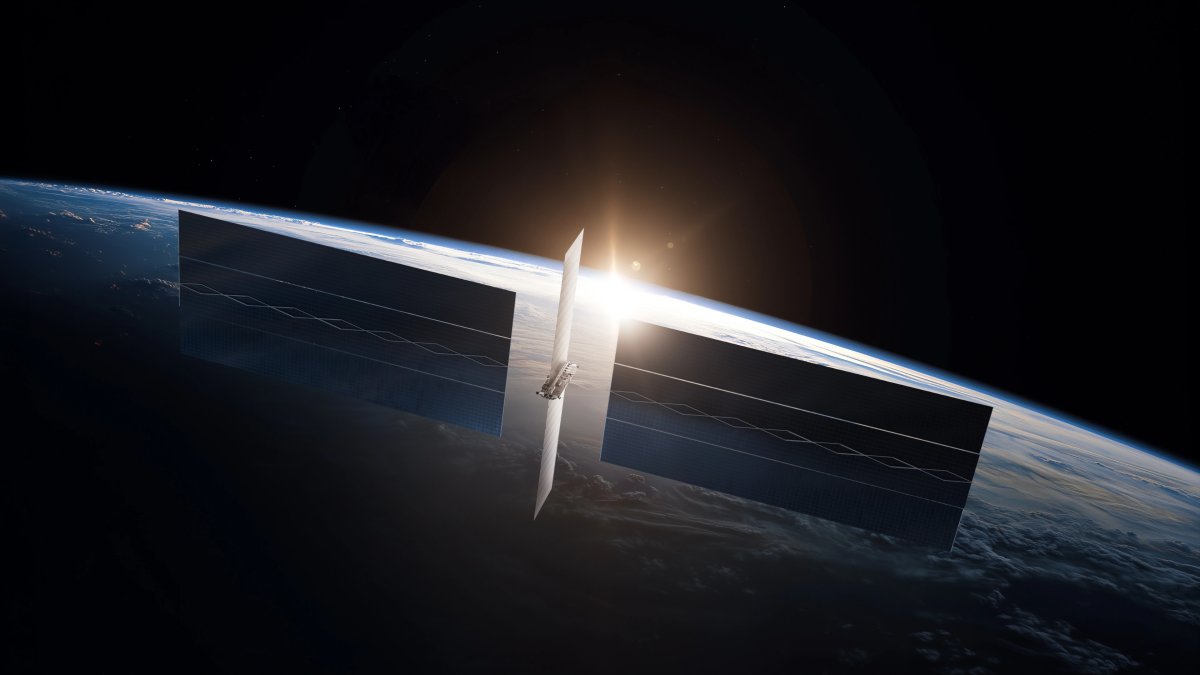

Space-based AI infrastructure is edging closer to deployment. In a notable step for orbital computing, SpaceX announced a hardware partnership with Nvidia to equip an upcoming network of data-center satellites built to run artificial intelligence workloads in space.
An official post on X from @SpaceX confirmed the collaboration:
“SpaceX is partnering with @Nvidia to design the Starmind AI1 satellite compute payload. Each of the Starmind satellites will include NVIDIA Rubin GPUs and Vera CPUs for datacenter class space compute.”
The news coincided with SpaceX’s first public earnings call after its historic IPO in June. The company’s market cap stands at nearly $1.5 trillion as it advances plans to move orbital AI from concept to reality.
Built for Space Compute and Solar Power
According to technical details on SpaceX’s official Starmind page, the AI1 satellite will process AI workloads locally in orbit and return processed data to Earth from a low-latency, sun-synchronous orbit via high-bandwidth optical laser links tied to the Starlink constellation. It will draw on solar power and leverage cooling in low Earth orbit to bypass terrestrial power bottlenecks.
Key hardware specifications for the Starmind AI1 platform include:
- Deployed Height: 30 m / 98 ft
- Wingspan: 75 m / 246 ft
- Compute Payload: Up to 250 kW peak / 175 kW average
- Vehicle Efficiency: 75 kW/ton
- Solar Array Output: 210 kW at 250 W/m² power density
- Thermal Management: 160 m² deployable liquid radiators using active fluid cooling and redundant pumping loops

By radiating heat directly into space, the satellites eliminate the energy-intensive cooling towers and chillers required by ground data centers, reducing cooling overhead by roughly an order of magnitude. SpaceX plans a modular system architecture to simplify upgrades and avoid reliance on a single chip vendor, while initial builds will use Nvidia’s Vera Rubin architecture.
Gigasat Factory and Global Synergies
SpaceX intends to manufacture these orbital data centers at scale at the Gigasat Factory in Bastrop, Texas, aiming for mass production and initial deployments as early as 2027.
While Nvidia will provide chips for the first-generation Starmind satellites, custom hardware is still in development. SpaceX continues to co-develop custom AI silicon through the TERAFAB AI chip project with Tesla and Intel.
Shared technology efforts have fueled speculation about a potential corporate combination between Tesla and SpaceX, though Elon Musk recently denied rumors of selling Tesla’s China business. Moving compute into orbit addresses growing terrestrial grid constraints and significantly lowers operating costs, setting the stage for scalable space-based AI processing.







Condividi:
Tesla Won't Bring Back FSD Max Speed Option, Speed Selection Improvements Coming
Tesla HW3 Computers Are Overheating on FSD V14 Lite