
Tesla Sued Over Cybertruck FSD Crash: Lawsuit Blames Musk

Tesla is facing a new and unusually personal lawsuit over its driver-assistance technology. According to Electrek, a Texas plaintiff is seeking more than $1 million in damages after a collision in her Cybertruck, alleging the vehicle’s Full Self-Driving (FSD) system failed to manage a freeway split and drove into a concrete barrier.
The case was filed in Harris County District Court and comes amid heightened scrutiny of Tesla’s autonomy claims. It follows a separate federal decision that upheld a $243 million verdict against the company in a fatal 2019 Autopilot crash.
Crash details and claims targeting Musk
The complaint states that Justine Saint Amour was driving her Cybertruck on a Houston freeway in August 2025 with FSD engaged. As the roadway divided at an overpass, the truck allegedly did not follow the curve and instead continued toward a barrier. Although Saint Amour attempted to take control, the collision occurred before she could avoid it.
The filing also singles out Tesla’s leadership, asserting the company was “negligently hiring and negligently retaining Elon Musk as CEO, and allowing him to participate in product design decisions.” It alleges Musk rejected engineer recommendations to incorporate LiDAR or radar sensors, opting to rely only on cameras. The plaintiff’s attorneys describe Musk as “an aggressive and irresponsible salesman, who has a long history of making dangerous design choices, and over-promising the features of his products”.
Legal questions and regulatory pressure
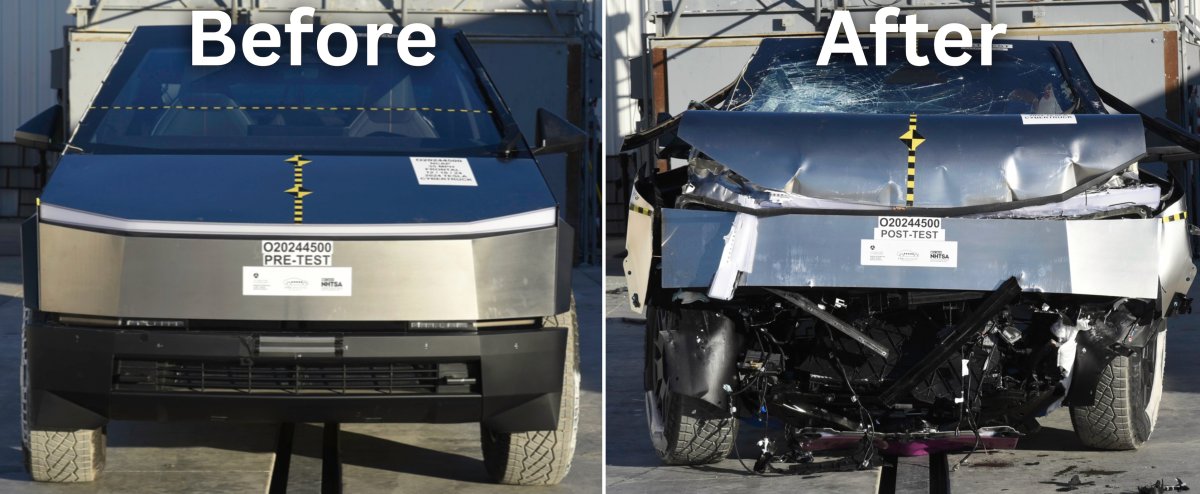
While the Cybertruck carries 5-star crash safety ratings from the NHTSA, the software guiding the vehicle remains under scrutiny. The lawsuit argues that the system’s marketing is misleading, noting that competitors such as Mercedes-Benz offer Level 3 systems that instruct drivers when to resume control, whereas Tesla’s Level 2 system still requires constant supervision despite the “Full Self-Driving” label.
These disputes often turn on whether the driver was attentive, but regulators are increasingly questioning the branding itself. In late 2025, a California judge ruled that Tesla’s FSD marketing is “actually, unambiguously false and counterfactual”. In parallel, the NHTSA is investigating 2.88 million Tesla vehicles equipped with FSD after linking the software to dozens of incidents, including 14 accidents. Under mounting pressure, Tesla is beginning to step away from its “Full Self-Driving” and “Autopilot” names.
A history of branding battles
To avoid a 60-day sales ban in California, Tesla recently halted the use of the “Autopilot” name for new sales and shifted to “Full Self-Driving (Supervised)” in its marketing. Although the company has successfully defended its marketing in some cases, momentum in U.S. courts appears to be shifting.
At the same time, Tesla has released updates demonstrating FSD detecting and avoiding crashes at high speeds, underscoring a paradox: the software continues to improve, yet it still exposes the company to significant liability when it errs.
As this million-dollar lawsuit proceeds, it may prompt debate not only about how Tesla’s vehicles operate, but also about whether the CEO’s design philosophy presents legal risk for the company.


Partager:
Amazon Petitions FCC to Block Tesla and SpaceX’s Orbital Data Center: FCC Responds
Tesla Energy Wins License to Supply Electricity in the U.K.