
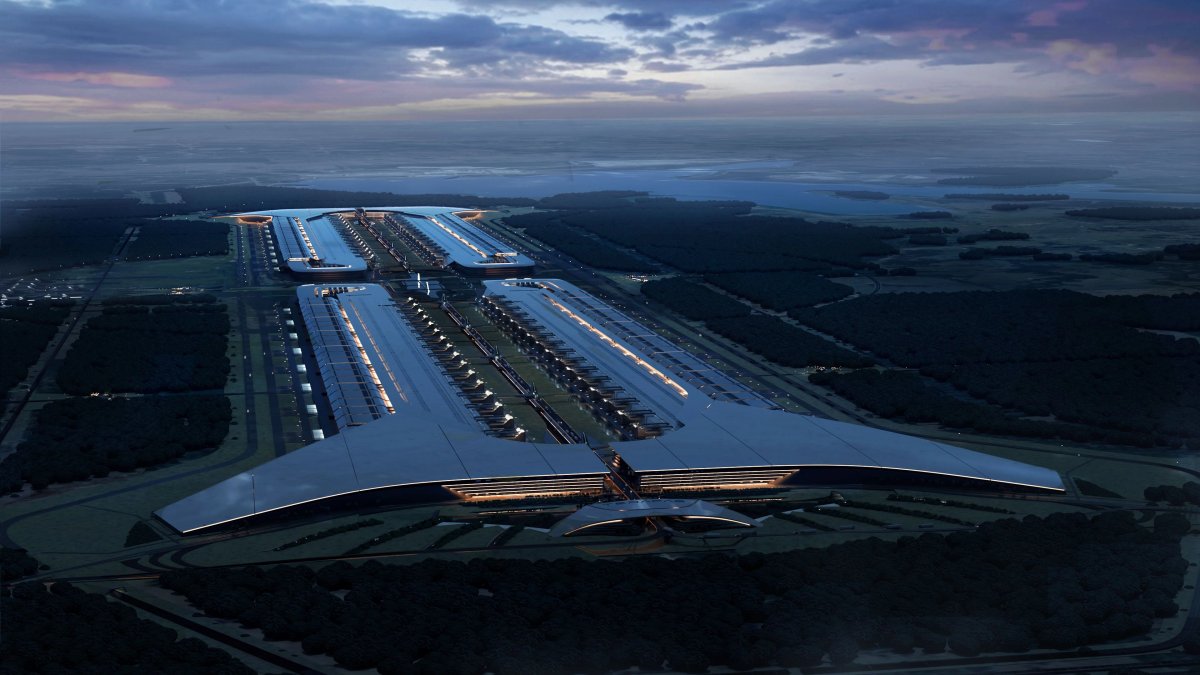
Tesla & SpaceX to Build TERAFAB in Grimes County, Texas

Tesla and SpaceX have finalized the site for what they describe as the largest semiconductor manufacturing facility in human history. After months of site-selection speculation, both companies confirmed that TERAFAB will be built in Grimes County, Texas, about an hour northwest of Houston and roughly two hours from Gigafactory Texas.
The joint effort began early groundwork in Austin this spring. Tesla confirmed the Grimes County location in an official post on X, accompanied by a concept video of the site:
“Terafab will be built in Grimes County, Texas. In April, we broke ground on our research fab on the North Campus of Giga Texas – the precursor to Terafab. Both Tesla & SpaceX will need far more chips than current & future global production can supply. This is why we’re building the largest chip manufacturing facility ever, with the goal of producing over 1 terawatt of compute per year. The future is built in Texas.”
Massive Scale and Industrial Footprint
The physical scale of TERAFAB sets a new benchmark for manufacturing. According to site plans, the facility will include more than 100 million square feet of manufacturing space under a single roof.
To illustrate the footprint, @niccruzpatane produced a comparison indicating that TERAFAB could fit ten Giga Texas factories inside. The single building would also be large enough to encompass the U.S. Pentagon, Apple Park, and the Mall of America together with room to spare.

The initial phase of construction represents approximately $16.8 billion in capital investments from SpaceX and Tesla, with future expansion phases potentially pushing total investment up to $119 billion. Initial operations will employ at least 3,000 workers, many of whom are expected to come from local Grimes and Brazos County communities.
Vertically Integrated Semiconductor Manufacturing
In contrast to traditional chipmaking models that separate manufacturing, packaging, and testing across different facilities and regions, TERAFAB is designed to bring logic devices, memory, and advanced packaging together under one roof, enabling faster validation and iteration cycles. The facility aims to deliver more than 1 terawatt (TW) of compute per year to meet surging internal demand.

Elon Musk outlined how that compute output could be allocated, posting on X:
“My very approximate guess is that Terafab AI compute output would be ~25% for Tesla Optimus and ~75% for AI spacecraft.”
Silicon produced at the site will power Tesla’s upcoming Optimus humanoid robots and autonomous Cybercabs, as well as orbital AI data centers that SpaceX is deploying.
Domestic Silicon Pipeline and Industry Partnerships
Building TERAFAB is intended to reduce reliance on suppliers like TSMC and Samsung for key chips while expanding domestic manufacturing capacity and bringing advanced semiconductor packaging back to the U.S.
To safeguard local environmental resources, the factory will utilize Gibbons Creek Reservoir water for industrial operations rather than tapping local groundwater, supported by on-site wastewater treatment facilities. SpaceX previously filed plans for a TERAFAB facility at the Gibbons Creek Reservoir, indicating Grimes County as the future home of the factory.
The project is giving shape to plans announced at a dedicated TERAFAB event earlier this year. Tesla and SpaceX are partnering with Intel for the latter’s silicon expertise, recently even poaching a high-profile first hire from the veteran chipmaker.
By centralizing research, fabrication, and packaging in Grimes County, the companies are building a vertically integrated supply chain capable of powering autonomous robotics, robotaxis, and orbital compute at unprecedented scale.







Partager:
Tesla Files Plans for $10.1B Solar Cell Factory in Texas
Tesla Rolls Out Rare Software Update to Mobile Connectors