
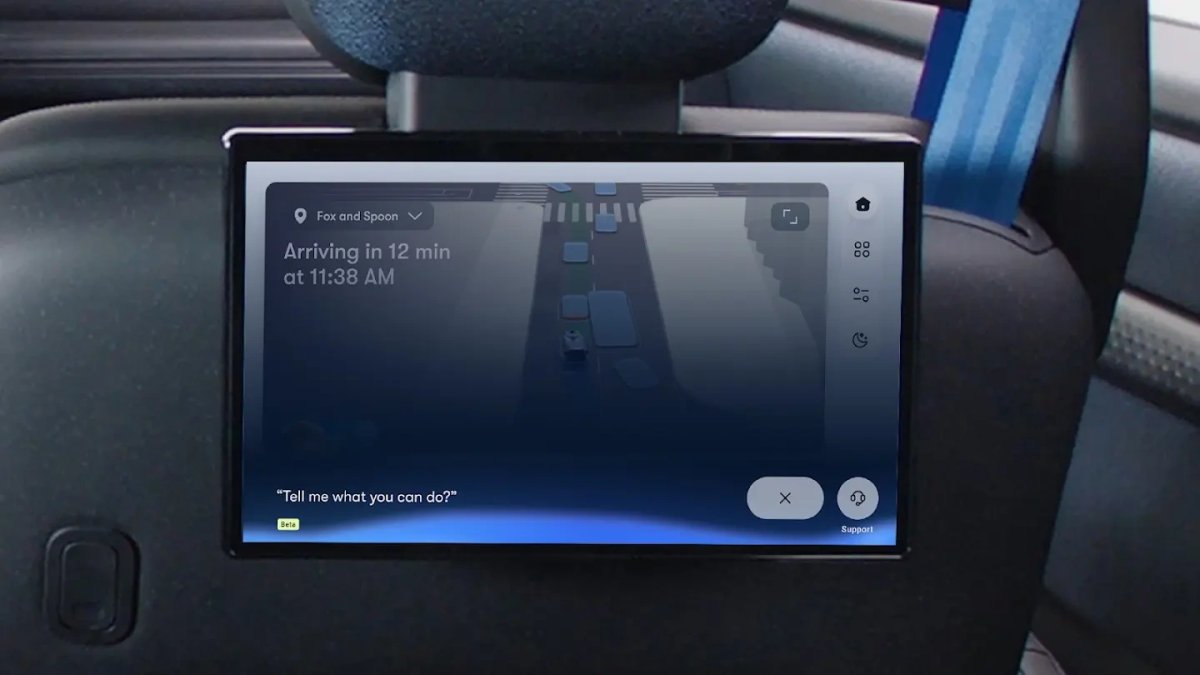

Autonomous ride-hailing is shifting from simply proving a car can drive itself to improving the in-cabin experience. Waymo has officially unveiled a major overhaul of its rider screen interface, featuring a conversational AI integration powered by Google’s Gemini.
The updated software is debuting in Ojai, Waymo’s sixth-generation, purpose-built robotaxi platform manufactured in partnership with Chinese automaker Zeekr. The all-electric, boxy passenger van offers a spacious interior and elevator-style sliding doors, reframing the cabin as a flexible living room on wheels.

Unlike Tesla’s Cybercab, another purpose-built robotaxi that is currently testing fully autonomous employee rides at Giga Texas without manual controls, Ojai still retains traditional driving controls like a steering wheel. Ojai also incorporates Waymo’s multimodal approach to vehicle autonomy, combining cameras, radar, and LiDAR hardware to navigate complex city streets.
Google Gemini Comes to the In-Car Screen
In an official Waymo blog post, the team detailed how Google’s Gemini voice assistant is being deployed directly into the passenger cabin. Riders can tap a dedicated Gemini icon on the screen to adjust cabin climate, ask about nearby points of interest, or check journey progress using natural conversational prompts.
Waymo noted that Gemini in Waymo functions as a standalone conversational assistant, operating completely independently from the Waymo Driver software that steers the car. While passengers can issue voice requests for a pullover, Gemini does not control vehicle routing or movement and remains inactive until a rider explicitly engages with it.
Choreographed Tri-Screen Experience and Early Feedback
The UI redesign introduces a choreographed tri-screen layout across the Ojai cabin: a central touchscreen in the front and one behind each front seat for rear passengers. Rather than mirroring identical information on all three displays, the software adapts dynamically based on seat occupancy. A solo passenger sitting in the rear right seat receives full climate and media controls on their display, while unoccupied seating positions show a simplified trip view or ambient art. The update also introduces Calm Mode, which dims screen brightness and shows only essential trip stats for added comfort.
Early access testing is underway, giving Ojai riders in active markets a hands-on preview. On X, rider @ethanmckanna praised the Ojai’s door-closure automation and interface animations while also critiquing early self-driving behavior.
“I really like that you only have to press a button once after getting in. The Ojai auto-closes the doors and then immediately is off.”
They added that the transition from the windowed UI you see when you get into the Ojai to the fullscreen navigation view when the car starts driving is really “well done.” However, the Ojai’s self-driving logic appears to be less confident than even Waymo’s fifth-generation Driver platform, which the Ojai is supposed to succeed. “That and the really terrible speakers are my only issues with Ojai,” said @ethanmckanna.
The sound system critique may have limited software remedies. The minor hesitations observed in early Ojai software compared to the fifth-generation Driver setup are expected to improve with updates as public availability expands to broader service areas.






Partager:
How to Create Custom Tesla License Plate Visualizations
Should Tesla Allow FSD Transfers on Totaled Vehicles?