
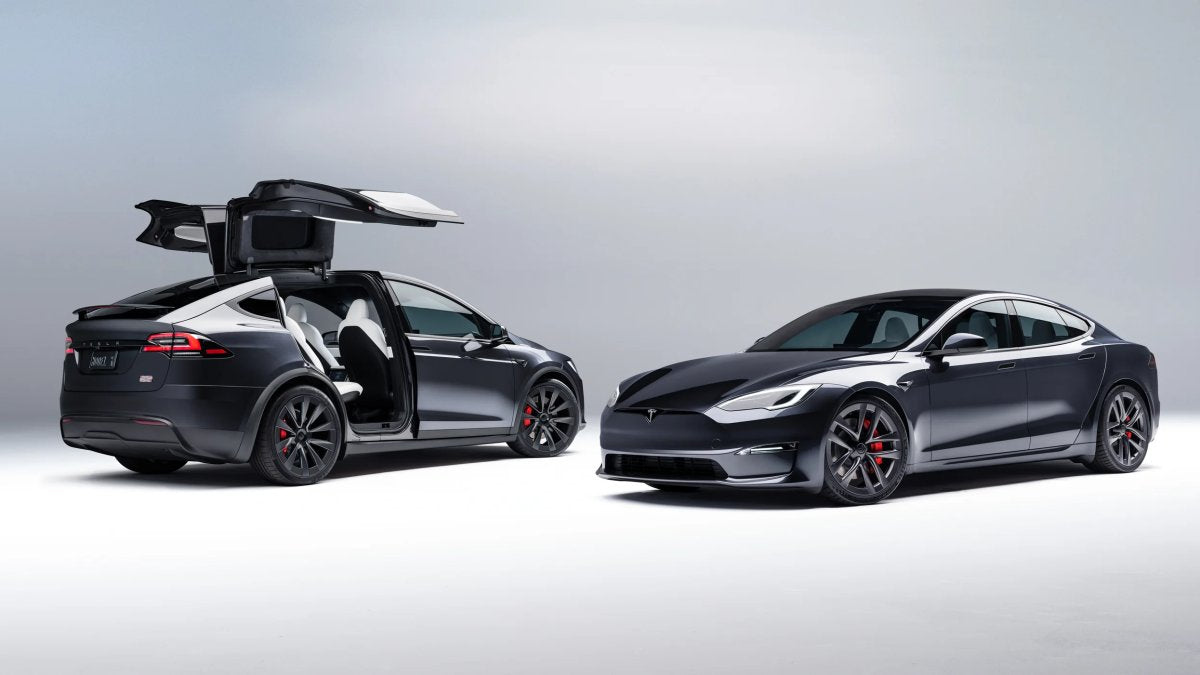

When Tesla officially retired the Model S and Model X, many assumed it was a quick reaction to softer demand. On a recent episode of the Ride the Lightning podcast, Chief Designer Franz von Holzhausen and Vice President of Engineering Lars Moravy detailed the real reasons.
According to the executives, the decision to sunset the two flagships was made over 1.5 years ago. It was driven by the limits of an aging safety architecture and the urgent need for additional manufacturing space.
The Aging Safety Architecture
The Model S platform was conceived in 2008 and entered production in 2012. Although Tesla iterated on the vehicle throughout its 14-year lifespan, the core physical architecture eventually hit its ceiling, particularly for crash-safety evaluations.
Moravy noted that major safety bodies such as Euro NCAP and the IIHS regularly tighten their testing protocols. Tesla implemented structural band-aids over time to clear assessments like the small-overlap and offset-crash tests, but maintaining a five-star rating on the aging platform was becoming increasingly challenging.
“We want to make the safest cars on the road, and that means always making structural updates,” Moravy said. Fully modernizing the 2012-era platform to meet future safety requirements would have demanded a massive overhaul costing hundreds of millions of dollars.
Perfect Timing for Optimus
While evaluating that substantial investment, Tesla was also running into a space constraint and needed a pilot factory to start manufacturing Optimus.
Instead of spending millions to tear down and rebuild the Model S and Model X production lines in Fremont, one proposal was to repurpose that large footprint for Optimus.
“We got to spend however many hundreds of millions of dollars to redo this in this factory, but we also need a pilot factory for Optimus,” Moravy recalled. “And it just kind of was serendipitous. I think that the two things went hand in hand”.
The Future is Autonomous
Another factor was Tesla’s overarching direction. The company is rapidly shifting toward a fully autonomous future, placing major emphasis on the Robotaxi Network and Optimus.
Because the Model S and Model X were the company’s first in-house designs, Tesla considers them the least prepared for a driverless future. Retiring them enables a full focus on next-generation platforms engineered specifically for autonomy.
New Model S/X or CyberSUV?
Reflecting on the overall impact of the two vehicles, the executives pointed out that Tesla delivered a combined 755,000 units, including over 400,000 Model S sedans and over 300,000 Model X SUVs.
For fans hoping the nameplates could return someday, Moravy offered a hint of possibility.
Now is not the right time to keep this one going, doesn’t mean it goes away forever, never say never.
The Model S and X were never intended to be high-volume models, and they would require a complete redesign to reduce costs. There is room in the lineup for a larger SUV, as suggested by Tesla teasing a Cyber SUV. While S/X production has ended, the company may be laying the groundwork for next-generation, all-new, larger models.
You can watch the full episode below:


Share:
How Tesla’s FSD Hardware Has Changed Over the Years
Tesla PowerShare Explained: Vehicle-to-Load (V2L), Vehicle-to-Home (V2H) and Supported Vehicles