
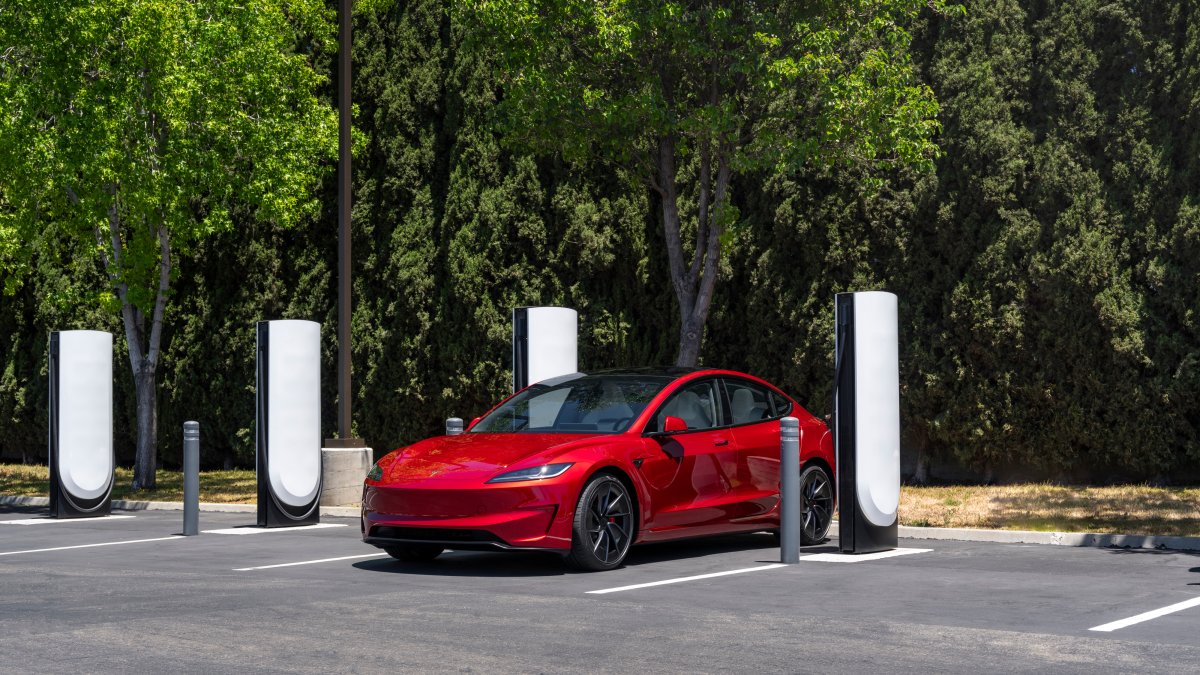

Tesla está entrando en una nueva fase de su red de carga. La Gigafactory de la compañía en Nueva York ha ensamblado su último armario Supercharger V3, lo que marca un cambio completo en la producción hacia el hardware V4 de próxima generación.
Según la cuenta oficial de Tesla Charging en X, la fábrica produjo más de 15,000 armarios V3 a lo largo de siete años. Con esa línea de producción ya retirada, el enfoque se ha trasladado totalmente a aumentar la producción de armarios V4 para respaldar un mercado de vehículos eléctricos cada vez más diverso.
El fin de la era del Supercharger V3
El V3 sirvió como columna vertebral de la expansión global de carga de Tesla, introduciendo una carga de 250 kW que permite a los conductores añadir aproximadamente 200 millas (320 km) de autonomía en unos 15 minutos.
Aunque fue innovador en su lanzamiento, el V3 se diseñó principalmente en torno a la arquitectura de vehículos de 400 V de Tesla. A medida que la industria cambia a sistemas de mayor voltaje y vehículos más grandes como el Cybertruck, el hardware requiere una actualización fundamental para satisfacer las crecientes demandas de energía.
El auge del armario V4
El V4 aporta mucho más que un nuevo exterior; representa una revisión integral de la electrónica de potencia. Una estación V4 combina un punto de carga V4, que cuenta con un cable más largo, con un armario más potente. Algunos puntos de carga utilizarán empuñaduras ergonómicas y de fácil agarre para mejorar la accesibilidad e incluirán terminales de pago para que no sea necesaria una cuenta de Tesla.
Los nuevos armarios ofrecen grandes mejoras en eficiencia y capacidad. Un solo armario V4 puede alimentar hasta ocho puntos de carga, duplicando la capacidad de un armario V3. Su tamaño más compacto y su menor complejidad permiten un despliegue más rápido de las estaciones a un costo menor, supuestamente por debajo de los 40,000 dólares por punto de carga.
En cuanto al rendimiento, el V4 admite arquitecturas de vehículos desde 400 V hasta 1000 V, lo que permite velocidades de carga de hasta 500 kW para turismos. Actualmente, el Cybertruck es el único vehículo de la gama de consumo de Tesla con una arquitectura de 800 V que puede aprovechar al máximo estas velocidades superiores, mientras que la familia S3XY continúa cargando a 250 kW, igual que en los Superchargers V3.
Una mejor experiencia para todos
Tesla también está trabajando para hacer que la carga en los puntos V4 sea más "universal". Además de cables más largos que ayudan a los vehículos eléctricos que no son de Tesla a alcanzar sus puertos de carga, la compañía ha introducido quioscos de pago centralizados en ubicaciones seleccionadas para simplificar el uso para los conductores que no tienen la aplicación de Tesla.
El primer Supercharger V4 se construyó en marzo de 2023. Con la fábrica de Nueva York ahora totalmente dedicada a la producción de V4, se espera que estas torres totalmente blancas aparezcan con mucha más frecuencia en todo el mundo. A medida que Tesla abre su red a otros fabricantes, la versatilidad y la densidad de potencia del V4 ayudarán a la compañía a mantener su liderazgo en la carga pública.








Compartir:
Hitos de los Tesla Supercharger: un vistazo a los Supercargadores de diseño único de Tesla
El Tesla Model Y L recibe la nueva y exclusiva función "Immersive Sound X"