
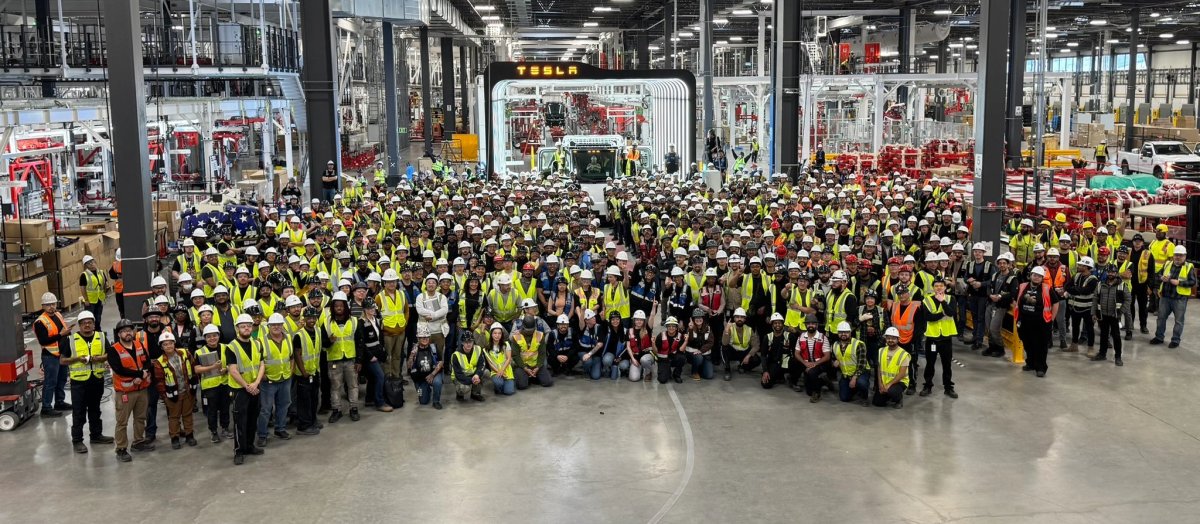

Tesla ha alcanzado un hito muy esperado en su impulso para electrificar el transporte pesado de mercancías. La compañía anunció que la primera unidad de su renovado Semi ha salido de una nueva línea de producción de alto volumen en Nevada, pasando de construcciones limitadas a una fabricación a escala industrial en una planta dedicada de 1.7 millones de pies cuadrados.
El hito fue confirmado por la cuenta @tesla_semi de la compañía en X. Aunque la Gigafactory Nevada está cerca, la nueva planta del Semi es una fábrica independiente diseñada específicamente para un gran aumento de producción. El objetivo a largo plazo de Tesla es una capacidad anual de 50,000 unidades, lo que representaría aproximadamente el 20% del mercado norteamericano de Clase 8.
Importantes mejoras de ingeniería
El modelo de producción de 2026 no es una repetición de unidades anteriores; introduce una extensa lista de mejoras de ingeniería. Una mejora clave es una reducción de peso de unas 1,000 libras, posible gracias al cambio a una arquitectura de bajo voltaje de 48 voltios y a la adopción de las celdas de batería 4680 de Tesla.

Tesla también ha incorporado actuadores de dirección "reforzados" del Cybertruck para ofrecer un sistema de asistencia de dirección totalmente eléctrico, sustituyendo la asistencia hidráulica anterior. La visibilidad mejora aún más gracias a que el nuevo Semi cuenta con 10 cámaras externas para ayudar a maniobrar en áreas estrechas.
Rendimiento estándar frente al de larga autonomía
El renovado Semi, presentado por primera vez el otoño pasado, estará disponible en dos configuraciones adaptadas a las necesidades de las flotas. Ambas versiones utilizan tres motores independientes en los ejes traseros, que suministran hasta 800 kW de potencia de tracción.
- Larga autonomía: 500 millas de alcance con tres módulos de batería.
- Autonomía estándar: 325 millas de alcance con dos módulos de batería. El paquete más pequeño acorta la distancia entre ejes y proporciona un radio de giro similar al de un Tesla Model Y.

La carga se simplifica gracias a la compatibilidad con los Megachargers de 1.2 megavatios de Tesla, que pueden recuperar el 60% de la batería en 30 minutos. Las primeras estaciones de carga públicas para el Semi han comenzado a abrirse, suministrando hasta 750 kW a los camiones que ya circulan por las carreteras.
Una nueva era para el transporte de carga
Tesla está ampliando la utilidad del Semi aplicando una versión de la tecnología Powershare del Cybertruck, lo que permite al camión alimentar remolques refrigerados directamente desde su batería principal y eliminar los generadores diésel independientes.
Con la producción en masa ya en marcha en la planta dedicada de Nevada, el Semi está listo para pasar de ser un proyecto llamativo a un verdadero disruptor del mercado. Respaldadas por incentivos gubernamentales y un menor coste total de propiedad, grandes flotas como Walmart y Costco ya están expresando su interés. Si Tesla alcanza su objetivo de 50,000 unidades, el estruendo del diésel en las carreteras podría ser reemplazado cada vez más por el suave zumbido de las transmisiones eléctricas.











Compartir:
Tesla anuncia que la versión FSD V14 Lite para HW3 se expandirá internacionalmente
Cómo Tesla resuelve las zonas muertas de GPS: reparando estacionamientos y preparándose para el futuro de Optimus