
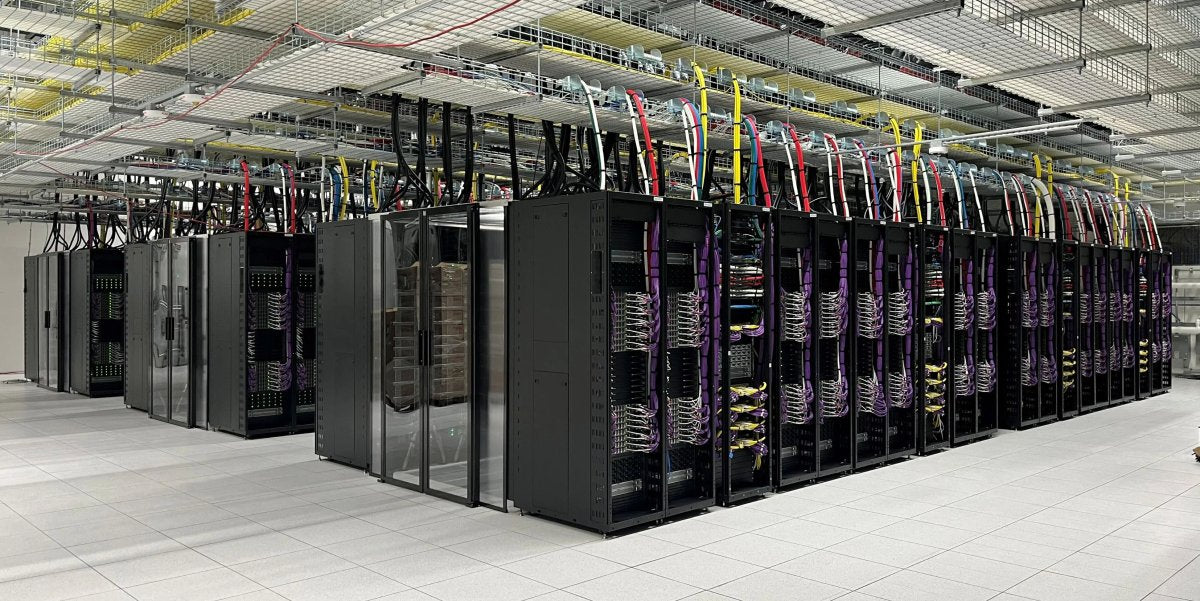

Tesla is rapidly expanding the AI infrastructure it uses to train next-generation autonomy models. The company’s Q2 2026 earnings report shows that installed training compute at Gigafactory Texas grew sharply during the first half of the year.
According to Tesla’s financial filings, on-site AI training compute in Texas more than doubled in megawatts (MW) from January to June, with most of the additional capacity coming online in Q2. The historical chart in the report indicates the company ended 2025 at roughly 115 MW of training capacity, increased to around 135 MW by the end of Q1 2026, and then nearly doubled to approximately 260 MW by the end of Q2, driven by newly activated supercomputing clusters.

Current training capacity is now many times greater than levels seen when the chart first rose in Q2 2022. Tesla also outlined its plans for the remainder of the year, projecting nearly 400 MW of AI compute at Giga Texas by year-end. If achieved, that would amount to a tripling of the site’s AI infrastructure over 2026.
“Cortex 2 supports the development of both vehicle and humanoid robot autonomy software and will ramp further over the rest of the year to ensure we have sufficient compute resources.”
What Tesla Uses Its Massive Compute Power For
Training large neural networks demands immense processing throughput. Tesla employs these clusters to ingest billions of video frames collected from its global vehicle fleet, training end-to-end neural networks that power consumer Full Self-Driving software and the driverless Robotaxi service.
The expanded capacity also supports Optimus, enabling training for physical dexterity, spatial awareness, and real-world task execution in humanoid robots.
More compute allows engineers to train larger models faster and to iterate on software builds more frequently.
Fueling the Next Generation of Autonomous Vehicles
The additional compute directly supports multiple major software initiatives across Tesla’s autonomy stack.

On the most recent earnings call, executives confirmed that Tesla Robotaxis are already running FSD v15, bringing the next architectural leap to active fleets early. Tesla also revealed that its Robotaxi vehicles have driven over 380,000 unsupervised miles across multiple cities.
Additionally, Elon Musk announced that FSD is coming to the Tesla Semi. Tesla’s expanded processing resources will likely also contribute to training neural nets to handle a massive Class 8 commercial truck.
The extra compute is also fueling a shift in model-training strategy: current-gen consumer HW4 vehicles actually run distilled FSD models derived from flagship models trained for the Cybercab. With Cortex 2 continuing to ramp, this should enable faster model iterations for both commercial fleets and consumer vehicles.






Share:
Tesla FSD Safety Stats From Europe: 5.2x Safer Than Humans
Exclusive: Tesla Model 3 and Model Y Are Getting Upgraded Wireless Phone Chargers