
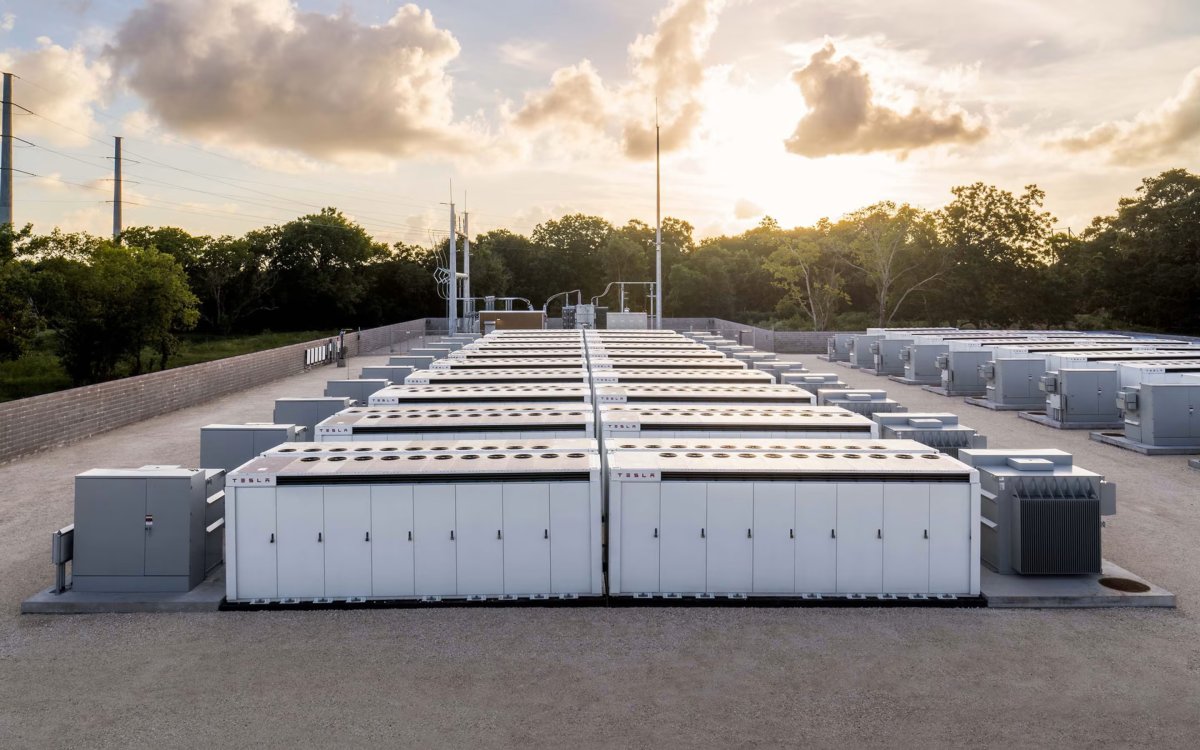

According to new documents submitted to the US Patent and Trademark Office, Tesla has applied to trademark a product named MEGAPOD. The filing, entered on June 18th, 2026, describes an all-in-one modular system designed to house, cool, and run AI workloads.
MEGAPOD is Mega Portable
Megapod is not a software framework; it is a self-contained, portable data center. The filing describes it as:
"Modular data center hardware systems for artificial intelligence computing, comprised of computer servers, computer hardware for artificial intelligence processing, computer networking hardware, electrical power distribution units, and cooling systems, sold as a unit; self-contained modular computing hardware systems for artificial intelligence workloads"
Tesla is bundling compute servers, networking infrastructure, cooling, and power distribution into a standardized, shippable enclosure, similar to Megapack’s format. The Megapack’s ease of transport and installation has been key, and the same approach will now be applied to the Megapod.
Taking Advantage of Idle Superchargers
Building traditional data centers can be slow, constrained by the months or years needed to secure grid interconnections and permits. Tesla already operates a distributed network of thousands of high-capacity power connections: the global Supercharger network.
Supercharger stations are engineered to support large spikes in demand when many vehicles plug in simultaneously, but utilization varies. During late-night hours or at remote highway locations, these paid-for power hookups often sit idle.
By placing a Megapod at an underutilized Supercharger site, Tesla can dynamically switch between computing and charging. When vehicles arrive, the compute cluster can throttle down or pause to free power for charging. When the stalls are empty, the Megapod can ramp back up, keeping this infrastructure productive 24 hours a day.
Peak-Load Arbitrage
This decentralized approach is even stronger alongside Tesla’s expanding combination of Megapacks with Superchargers. An increasing number of modern Supercharger stations are being co-located with Megapack installations to hedge against demand charges and stabilize grid inputs.
Pairing a Megapod with a Megapack enables peak-load arbitrage. During off-peak nocturnal hours, when grid electricity prices drop or sometimes turn negative, on-site Megapacks can store low-cost power. Megapods can then use this stored electricity to run intensive AI training cycles or process localized edge computing data without drawing expensive peak-rate power during the day.
Building a Distributed Compute Web
In March, Elon Musk outlined a roadmap for a distributed compute web. His remarks focused primarily on the collective idle power of AI4-equipped vehicles, and they also pointed to the Megapod.
As Tesla scales its AI training for FSD and Optimus, its compute needs will continue to grow. Instead of constructing single gigawatt-scale data centers that strain regional electrical grids, the Megapod supports a resilient, weather-resistant, decentralized supercomputer network.







Teilen:
Tesla Supercharger Predicted Availability Now Available in Google Maps
Tesla Semi Includes Vehicle Dynamic Controls That Can Prevent Jackknifing [VIDEO]