
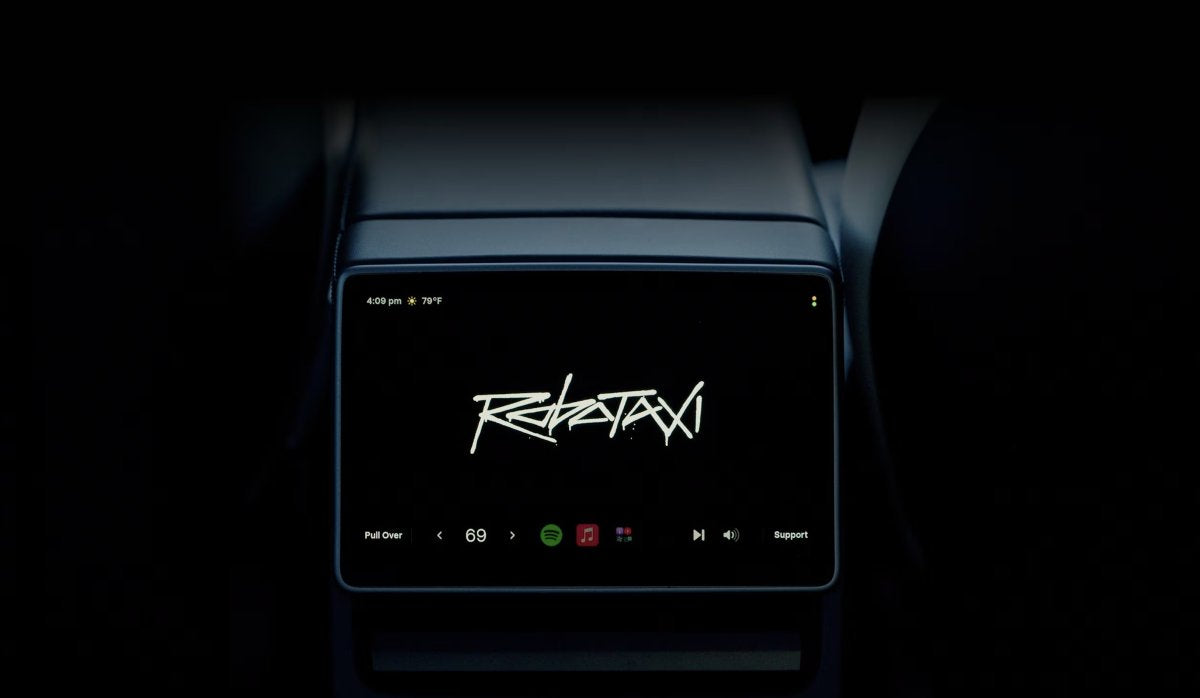

On June 22, 2025, a small fleet of specially equipped Model Y crossovers began giving rides in Austin, Texas. What started as a quiet autonomous ride-hailing pilot has, over 12 months, become a growing commercial network that is steadily phasing out human supervision.
The Early Summer Pilot and Mobile App
At launch in Austin, access was tightly controlled through an invite-only program; without a direct invitation, the Robotaxi app could not be downloaded. Tesla expanded carefully by sending out more invites to local riders to collect early validation data.

During the first weeks, user feedback drove rapid fixes and UI updates, adding features such as walking directions and mid-trip destination editing. Pricing was experimental: rides began at a flat $4.20 per trip, shifted by mid-July to a $6.90 flat fee, and moved to a dynamic pricing model by the end of July. Despite the changes, per-mile costs remained far lower than traditional ride-hailing.
Coastal Expansion and Going Public on iOS
On August 1, 2025, the service expanded to the Bay Area with higher fares and strict human supervision via hands-off safety drivers. In September, commercial vehicles in Austin gained highway access for the first time, and the Robotaxi app appeared on the iOS App Store with a public waitlist.
Dropping Safety Drivers
In early January 2026, after about six months of trips overseen by a human monitor in the front passenger seat, Tesla began limited uncrewed rides in Austin. Passengers could ride alone while the vehicle navigated using its cameras and onboard computer.
As driverless operations matured, pricing standardized following the most recent increases earlier this spring, settling at a $3.00 base fare plus $1.40 per mile. In April 2026, Tesla launched fully unsupervised service in Dallas and Houston, skipping the safety-driver phase entirely. A few days later, the Robotaxi app launched on Android, ending nearly a year of iOS exclusivity.

In May, the network introduced unsupervised night rides to test low-light performance. Earlier this month, the driverless service area expanded to cover the entire Austin geofence, enabling pickups across the Austin metro area.

Safety Records and the Cybercab Future
Federal safety filings show no major accidents involving Tesla Robotaxi vehicles over the last twelve months. In the rare collisions that did occur, most involved a human-driven vehicle rear-ending a Robotaxi at a stoplight or intersection.

Modified Model Ys sustained operations through year one, but the long-term plan centers on dedicated hardware. The Cybercab, Tesla’s purpose-built autonomous vehicle, is already rolling out of assembly lines at Giga Texas. Public documents detailing the Cybercab’s official specs list a 617-pound maximum weight rating for the two-seat cabin configuration.

The next phase of expansion depends on software. Tesla plans to wait for FSD v15, expected later this year or early next year, before initiating large-scale U.S. rollouts. In the meantime, staging activity has appeared in prospective markets such as Las Vegas and Arizona. Within a year, Texas operations progressed from a limited pilot to a broader transit option.



Teilen:
How Tesla's New FSD Streak Feature is Turning Self-Driving into a Game (And Why Owners Are Obsessed)
Tesla Crashes Into Texas Home, Driver Blames Autopilot [VIDEO]