
New Jersey bill would require Tesla robotaxis to add sensors beyond cameras
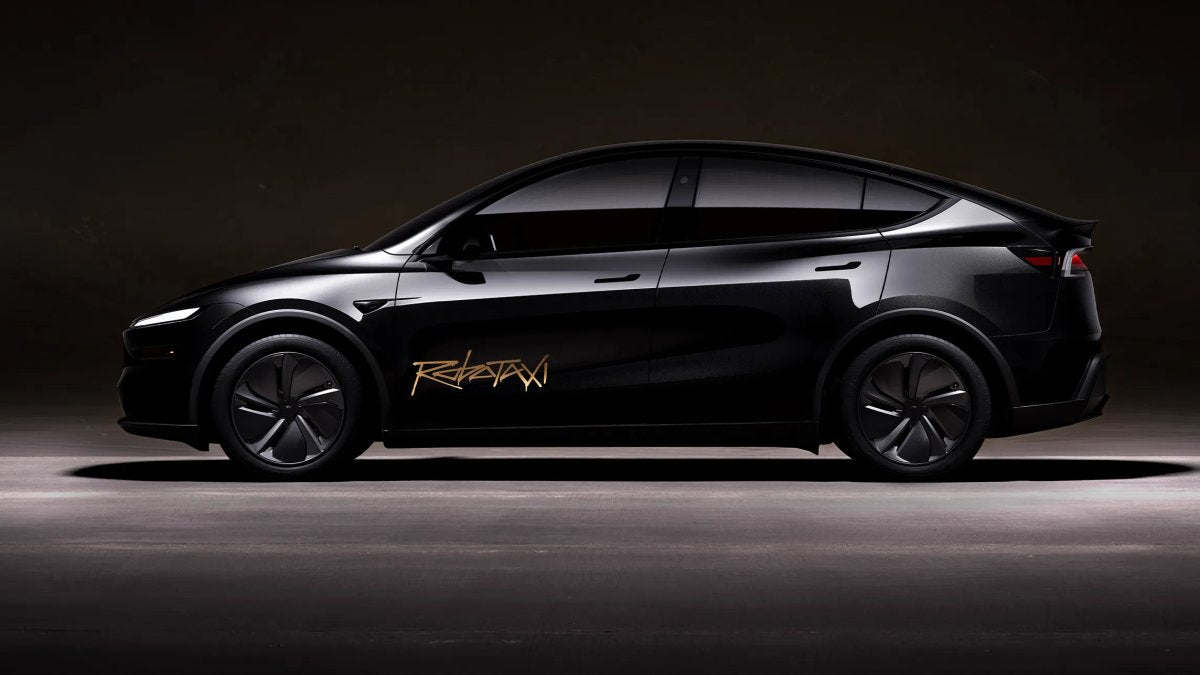
Tesla’s plan to operate a fleet of vision-only autonomous vehicles faces a major obstacle in New Jersey. A bill moving through the state could prevent the Cybercab and other Tesla Robotaxi vehicles from operating unless the sensing approach used by Full Self-Driving is expanded beyond cameras.
According to a recent report from Electrek, Bill S1677 would mandate multiple sensors on any driverless commercial vehicle, directly challenging Elon Musk’s long-held camera-only strategy for autonomy.

“Camera plus two” requirement
The proposal sets up a three-year pilot program for autonomous commercial networks. A key provision requires “camera plus two distinct sensing modalities,” meaning driverless commercial vehicles must add at least two additional types of sensors beyond cameras. In practice across the industry, that usually means combining cameras with radar and LiDAR.

Competitors such as Alphabet’s Waymo and Amazon’s Zoox already employ this three-sensor stack to build redundancy. Musk has dismissed radar and LiDAR for self-driving, calling them a crutch. While Tesla still uses LiDAR equipment to collect ground-truth data on its validation rigs, production vehicles don’t use it to drive. Instead, Tesla’s FSD software relies entirely on cameras to create 3D models of the surroundings — a task typically handled by LiDAR in many other self-driving systems.

The hardware rules would not end with the pilot. Even after the three-year period, operators would not be permitted to remove the added sensors. The pilot is intended to help the state determine how to integrate autonomous vehicles into traffic laws. After the pilot concludes, the NJ Motor Vehicle Commission will have six months to deliver a final evaluation to the Governor and Legislature to codify these safety guidelines — including the sensor requirements — into permanent state traffic laws.
Strict oversight and missing steering wheels
Beyond sensors, the bill lays out additional conditions for commercial deployment:
- Vehicles must complete 50,000 miles of supervised in-state testing with a human safety driver before going driverless.
- Operators must submit full safety certifications, insurance proof, and law enforcement interaction plans.
- All collisions must be reported to the New Jersey Department of Transportation within five days.
Another clause presents a separate challenge for Tesla: Bill S1677 favors vehicles that retain traditional controls such as a steering wheel and pedals. That’s problematic for the Cybercab. Production Cybercab units ultimately intended for Tesla’s Robotaxi service just started testing on public roads in Austin, and they not only omit radar and LiDAR but also forego steering wheels, pedals, or any human controls.


This approach contrasts with states where Tesla is already cleared to operate fully driverless, camera-only robotaxis. For example, Tesla was able to self-certify FSD-driven Robotaxi vehicles as SAE Level 4 autonomy-compliant in Texas under a new law that permits commercial driverless operation with minimal state-level hardware requirements.
What this means for New Jersey Tesla owners
State Senator Andrew Zwicker, the bill’s sponsor, said, “This is not anti-Tesla. I’m pro-New Jersey safety.” Tesla had previously pushed back via alerts sent to customers in the state, which led to confusion and caused some drivers to think their personal vehicles might be banned or that FSD would be disabled.

Zwicker clarified that the bill applies only to fully driverless commercial fleets. Consumer vehicles are unaffected — at least until unsupervised FSD becomes available and Tesla begins allowing owners to rent out their cars for autonomous ride-hailing on the Robotaxi network. With New York reportedly considering an identical bill, the regulatory debate over vision-only autonomy is only just beginning.


Teilen:
Tesla Starts Rolling Out FSD V14 Lite Internationally
Tesla 2025 Impact Report: 37M Tons of CO2 Avoided, 14,000 Tons of Batteries Recycled & More