
The autonomous ride-hailing field is becoming increasingly competitive as companies scale their driverless fleets. Tesla recently marked a key milestone following the first year of its Robotaxi service, which launched in Austin last summer and has been fully unsupervised for half a year. As Tesla works to expand its robotaxi service area and compete with Alphabet's Waymo, Amazon-owned Zoox has introduced an updated design of its custom-built carriage.
The Production-Ready Upgrades
According to details shared on X by industry watcher @SawyerMerritt, Zoox has revealed a refreshed version of its robotaxi. This iteration is slated to be the official variant moving into mass production at the company's Hayward, California, manufacturing facility.
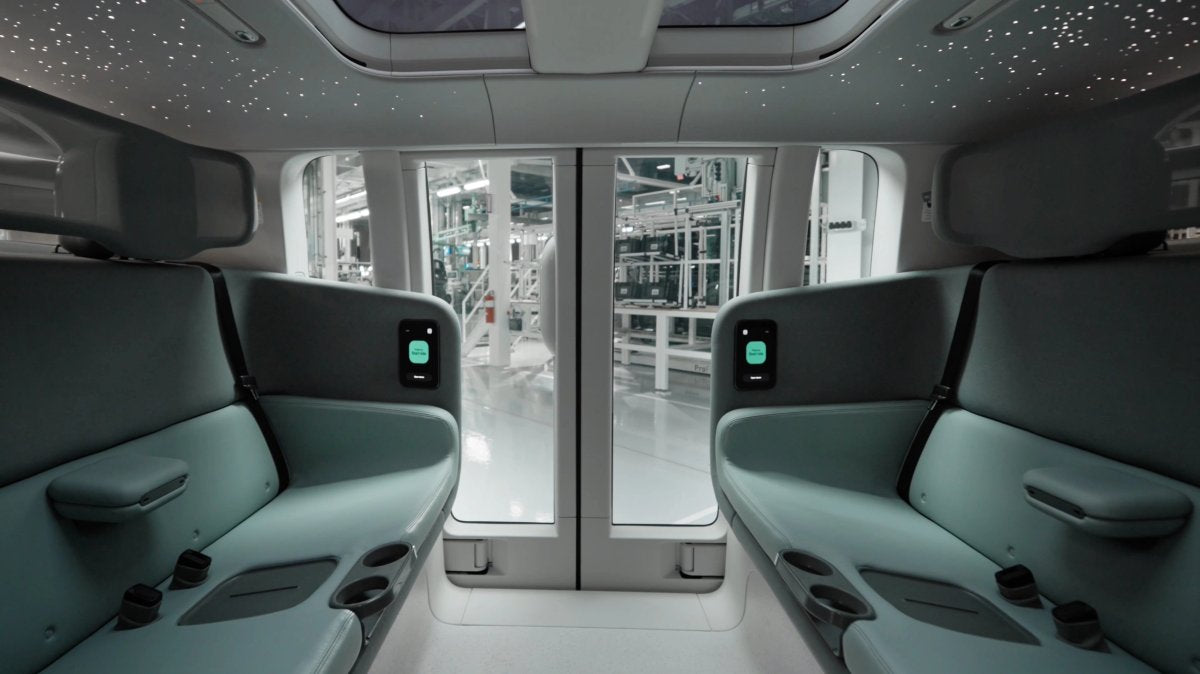
While the underlying architecture is unchanged, the update focuses on practical improvements for riders. The cabin features redesigned seats with added padding, more ergonomic shapes, and an updated headrest. The interior adopts a new color palette with aloe green seating alongside stone-gray flooring and trim.

The lighting arrangement has been reworked to brighten the cabin, helping riders spot personal items like phones, wallets, and keys when they exit. A refreshed touchscreen offers higher brightness and clarity. For devices, the wireless charging pad now has a fluted surface to keep phones more secure while the vehicle is moving, and the cupholders are larger for everyday convenience.

Audio and communication systems were upgraded as well. The sliding doors integrate improved speakers and microphones, paired with a better two-way audio system to enhance communication between passengers and remote support staff. Externally, new rotating bidirectional reflectors were added to bolster visibility and interaction with other road users.
Sticking to the Core Framework
The core specifications remain intact. The vehicle operates without a steering wheel, pedals, or traditional driver controls. Its bidirectional layout lets it drive equally well in either direction, serving a four-passenger cabin with face-to-face bench seating. The autonomous safety stack continues to use a mixed sensor suite that includes cameras, lidar, radar, and long-wave infrared sensors.

Zoox says it has already provided rides to over 500,000 people as it prepares for large-scale commercial operations.
"These robotaxis will join the fleet across our markets and become available to riders later this year as they come off the production line. We have the capability to ramp production up to a rate of 100 vehicles a week to support our expansions this year, subject to regulatory approval."
With Zoox's production lines gearing up and Tesla planning wide-scale expansions of its Robotaxi network, the race to deploy driverless transportation is entering an intense rollout phase.


Teilen:
Tesla FSD V14 Skips Model Y L in Australia — For Now
Tesla Partners With Sunrun, Renew Home for 16 GW Virtual Power Plant