
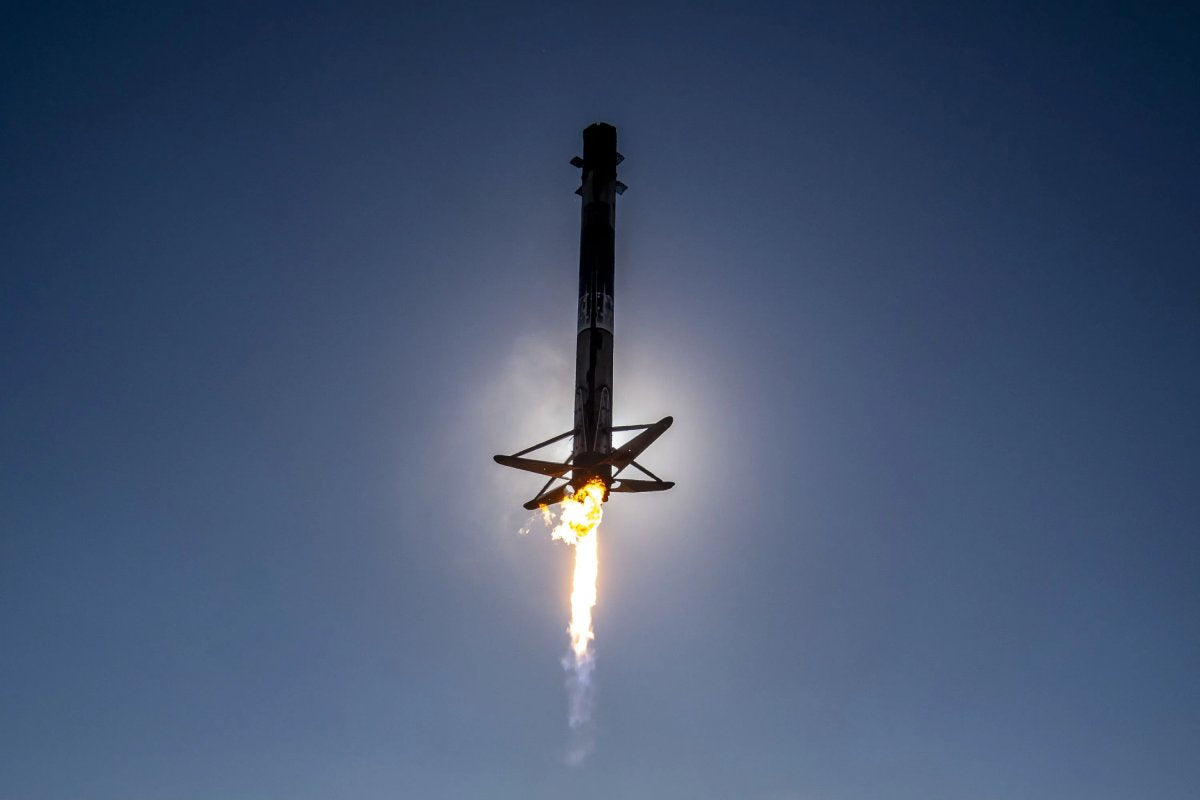

Competition over orbital resources is intensifying. On March 6, Amazon’s satellite internet division, now renamed Amazon Leo, filed a 17-page petition with the Federal Communications Commission (FCC) urging the agency to dismiss SpaceX’s proposal to launch up to 1 million satellites.
SpaceX submitted its application in late January 2026, outlining a massive constellation of solar-powered orbital data centers designed to process AI workloads in space. Amazon contends the plan is aspirational rather than a concrete deployment strategy, describing it as a speculative placeholder that lacks the technical grounding required for regulatory approval.
FCC Responds
FCC Chairman Brendan Carr criticized Amazon’s petition, suggesting the company should focus on meeting its own deployment obligations rather than targeting competitors. Carr said Amazon is projected to fall roughly 1,000 satellites short of its upcoming Kuiper constellation milestone, while other operators are actively launching at scale.
The Centuries Math
Amazon’s filing argues the proposed timeline is infeasible under current aerospace logistics and backs this with calculations based on today’s relatively rapid launch cadences.
In 2025, which was a record-breaking year for spaceflight, only 4,526 satellites were launched into orbit worldwide. At that pace, Amazon notes it would take more than 220 years to deploy SpaceX’s proposed 1-million-satellite constellation.
Assuming a five-year lifespan for each satellite, 200,000 satellites would need to be replaced every year just to maintain the system. That replenishment alone is 44 times the global launch output of 2025 (of which SpaceX is greater than 90%).
Conversely, SpaceX’s case hinges on one factor Amazon does not address: Starship. If Starship V3 becomes as reusable as Falcon 9 in the near future, the dramatically higher capacity could make the required launch cadence more attainable.
Warehousing Orbital Real Estate
Beyond the numbers, Amazon accuses SpaceX of exploiting the regulatory process by using a vague filing to claim priority over a vast share of orbital resources without a genuine intent to deploy.
According to Amazon, the application omits critical radio-frequency and orbital parameters. Instead of specifying the full constellation, SpaceX allegedly provided partial information for just three satellites, representing only 0.0003% of the proposed system.
The filing also states that operations could occur anywhere from 500 km to 2,000 km in altitude, with an additional 100 km tolerance, which Amazon argues would let SpaceX reserve a huge portion of low-Earth orbit and force other operators to design around a constellation that may never materialize.
Industry Backlash
The FCC’s deadline for public comments on the application closed on Friday, drawing over 1,200 submissions—an unusually high volume for a satellite filing.
Alongside Amazon, rival operator Viasat and the American Astronomical Society submitted objections, citing serious concerns about space safety, collision risks, and the potential for substantial orbital debris and light pollution from a million-satellite network.
Impact on Tesla
The implications extend to Elon’s other companies. Elon has proposed a similar roadmap for Tesla, envisioning space-based data centers to support the FSD’s own massive artificial intelligence workloads.
In the initial phases of this off-planet approach, Tesla would use orbital data centers built by SpaceX and xAI to access additional neural network training capacity as needed.
To supply the energy for this build-out, Tesla and SpaceX are working to drastically expand domestic solar panel manufacturing. Elon recently announced a target to build up to 100 gigawatts of annual solar production capacity in the U.S. within the next three years to power these energy-intensive satellites.










Teilen:
Judge Dismisses Odometer Class-Action Lawsuit Against Tesla
Tesla Sued Over Cybertruck FSD Crash: Lawsuit Blames Musk