
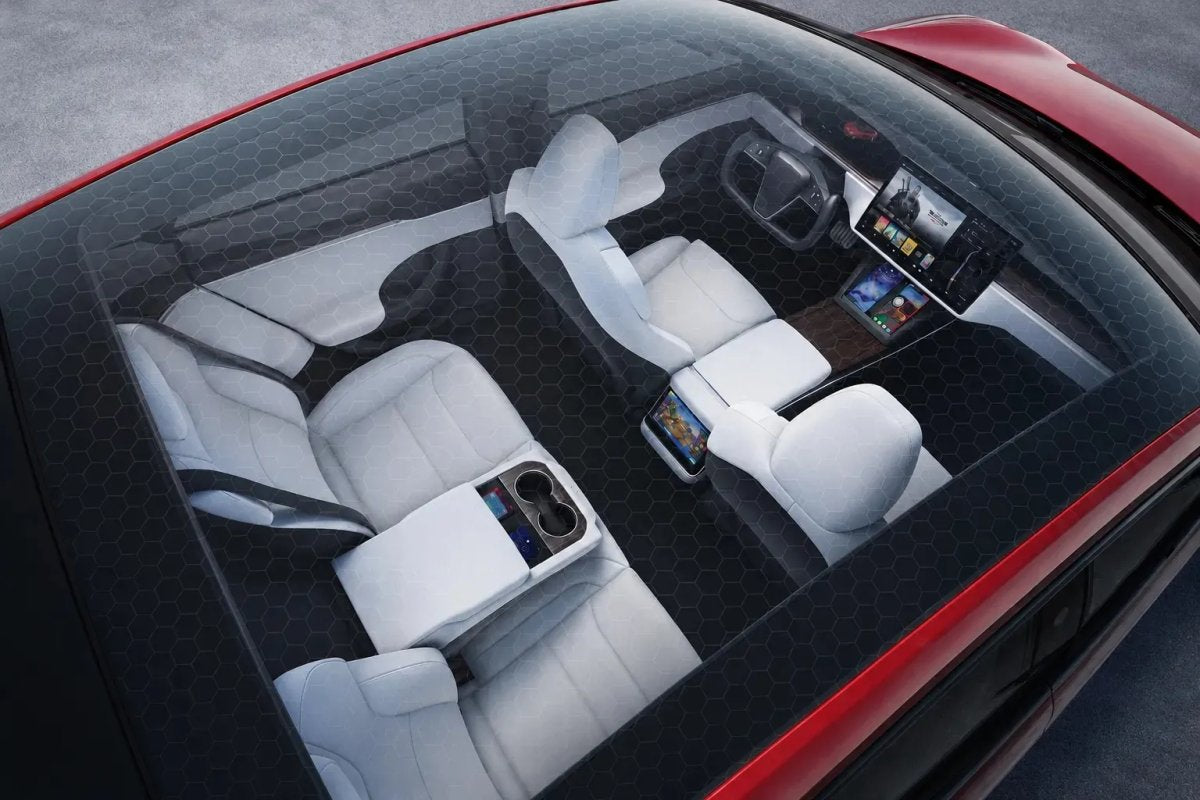
Tesla Patents Perforated Glass Roof with Active HVAC and Acoustic Tuning

Tesla has been granted a U.S. patent titled "Automotive Perforated Insulated Glass Structure”. The patent describes a dual-layer panoramic roof engineered to actively regulate temperature while also reducing road and wind noise.
The Perforated Architecture
The design replaces a conventional single-pane roof with a multi-layer assembly. A solid exterior glass layer shields the vehicle from the elements, while the interior layer facing occupants is perforated with thousands of precisely drilled holes. A gap sits between the two panes; according to the patent, this void can range from 0.5 millimeters to 6 millimeters, and the perforations themselves range from 0.05 to 2 millimeters in diameter. This cavity underpins two core benefits for the cabin.
Active HVAC Integration

The primary role of the internal gap is thermal management. The filing outlines connecting the vehicle’s climate control system directly to the roof structure so that hot or cold air is pumped into the space between the panes. Pressurized air then flows uniformly through the perforations into the cabin, creating a thermal barrier at the source of heat. Whereas automakers have traditionally relied on tints and UV coatings to counter greenhouse heating from panoramic glass, ventilating the glass itself can neutralize solar heat gain before it reaches passengers, potentially enabling larger and clearer roof glass in future models.
Acoustic Dampening
The perforated assembly also functions as an acoustic dampener. Since electric vehicles do not have an engine masking ambient sounds, wind and tire noise are more noticeable. The patent explains that the roof can be tuned to absorb specific frequencies by adjusting variables such as perforation diameter, the thickness of the inner glass layer, and the gap size—allowing engineers to target the characteristic pitch of highway wind noise.
Honeycomb Matrix
The void between the panes can be partitioned by hexagonal or honeycomb-shaped walls that link the glass layers. These cells add structural support to keep the dual-pane system rigid and resistant to shattering, while also channeling airflow for even distribution across the roof. Additionally, the small chambers act as acoustic traps that absorb sound energy before it can propagate into the cabin.
The Future of Cabin Comfort
This approach aligns with a minimalist interior by moving primary climate delivery into the ceiling. Distributing conditioned air across the roof’s surface, rather than directing it forcefully from the dashboard, can cool the cabin more efficiently and with less noise.



















Condividi:
Tesla Relaxes Driver Monitoring With FSD v14.3.3
How to Watch Tesla's Model S/X Signature Edition Delivery Event