
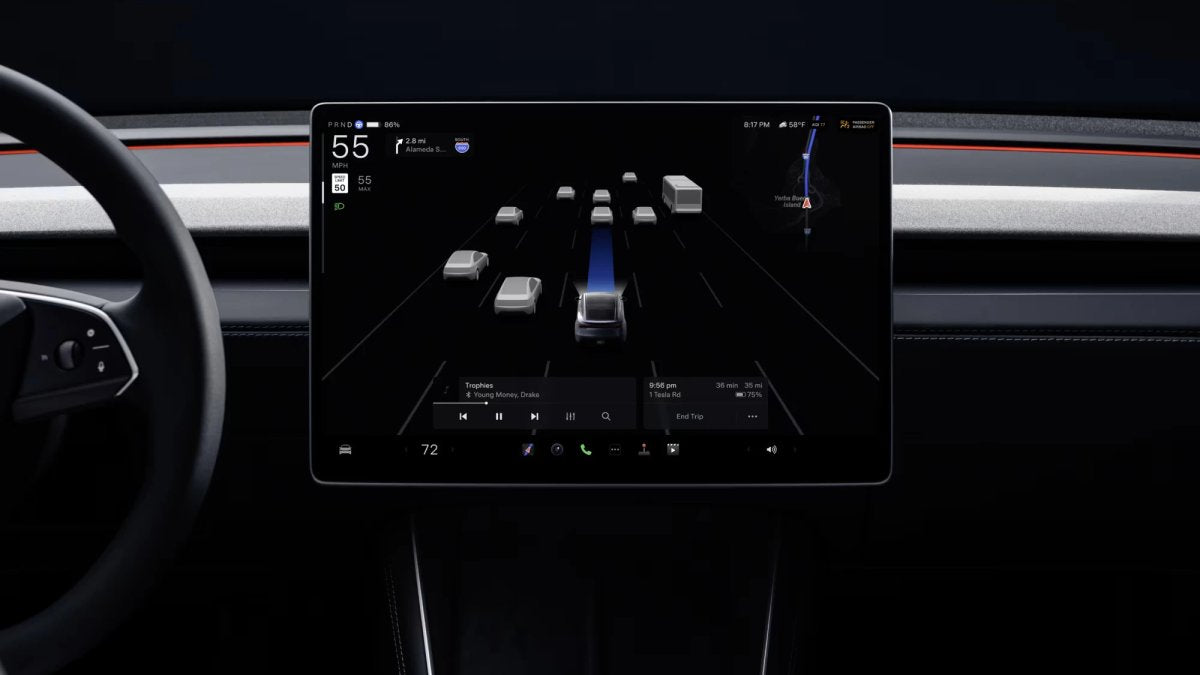
Should Tesla Allow FSD Transfers on Totaled Vehicles?

Automakers have typically advanced at a measured pace, but Tesla treats vehicles like software platforms, iterating quickly through continuous updates.
Tesla recently transitioned from selling FSD as a one-time purchase to a subscription-only model in several regions around the world, including North America and Europe.
While that shift supports long-term revenue, it creates a punitive gap for owners who previously bought FSD outright. If a vehicle carrying a lifetime FSD license is declared a total loss by an insurer, the owner forfeits a valuable, irreplaceable asset that could one day be worth tens of thousands of dollars.
The Insurance Valuation Disconnect
Traditional auto insurance adjusters excel at pricing damaged hardware—bent aluminum, shattered glass, or even degraded lithium-ion batteries—but they are not equipped to assess the value of proprietary software licenses.
When a Tesla with a lifetime FSD package is totaled, insurers seldom cover the true replacement cost of the software. In many cases, adjusters assign only a few hundred or a few thousand dollars to the suite, overlooking the historical purchase price of FSD and the potential future value of autonomy.
Because the purchase option for FSD has already been sunset, customers no longer have a way to re-buy the software as a one-time purchase.
Reputation for Totaling
For Tesla owners, the situation is even more frustrating. Insurers are known to total many EVs—Tesla or otherwise—partly to avoid higher repair costs.
A Tesla with FSD purchased could be worth tens of thousands in the future as FSD subscription prices climb, but if insurers ignore the value of FSD, a vehicle may be totaled for significantly less than its true worth.
Safety, Retention, and Loyalty
This dynamic creates tension between safety outcomes and customer loyalty. Tesla’s engineers have spent over a decade developing some of the safest passenger vehicles on the planet.
When a driver survives a severe crash unharmed, the instinct is to stick with the brand and immediately buy another Tesla.
However, that goodwill dims upon re-entering the purchase process, especially for those who previously held lifetime FSD.
To regain the same functionality in a replacement car, owners must subscribe to a $99 per month service that is only going to go up in the future.
Zero-Cost Solution
The strongest case for permitting FSD transfers after a total loss is that it effectively costs Tesla nothing. Unlike replacing physical hardware—such as future HW3 retrofit plans—moving a digital authorization from one VIN to another requires no raw materials, no manufacturing bandwidth, and no logistical overhead. The software already exists, and the customer has already paid for it.
By making FSD transfers permanent in total-loss scenarios, Tesla would close a customer service and loyalty gap created by current policies and by insurance practices.
As Tesla continues to transition towards a services company, the number of legacy vehicles with permanent FSD licenses will naturally decline. Grandfathering these rare, catastrophic cases would not materially impact Tesla’s future subscription targets; instead, it would strengthen loyalty among customers who helped advance autonomy and prevent them from being left behind when their vehicles reach an unfortunate end.
The article was adapted from original reporting by Not a Tesla App.


Condividi:
First Look at Waymo's New Robotaxi UI and Gemini Integration
Tesla FSD V14.1 Lite Rolls Out: First Impressions