
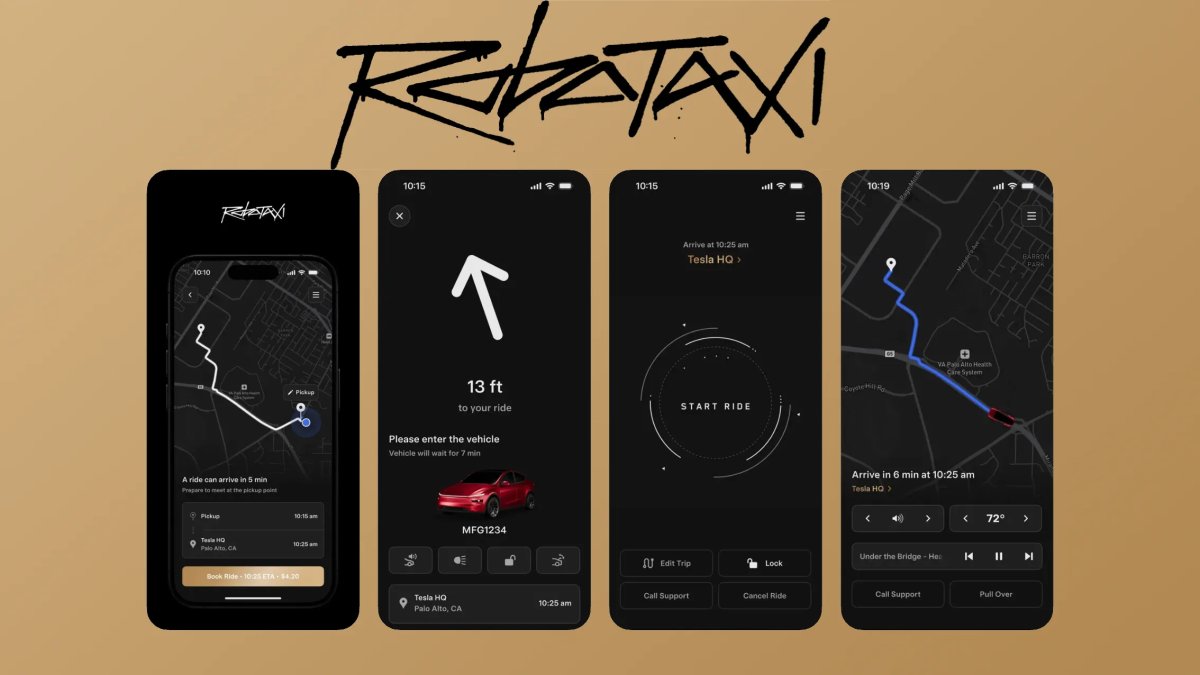
Tesla has broadened its fully autonomous ride-hailing operations in Texas. The official Tesla Robotaxi account on X confirmed that unsupervised service now covers the entire Austin geofence.
A Multi-Stage Austin Expansion
The rollout appears to have unfolded in two phases over Wednesday morning. Local enthusiast @iamjesserichard spotted the change by probing the limits of the service area in the Robotaxi app, requesting an unsupervised ride to destinations beyond the previous boundary. Typically, selecting a drop-off outside the permitted perimeter results in a "route unavailable" message.

Initial tests indicated that the operational limits for unsupervised Robotaxi vehicles had more than doubled. A few hours later, while riding in an unsupervised Robotaxi toward the northern edge of Tesla’s wider Austin geofence, he found that driverless rides had opened up entirely across the area. He followed up noting, “it’s now updated to the whole geofence!"
Nevermind it’s now updated to the whole geofence! https://t.co/mrzj240WS8
— Jesse Richards (@iamjesserichard) June 3, 2026
Aligning the Service Borders
Tesla has run a mix of supervised and fully autonomous vehicles in Austin since launching public Robotaxi service there last summer. Although the company has periodically expanded the Austin geofence, including the smaller unsupervised zone, driverless trips had remained confined to a limited portion of the overall Robotaxi map—until now.

This update marks the first time the unsupervised operating area fully matches the main service region. With the driverless boundary now aligned to the broader geofence and spanning the Austin Metro area, future growth could extend both borders in tandem.
The geographic expansion follows recent operational changes. Last month, Robotaxi vehicles in Austin began offering rides at night. The platform has also scaled to new markets, with unsupervised service launched in Houston and Dallas earlier this spring alongside an Android version of the Robotaxi app.

Broader rollouts into additional cities remain dependent on future software milestones. Tesla has said that major commercial Robotaxi expansions will wait until Full Self-Driving (FSD) v15, which promises a “major architectural improvement” and a 10-billion-parameter neural network upgrade. The company is also preparing supporting infrastructure for the envisioned fleet, including a maintenance and dispatch hub in Irving, Texas.



Partager:
Tesla Dashcam / Sentry Mode: How to Get 24 Hours of Rolling Footage
What to Expect from Tesla's FSD V14 Lite This Month