

Elon Musk outlined a major collaboration between Tesla and his AI startup xAI. The effort, referred to as “Macrohard” or “Digital Optimus,” aims to automate complex office workflows by observing activity on a computer screen and imitating human inputs. The initiative follows Tesla’s recent $2 billion investment into xAI.
How Digital Optimus Works
The system pairs Tesla hardware for real-time execution with the reasoning capabilities of xAI’s Grok model. Musk said it uses a dual-process approach that blends “instinct” with “reason.”
“Grok is the master conductor/navigator with deep understanding of the world to direct digital Optimus, which is processing and actioning the past 5 secs of real-time computer screen video and keyboard/mouse actions,” Musk explained. He further described the cognitive split within the software: “You can think of it as Digital Optimus AI being System 1 (instinctive part of the mind) and Grok being System 2 (thinking part of the mind)”.
Macrohard or Digital Optimus is a joint xAI-Tesla project, coming as part of Tesla’s investment agreement with xAI.
— Elon Musk (@elonmusk) March 11, 2026
Grok is the master conductor/navigator with deep understanding of the world to direct digital Optimus, which is processing and actioning the past 5 secs of…
Designed for efficiency, the project will run primarily on Tesla’s AI4 hardware, which costs about $650, while turning to more expensive Nvidia hardware from xAI only when needed. Musk believes this setup will enable the AI to scale to the point where it can emulate the function of entire companies, inspiring the “Macrohard” nickname.
Applying the Instinct vs. Reason Framework
The “System 1” and “System 2” paradigm mirrors work Tesla has been pursuing for its vehicle software. Last fall, Tesla began adding high-level reasoning to its Full Self-Driving (FSD) stack to better handle situations that pure imitation struggles with, such as interpreting a construction worker’s hand signals.
To bridge large reasoning models and limited on-device compute, Tesla uses “distillation.” Massive “teacher” models are trained in data centers to generate reasoned solutions, which are then distilled into smaller “student” models that can run locally on a car’s chip. Digital Optimus follows the same playbook: xAI’s infrastructure serves as the reasoning “teacher,” while local Tesla hardware performs the real-time actions.
A Converging Path for Tesla and xAI
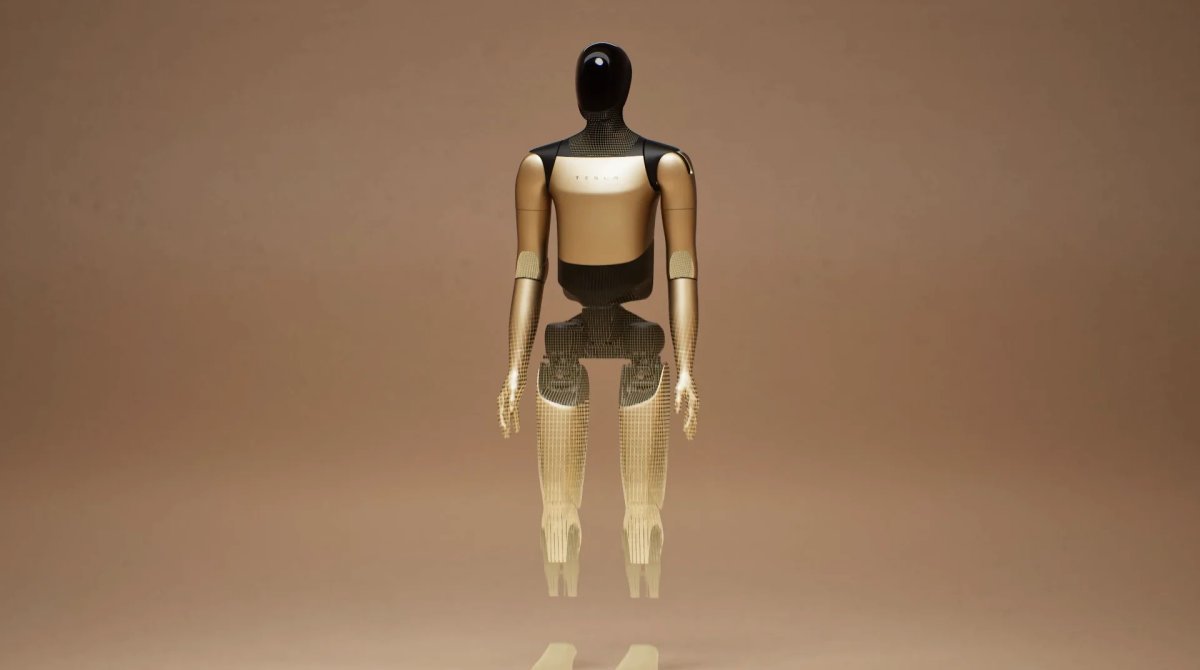
The collaboration aligns with plans to integrate Grok into Tesla’s Optimus robot. Leveraging Tesla’s computer vision expertise, Digital Optimus is intended to “see” and operate any software interface the way a human employee would.
The announcement also arrives as Musk’s broader AI efforts accelerate; SpaceX recently acquired xAI to support ambitions for data centers in space. Musk characterized the system’s current standing by saying, “No other company can yet do this”.


Partager:
Production Cybercab: Larger Cabin Camera, Interior Trunk Cam, First Look at Door and Hazards Button
Judge Dismisses Odometer Class-Action Lawsuit Against Tesla