
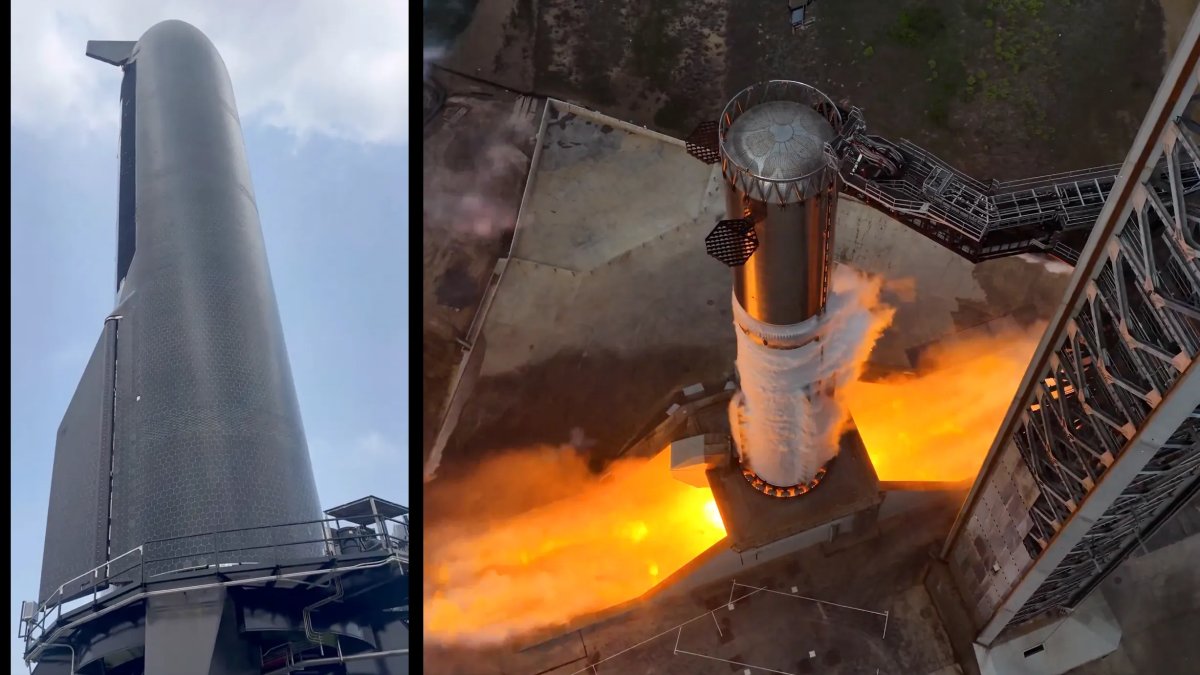

SpaceX approche du premier vol de son Starship V3 de nouvelle génération. Hier, l'entreprise a effectué un essai statique prolongé du booster Super Heavy 19 à Starbase, au Texas.
Parallèlement, les équipes ont commencé à déplacer le Ship 39 vers la tour de lancement. Avec ces deux étapes finales avant l'assemblage en cours, SpaceX se prépare à entamer l'empilement sur le site de lancement pour le Vol 12, le premier lancement du Starship V3.
Starship Flight 12: Booster 19 Pre-Flight Static Fire (and wow!).
— NSF - NASASpaceflight.com (@NASASpaceflight) 7 mai 2026
Came after DSS fired up, stopped (no deluge), looked like an abort... then minutes later, recycled, DSS and Deluge - and FIRE!
Live on X and YT:https://t.co/fUrUzOpSa4 https://t.co/2j3vonEUbF pic.twitter.com/24QAfYh6M3
Essai statique du Booster 19
Le Booster 19 a allumé ses moteurs sur la nouvelle plateforme de lancement orbital du Pad 2 pendant environ 14 secondes. Cette combustion prolongée a permis de vérifier l'état du système de propulsion tout en soumettant à un test de contrainte l'infrastructure au sol améliorée.
🚨SPACEX BOOSTER 19 STATIC FIRE IN SLOW MOTION & 4K
— What about it!? (@FelixSchlang) 7 mai 2026
Seeing the shockwaves create whole areas of condensation for fractions of a second at a time is mesmerizing.
This might very well be the best footage Jordan has ever recorded for WAI.
Enjoy!!! 🔥🔥🔥
📸@Jordanguidry6 pic.twitter.com/OkpGd72Uku
Le nouveau système de déluge d'eau a bien fonctionné face aux charges thermiques et acoustiques intenses, protégeant le béton en dessous. Maintenir le pad intact est essentiel pour atteindre à terme une cadence de lancement comparable à celle du Falcon 9 avec le Starship, ce qui est nécessaire pour les projets d'Elon Musk concernant les centres de données orbitaux.
Super Heavy Booster static fire!@StarbaseTX pic.twitter.com/yCHm3Po2Do
— Mark Federschmidt (@BoosterTribe) 7 mai 2026
L'avantage du Raptor 3
Le Vol 12 est remarquable pour bien plus qu'une simple démonstration atmosphérique. Le Ship 39 et le Booster 19 sont les premiers prototypes du Starship V3, caractérisés par l'adoption complète des moteurs Raptor 3 de SpaceX, que le Ship 39 a testé en statique le mois dernier.
SpaceX have finally posted the footage of Ship 39's static fire. pic.twitter.com/8ZKJ0tUxO5
— Booster 10 (@booster_10) 24 avril 2026
Chaque Raptor 3 produit environ 280 tonnes de poussée. Avec les 33 moteurs allumés simultanément sur le Booster 19, l'étage délivre 9 240 tonnes de poussée, ce qui en fait la fusée la plus puissante jamais allumée. Cette capacité permet au Starship V3 de transporter plus de 100 tonnes en orbite terrestre basse dans une configuration entièrement réutilisable, une avancée nette par rapport aux versions précédentes.
Assemblage pour le Vol 12
Alors que le Ship 39 se dirige vers le pas de tir, les opérations passent des tests de composants à l'intégration complète du lanceur.
Starship Ship 39 rolls out to the launch pad ahead of Test Flight 12! First V3 Starship with bigger tanks, Raptor 3 engines & major upgrades over V2, the future is rolling in! 🚀#Starship #SpaceX #Starbase #StarshipV3 pic.twitter.com/SfKoeZt7LI
— The Space Road (@thespaceroad) 7 mai 2026
Une fois le Ship 39 soulevé et couplé au Booster 19, l'équipe prévoit une répétition générale complète (wet dress rehearsal) pour valider le chargement de propergol dans les deux véhicules.
Si l'intégration se déroule sans encombre, le lancement du Vol 12 dans les prochaines semaines est hautement probable. L'essai statique réussi d'aujourd'hui montre que le matériel est prêt, ne laissant que l'assemblage final et l'approbation réglementaire du vol comme dernières étapes à franchir.








Partager:
Un aperçu en haute résolution des nouveaux avatars du « Mode Chien » de Tesla [VIDÉO]
Les dernières unités de Tesla Model S/X sortent de la chaîne de production