
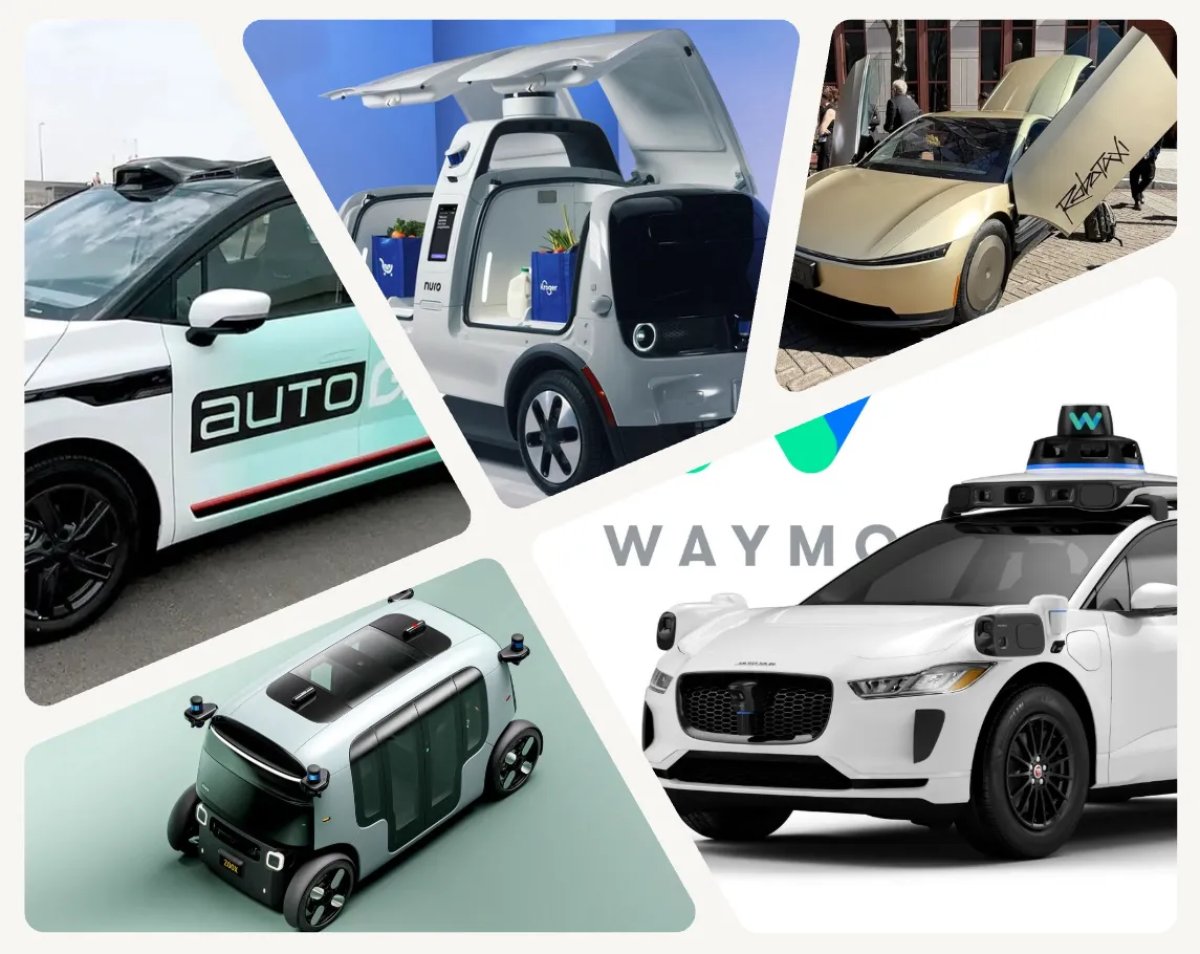

Mientras Tesla prepara su Cybercab y un servicio de Robotaxi más amplio, no está entrando en un campo vacío. Para 2026, el mercado de vehículos autónomos ya está saturado, bien financiado y compitiendo por escalar.
Tesla persigue una estrategia de red neuronal de extremo a extremo basada únicamente en la visión. Muchos rivales, en cambio, se apoyan en sistemas redundantes con gran cantidad de sensores y en asociaciones con importantes plataformas de transporte compartido como Uber para acelerar la adopción por parte de los clientes.
Aquí es donde se encuentran hoy las iniciativas líderes en robotaxis, cómo están construidos sus sistemas y qué tan lejos parecen estar de una implementación a gran escala.
Los pesos pesados estadounidenses
Waymo
Waymo, parte de Alphabet (Google), lidera actualmente el mercado estadounidense. La empresa apunta a la autonomía de Nivel 4 con un enfoque cargado de sensores y se encuentra en su sexta generación de hardware. El último Waymo Driver combina 13 cámaras, 4 lidares y 6 unidades de radar, reduciendo los costos del conjunto de sensores en aproximadamente un 40%.
A principios de 2026, las operaciones abarcan 10 grandes áreas metropolitanas de EE. UU.: San Francisco, Los Ángeles, Phoenix, Atlanta, Austin, Dallas, Houston, San Antonio y Orlando.
Con una flota activa estimada entre 2,500 y 3,000 vehículos, la escala de Waymo en EE. UU. no tiene comparación. Completa alrededor de 400,000 viajes pagados por semana y tiene como objetivo alcanzar el millón de viajes semanales para finales de 2026. Para respaldar la expansión, Waymo opera una planta de integración en Mesa, Arizona, capaz de producir decenas de miles de unidades por año, y está en proceso de transición a las furgonetas Zeekr Ojai y los Hyundai IONIQ 5.
Zoox
Amazon adquirió Zoox en 2020 por 1,300 millones de dólares. En lugar de adaptar coches de pasajeros, Zoox construye cápsulas bidireccionales diseñadas específicamente solo para pasajeros.
Estos vehículos omiten el volante y los pedales y dependen de un rico conjunto de cámaras, radar y lidar. Zoox está probando y ofreciendo servicios limitados en Las Vegas y San Francisco, con pruebas que también se expanden a Dallas, Seattle y Miami.
Debido a que estos vehículos carecen de controles manuales, el despliegue depende de las exenciones federales de la NHTSA, lo que ha limitado su escala. Se abre un nuevo canal: los robotaxis de Zoox tienen previsto lanzarse en la aplicación Uber en Las Vegas en el verano de 2026, seguidos de Los Ángeles en 2027.
La historia de advertencia de Cruise
Cruise, de General Motors, equipó inicialmente los Chevy Bolt con cámaras, radar y lidar, e impulsó una rápida expansión en EE. UU.
Tras un incidente de alto perfil en San Francisco en el que un robotaxi arrastró a un peatón, la empresa perdió la confianza del público y permisos regulatorios clave. Con pérdidas totales de 10,000 millones de dólares, GM cerró el programa original de robotaxis de Cruise.
Posteriormente, GM retiró la financiación para el desarrollo de futuros robotaxis dedicados, concluyendo que el tiempo y el capital necesarios para escalar no estaban justificados.
Las potencias chinas
Apollo Go
Respaldado por Baidu, Apollo Go opera a gran escala. Utiliza autonomía de Nivel 4 en sus vehículos Yichi 06 de sexta generación, que incluyen 5 lidares y carecen de volante. El servicio opera en 22 ciudades y recientemente comenzó un servicio comercial totalmente autónomo en la isla Yas en Abu Dabi.
La escala es una fortaleza fundamental: Apollo Go maneja más de 250,000 viajes sin conductor a la semana y ha superado los 17 millones de viajes acumulados. Con costos de fabricación por debajo de los 29,000 dólares para su vehículo de sexta generación —competitivo con el próximo Cybercab de Tesla— la empresa puede expandirse rápidamente.
Apollo Go se acerca a la rentabilidad unitaria en mercados como Wuhan y se está asociando con Uber para desplegar miles de vehículos en todo el mundo.
Pony.ai
Pony.ai, que ahora cotiza tanto en la HKEX como en el NASDAQ, es una startup independiente de rápido crecimiento. Su conjunto de sensores de séptima generación enfatiza el lidar y las cámaras en plataformas de BAIC y Toyota.
La empresa opera en Guangzhou, Shenzhen, Pekín y Shanghái, y operaba con 1,159 vehículos a finales de 2025. Tras alcanzar el punto de equilibrio en la economía unitaria en Guangzhou (con un promedio de 23 viajes diarios de clientes por vehículo), Pony.ai planea expandir su flota activa a más de 3,000 vehículos para finales de 2026.
WeRide
WeRide ha dado un gran salto en la fabricación mientras persigue la autonomía de Nivel 4. Su robotaxi construido a medida, el GXR, utiliza la plataforma Super VAN de Geely Farizon.
El vehículo cuenta con un chasis de dirección electrónica por cable (steer-by-wire) con IA y el conjunto de sensores GEN8, que incluye un lidar de mil haces capaz de detectar objetos a una distancia de hasta 600 metros.
Operando en China, Singapur y Oriente Medio (Abu Dabi, Dubái, Riad), WeRide se está expandiendo rápidamente. En marzo de 2026, realizó un gran pedido a Geely por 2,000 nuevos robotaxis GXR.
Gracias a su nueva asociación de fabricación, el tiempo de montaje del vehículo se ha reducido a menos de 10 minutos. Se espera que la flota global supere los 2,600 vehículos activos este año, con ambiciones de alcanzar decenas de miles para 2030.
Otros actores
Nuro
Nuro es más conocida por sus cápsulas de reparto autónomas compactas, pero ha cambiado decididamente hacia los servicios de pasajeros. En el CES 2026, Nuro anunció una asociación con Uber para integrar su autonomía de Nivel 4 en el SUV Lucid Gravity.
Esta flota premium utilizará la plataforma informática DRIVE AGX Thor de Nvidia y la autonomía de 450 millas (724 km) del Gravity para limitar el tiempo de inactividad por carga. Uber tiene como objetivo desplegar 20,000 o más robotaxis Lucid–Nuro a nivel mundial durante los próximos seis años, y se esperan los primeros vehículos a finales de 2026.
Aurora
Aurora no busca el transporte compartido de pasajeros; su enfoque lo posiciona como un competidor potencial de FSD en el Tesla Semi.
La empresa se concentra en el transporte pesado de Clase 8. Tras adquirir la unidad de conducción autónoma de Uber, Aurora se construyó en torno a su lidar FirstLight (que puede ver a más de 450 metros por delante), además de cámaras, radar e "IA verificable".
Actualmente, realiza rutas comerciales diarias sin conductor en Texas y aspira a alcanzar un par de cientos de camiones autónomos en todo el sur de EE. UU. para finales de 2026.
Rimac Verne
Dirigido por Mate Rimac, Verne está diseñado para una experiencia de robotaxi de alta gama.
Basado en la plataforma Drive de Mobileye (13 cámaras, 9 lidar, 5 radares), el vehículo es una cápsula de dos asientos con puertas correderas, sin volante, una pantalla de 43 pulgadas y asientos que se reclinan totalmente.
La empresa tiene acuerdos con 11 ciudades de Europa y Oriente Medio, pero se está expandiendo como un servicio boutique en lugar de como una alternativa masiva a Uber. Verne ha construido 60 prototipos de validación y planea comenzar el servicio en carretera en Zagreb, Croacia, en la primavera de 2026.
NVIDIA
Nvidia no opera una flota de robotaxis; suministra el hardware y el software del sector.
Sus arquitecturas DRIVE AGX Hyperion 10 y Thor impulsan una gran parte de los programas, incluidos los de Lucid, Nuro, Mercedes, WeRide y Aurora.
Nvidia también se asoció directamente con Uber para ayudar a escalar una flota autónoma global que apunta a 100,000 vehículos para 2027, con el apoyo de la infraestructura de IA de Nvidia.
Tesla lidera la autonomía en el mercado de consumo occidental, pero los competidores están avanzando en otros segmentos. El objetivo general de todos los programas es transportar personas y mercancías a gran escala.



Compartir:
Tesla muestra lo que hay dentro de un Tesla con este modelo especial de estudio
Tesla acusa a un proveedor de robar la tecnología de baterías 4680