

La era de la manilla de puerta oculta —durante mucho tiempo un sello distintivo del diseño minimalista y el enfoque aerodinámico de Tesla— parece estar llegando a su fin. El Ministerio de Industria y Tecnología de la Información (MIIT) de China ha publicado hojas normativas detalladas que establecen nuevos y estrictos requisitos de seguridad para los sistemas de acceso a los vehículos.
Coincidiendo con una nueva investigación federal de la NHTSA en Estados Unidos, este cambio normativo establece un mandato claro: el método para abrir la puerta de un coche durante una emergencia debe ser evidente, mecánico y utilizable sin conocimientos especiales.
Para Tesla, cumplir con esos requisitos probablemente forzará un rediseño de una de sus características más reconocibles.
El nuevo estándar de China
Los requisitos se exponen en el borrador del documento titulado “Requisitos técnicos de seguridad para las manillas de las puertas de los automóviles”, publicado por el MIIT el 16 de diciembre de 2025. Aunque se trata de un estándar nacional para China, la escala de la producción de Tesla en Giga Shanghai significa que las normas casi con toda seguridad afectarán a la producción y el diseño global, especialmente con el escrutinio paralelo de la NHTSA.
El borrador es explícito sobre la eliminación de la ambigüedad durante las emergencias. Requiere que las puertas de los vehículos incluyan una manilla de apertura mecánica que actúe como medida de seguridad en caso de pérdida de energía electrónica. Los reguladores también enfatizan la accesibilidad: la apertura mecánica debe ser claramente identificable y operar dentro de un espacio físico definido que permita una manipulación sencilla.
En pocas palabras, el objetivo es garantizar que cualquier persona —incluso alguien no familiarizado con un vehículo específico— pueda abrir una puerta en caso de emergencia, una tarea que actualmente puede resultar difícil. A pesar de muchos años de fuertes ventas globales, las personas todavía suelen tener dificultades con las manillas exteriores ocultas del Model 3 y el Model Y porque no saben cómo operarlas.
Salida de emergencia interior

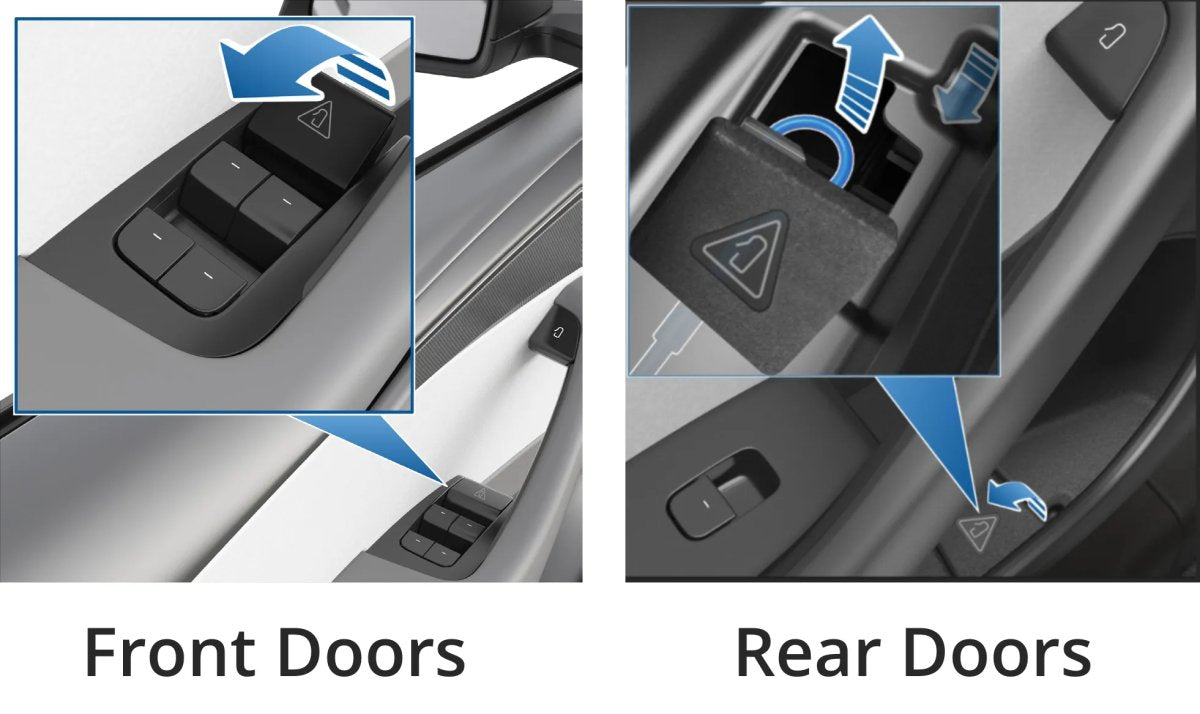
Las nuevas reglas desafían directamente las elecciones de diseño interior de Tesla y requerirán cambios significativos. El Model 3 y el Model Y son ejemplos notables, con desbloqueos mecánicos de emergencia a menudo ocultos debajo de compartimentos o paneles en las puertas traseras. El Model X es particularmente problemático, donde acceder al desbloqueo de emergencia de la puerta Falcon Wing puede requerir la retirada parcial de las cubiertas de los altavoces.
Una guía reciente resume cómo abrir las manillas de las puertas de un Tesla en una emergencia.
La investigación de la NHTSA
Tesla también está bajo presión en Estados Unidos. A finales de diciembre, la NHTSA abrió una Petición de Defecto (DP25002) que investiga específicamente la seguridad de los pestillos electrónicos de las puertas de Tesla.
La investigación fue impulsada por informes de ocupantes atrapados en vehículos durante fallos de energía de bajo voltaje, incapaces de encontrar el desbloqueo de emergencia de forma rápida y segura. La combinación de estándares proactivos en China e investigaciones reactivas en EE. UU. significa que mantener el statu quo ya no es sostenible desde una perspectiva legal o de seguridad.
La solución interior
El equipo de diseño de Tesla parece estar trabajando en soluciones. El jefe de diseño, Franz von Holzhausen, reconoció el problema a principios de este año y dijo que la compañía estaba diseñando una solución para equilibrar la conveniencia electrónica con la seguridad mecánica.
El enfoque más probable es combinar los pestillos electrónicos y mecánicos en una única interfaz. Hoy en día, la manilla exterior o el botón interior envían una señal electrónica a un actuador de puerta; si eso falla, el usuario debe localizar un desbloqueo manual separado. Un diseño combinado permitiría que la misma manilla cumpla ambas funciones: una parte inicial del recorrido activa el interruptor electrónico cuando hay energía disponible, mientras que continuar tirando de la manilla más allá activaría un desbloqueo mecánico si se pierde la energía.
Solucionar el factor de pánico
Otros fabricantes ya han utilizado diseños de pestillo progresivos y cumplirían con los requisitos chinos de un desbloqueo mecánico claramente identificable mientras se preserva un interior limpio. Fundamentalmente, también abordan el comportamiento humano en emergencias: tiradas instintivas y más fuertes de una manilla activarán naturalmente la medida de seguridad mecánica sin necesidad de que los usuarios encuentren desbloqueos ocultos.
La solución exterior
Las normas chinas también afectan a los diseños exteriores. Las manillas de puerta enrasadas han sido parte del enfoque característico de Tesla durante más de una década porque reducen la resistencia aerodinámica y mejoran la autonomía. Sin embargo, los requisitos en torno a la accesibilidad y el espacio operativo entran en conflicto con los mecanismos totalmente enrasados.
En accidentes graves con pérdida de energía, las manillas exteriores del Model 3 y el Model Y generalmente siguen siendo operables, pero en algunas unidades del Model S las manillas pueden permanecer retraídas e inoperables. Los diseños exteriores actuales no siempre son intuitivos para transeúntes no capacitados o personal de primeros auxilios y pueden ser difíciles de usar.
Es probable que Tesla deba revisar el diseño del Model S en particular para cumplir con la normativa, mientras que se espera que el Model 3 y el Model Y adopten un desbloqueo de un solo movimiento de electrónico a mecánico en futuras iteraciones.
Cambios de diseño global
Aunque las regulaciones chinas todavía están en forma de borrador, los plazos se están acelerando. Es probable que los nuevos diseños aparezcan a finales de 2026 o principios de 2027, y la fecha de requisito reglamentario parece ser finales de 2027.
Debido a que Tesla favorece la eficiencia en la fabricación, es poco probable que produzca puertas separadas para China y EE. UU.; en cambio, un único diseño que cumpla con estándares de seguridad más estrictos probablemente se convertirá en el estándar global.





Compartir:
Notas de la versión 2025.45.8
Primer vistazo a la versión 14.2.2.3 del FSD de Tesla