

@minusYCore en X
Durante la última década, los diseñadores de inversores de tracción —los componentes que convierten la salida de CC de una batería a la CA utilizada por los motores eléctricos— han tenido que elegir entre dos enfoques de semiconductores. Los IGBT de silicio (Si) son económicos y muy robustos, pero relativamente ineficientes. Los MOSFET de carburo de silicio (SiC), por el contrario, ofrecen una eficiencia mucho mayor a costa de una mayor fragilidad y un precio mucho más elevado.
Muchos vehículos eléctricos de gama alta actuales, incluidos el Model 3 y el Model Y, emplean MOSFET de SiC para maximizar la autonomía, pero esa eficiencia aumenta los costes de producción del motor.
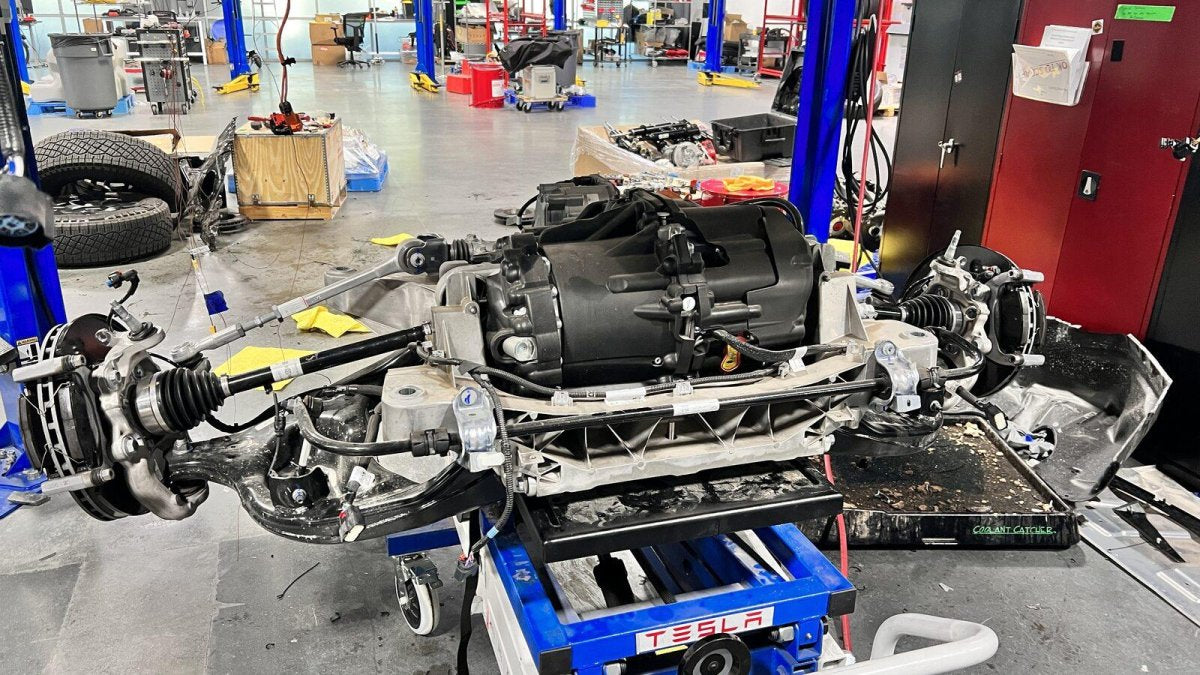
Una solicitud de patente publicada recientemente (WO 2026/010828-A1), titulada "Inversores de tracción híbridos para motores de tracción eléctricos", describe una alternativa: colocar dispositivos tanto de Si como de SiC en el mismo inversor y cambiar activamente qué tecnología se utiliza en función de las condiciones de conducción.
Transmisión variable
La patente describe un controlador que funciona como una transmisión automática, dirigiendo la carga eléctrica al semiconductor que mejor se adapte al momento.
Para la conducción a velocidad de crucero —cuando la eficiencia es más importante—, el controlador favorece a los MOSFET de SiC. En un modo de baja corriente, el sistema mantiene a estos MOSFET dominantes para maximizar la autonomía.
Para situaciones de alta demanda, como una aceleración fuerte o remolque, el sistema cambia a los IGBT de Si. En estos escenarios de "marcha de potencia" de alta corriente, los robustos IGBT se activan primero para que absorban la fuerte carga eléctrica y protejan a los dispositivos de SiC, más delicados.
Reducción de costes
El coste es un factor principal del diseño. Los dispositivos de SiC son sustancialmente más caros que los IGBT de silicio.
Para abordar esto, la patente describe una relación física de 2:1: dos IGBT de Si por cada MOSFET de SiC. Eso permite que la parte de SiC se dimensione para el caso común —conducción por autopista— en lugar de para eventos raros de aceleración máxima. Debido a que la aceleración máxima es una pequeña fracción del uso en el mundo real, Tesla puede reducir su capacidad de SiC y confiar en los IGBT más baratos para suministrar las corrientes pico, reduciendo el coste total del módulo mientras conserva casi la misma autonomía de conducción que un diseño totalmente de SiC.
Mayor durabilidad y respaldo
El diseño también mejora la robustez. Los motores de imanes permanentes (PM), como los utilizados en el Model 3 y el Model Y, pueden generar un pico de tensión de fuerza contraelectromotriz si el motor gira más rápido que el inversor o si el coche es remolcado con las ruedas en el suelo. Ese pico puede estresar los componentes del inversor.
El enfoque híbrido utiliza los IGBT más resistentes como salvaguarda. Un circuito de gestión de fallos puede anular inmediatamente la lógica normal de prioridad a la eficiencia si detecta un pico de tensión peligroso u otro fallo, asegurando que los IGBT de servicio pesado manejen la carga primero y protejan a los MOSFET de SiC.
La perspectiva técnica
La patente detalla cómo se coordinan los dos tipos de dispositivos para evitar interferir entre sí. No pueden estar encendidos en el mismo instante, por lo que se utiliza un protocolo de sincronización: el flanco ascendente del mando del IGBT se adelanta al mando del SiC en aproximadamente 100 nanosegundos a 10 microsegundos. Ese breve tiempo de adelanto crea una ventana protectora en la que el dispositivo de Si absorbe el estrés.
Para reducir la inductancia parásita y la interferencia magnética, la disposición de la placa descrita coloca el MOSFET de SiC en el centro, flanqueado por los IGBT de Si. Esa disposición equilibra los campos eléctricos y ayuda a prevenir interacciones no deseadas dentro del inversor del motor.
Lo que esto significa para usted
Fundamentalmente, la patente tiene como objetivo eliminar las compensaciones de larga duración en el diseño de inversores de tracción. Hasta ahora, los compradores e ingenieros han tenido que elegir efectivamente entre autonomía, rendimiento y asequibilidad; elegir dos normalmente significaba sacrificar el tercero.
Los coches de alta autonomía y alto rendimiento como el Model S son caros en parte porque requieren grandes cantidades de carburo de silicio. Los vehículos más asequibles han sacrificado históricamente la autonomía (baterías más pequeñas) o la eficiencia (inversores de Si más baratos).
Un inversor híbrido que combina SiC para la eficiencia de crucero y IGBT de Si para las cargas pico promete motores de menor coste sin una penalización significativa en la autonomía, una mayor durabilidad en escenarios de fallo y el mismo rendimiento en carretera que esperan los conductores.


Compartir:
Tesla anuncia el fin de las transferencias de FSD
Seguro revolucionario para Tesla FSD: Lemonade lanza recortes de tarifas del 50 % para la conducción autónoma