
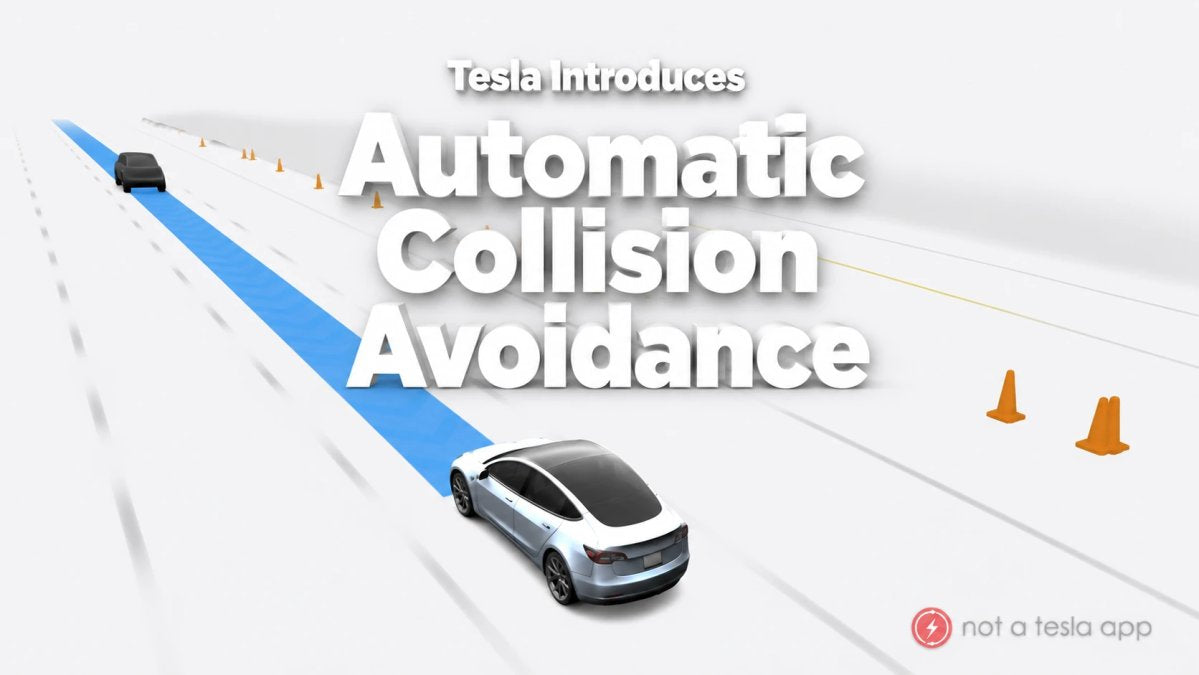
Tesla ha añadido una nueva capacidad de seguridad activa llamada Evasión de Colisión Automática, que puede activar automáticamente la Conducción Autónoma Total (Supervisada) para ejecutar maniobras evasivas incluso cuando el vehículo se conduce manualmente.
Anteriormente, la FSD demostró su capacidad para detectar, predecir y evitar choques antes de que ocurrieran, incluso a velocidades de autopista, pero solo cuando el sistema de asistencia al conductor ya estaba activado. Tesla ahora pretende utilizar sus redes neuronales como una capa de intervención durante la conducción manual, complementando funciones como el Frenado de Emergencia Automático (AEB), la Aceleración ante Obstáculos, la detección de puntos ciegos y el monitoreo de carril.
En este momento, la Evasión de Colisión Automática parece estar disponible solo en Norteamérica. Todavía no aparece en otras regiones con FSD, incluida los Países Bajos, que se convirtieron en el primer país de la UE en aprobar el software a principios de esta primavera.

Dos activadores: impactos frontales y conductores distraídos
El sistema se activa en dos tipos de situaciones durante la conducción manual.
Primero, cuando una colisión frontal parece inminente, el software evalúa si esquivar un peligro ofrece un mejor resultado que frenar en línea recta solamente. Si la intervención está justificada, el vehículo activa la FSD y esquiva el obstáculo cambiando de carril o moviéndose hacia el arcén, frenando o acelerando según sea necesario, y luego continúa conduciendo.
Para que se active este caso de colisión frontal, se deben cumplir todas las siguientes condiciones:
- Una colisión frontal con otro vehículo es inminente y frenar por sí solo no puede evitarla.
- El vehículo circula por una autopista de acceso controlado a menos de 137 km/h (85 mph).
- No se detectan peatones, ciclistas ni usuarios vulnerables de la vía en la trayectoria.
- El sistema de dirección funciona correctamente y las carreteras no están mojadas ni resbaladizas.
El segundo escenario ocurre si el vehículo detecta que el conductor ya no tiene el control o no está atento; por ejemplo, si alcanza algo en el asiento trasero, aparta la vista de la carretera o si el vehículo determina que la FSD se desactivó involuntariamente. Si el vehículo opera entre 36 km/h y 137 km/h en cualquier tipo de carretera, asume automáticamente el control para guiar el automóvil a un lugar seguro.
Activación del sistema y reglas de anulación del conductor
La Evasión de Colisión Automática opera solo si se ha adquirido la Conducción Autónoma Total (Supervisada) y está habilitada en Controles > Conducción Autónoma.
Durante una maniobra evasiva, el sistema reduce la posibilidad de una interrupción accidental por parte del conductor. El pedal del acelerador queda inhabilitado y pisar el freno ralentiza el vehículo, pero no desactiva la FSD ni la maniobra evasiva. Para anular la FSD, el conductor debe aplicar una fuerza de dirección firme y deliberada contra el volante.
Una vez que ha pasado el peligro inmediato, el vehículo emite un sonido y pide al conductor que tome el control de la FSD.

Tesla especifica que la Evasión de Colisión Automática no es una función general para evitar obstáculos o cambiar de carril. Es una respuesta de último recurso ante un evento de emergencia y no reemplaza la responsabilidad del conductor de permanecer alerta y mantener el control.
Elon Musk ha dicho anteriormente que la evitación de baches llegará pronto a la FSD. Si bien los vehículos de consumo actualmente utilizan la FSD v14, los Robotaxis de Tesla ya han pasado a la FSD v15, de la que se esperan mejoras importantes en el sistema.




Compartir:
Ver la repetición del evento Cybercab de Tesla
El Tesla Model Y obtiene el premio Top Safety Pick+ del IIHS