
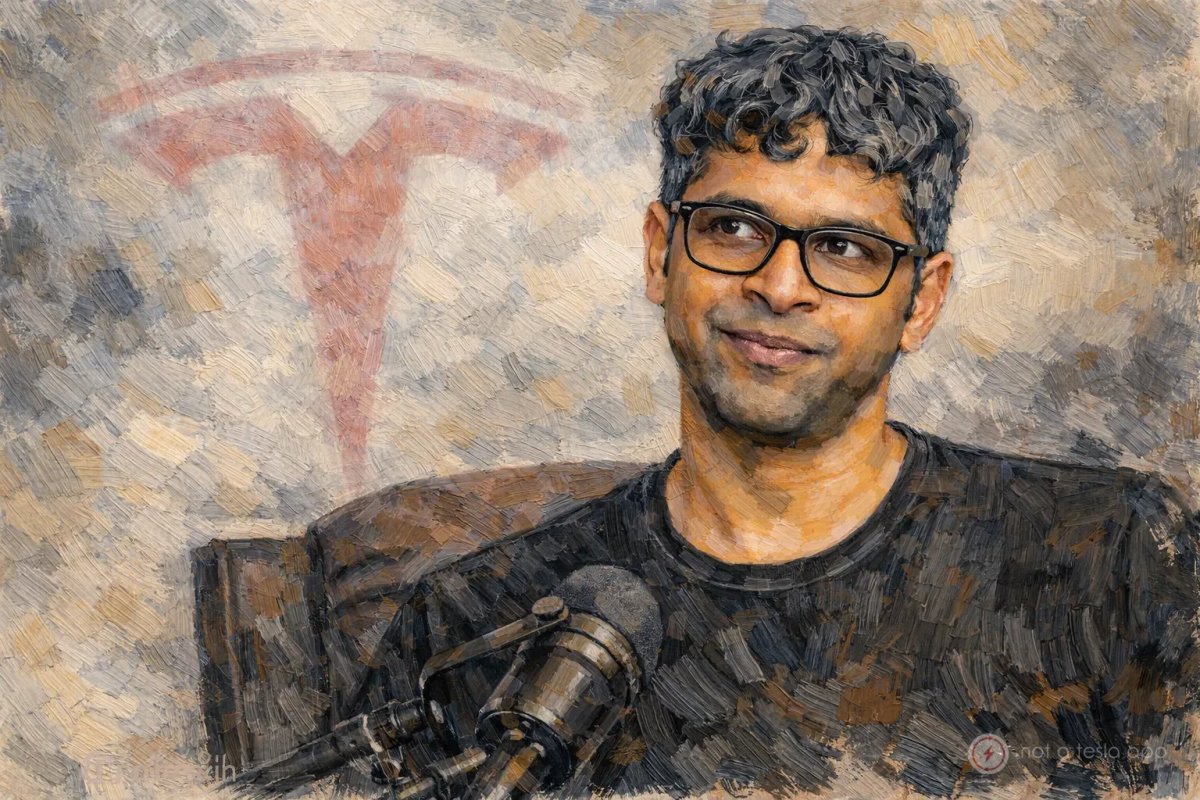

Ashok Elluswamy, vicepresidente de IA de Tesla y líder en Macrohard, supervisa uno de los programas de inteligencia artificial más ambiciosos hasta la fecha.
Mientras que Franz von Holzhausen dio forma al hardware que captó la atención mundial, Ashok se centra en permitir que ese hardware perciba, razone y actúe. Desde el primer lanzamiento de Autopilot hasta las redes neuronales de extremo a extremo en el FSD V12, su trabajo impulsa los vehículos autónomos y la robótica.
Una base en robótica
Ashok comenzó en la India, donde obtuvo una licenciatura en Ingeniería Electrónica y de Comunicaciones en el Instituto Nacional de Tecnología de Visvesvaraya.
Posteriormente se trasladó a Estados Unidos para estudiar en el Instituto de Robótica de la Universidad Carnegie Mellon, donde completó una maestría centrada en visión artificial y aprendizaje automático.
Su carrera temprana incluyó puestos en WABCO Vehicle Control Systems y más tarde en el Laboratorio de Investigación Electrónica de Volkswagen, donde desarrolló sistemas de visión artificial y funciones de asistencia al conductor, persiguiendo la autonomía vehicular dentro del ritmo más incremental de los fabricantes de automóviles tradicionales.
Respondiendo a la llamada
En 2014, dejó la industria automotriz tradicional para unirse a una empresa en rápido ascenso tras responder a una publicación ampliamente vista en X de Elon Musk, quien buscaba un equipo de alto nivel para construir el primer sistema de piloto automático real del mundo para vehículos de consumo.
Engineers interested in working on autonomous driving, pls email autopilot@teslamotors.com. Team will report directly to me.
— Elon Musk (@elonmusk) 18 de septiembre de 2013
Se convirtió en el primer ingeniero contratado para el grupo de Autopilot de Tesla y sigue siendo una figura central en el equipo.
La misión era más amplia que lanzar una única función para una actualización de modelo anual; requería ensamblar una organización de software de primer nivel para construir un sistema de conducción autónoma casi desde cero, alineado con un director ejecutivo que persigue una visión excepcionalmente ambiciosa para la conducción totalmente autónoma.
Enseñando a la flota a ver
El hito inicial fue Autopilot, que incorporó el Autosteer (autodirección) y el Control de crucero adaptativo a la producción. El gran salto, sin embargo, fue el cambio a Tesla Vision.
El equipo de Ashok lideró la controvertida eliminación del radar del conjunto de sensores de la compañía, argumentando que una pila que combinaba dos entradas de sensores diferentes (visión y radar) generaba problemas fundamentales.
Sostenían que la autonomía general debe comenzar con la visión, reflejando cómo conducen los humanos. El cambio obligó al desarrollo de un sistema más robusto y centrado en las cámaras que pudiera escalar en millones de vehículos y entornos variados en todo el mundo. En su opinión, la visión es mucho más entrenable que el LiDAR, porque el video puede supervisarse con millones de horas de conducción humana, lo cual no es posible de manera similar con el LiDAR o el radar.
La revolución de extremo a extremo
Bajo el liderazgo de Ashok, el programa avanzó hacia lo que se ha descrito como el cambio arquitectónico más importante en la historia de FSD: FSD V12. Como presentador frecuente en los eventos del Día de la IA de Tesla, describió la transición desde cientos de miles de líneas de código C++ que dictaban comportamientos hasta una red neuronal de extremo a extremo.
El sistema ingiere video de las cámaras del vehículo y genera controles de conducción directamente, aprendiendo de millones de horas de grabaciones del mundo real.
Este enfoque rompe con lo convencional al reemplazar una gran pila basada en reglas por un único y potente sistema de aprendizaje, y sustenta las ambiciones de Tesla en IA y autonomía, incluyendo Robotaxi y Optimus.
El trabajo de Ashok Elluswamy en Tesla refleja una ejecución sostenida y metódica hacia la resolución de uno de los problemas más difíciles del planeta: construir la mente de la máquina.


Compartir:
Tesla Powerwall recibe una nueva función de "Estado" impulsada por IA en la aplicación
Musk lanza aún más pistas sobre el nuevo SUV más grande de Tesla