
Tesla marcó el cierre de un capítulo en su fábrica de Fremont con la entrega de los últimos vehículos Model S y Model X. Elon Musk, Franz y otros miembros del equipo reflexionaron sobre cómo estos modelos emblemáticos transformaron la empresa y la industria automotriz en general.
La reunión repasó cómo el Model S desmintió la idea de que los vehículos eléctricos eran "carritos de golf" lentos y utilitarios. Demostró que un coche eléctrico podía ser un vehículo sin concesiones, e incluso el mejor coche en la carretera.
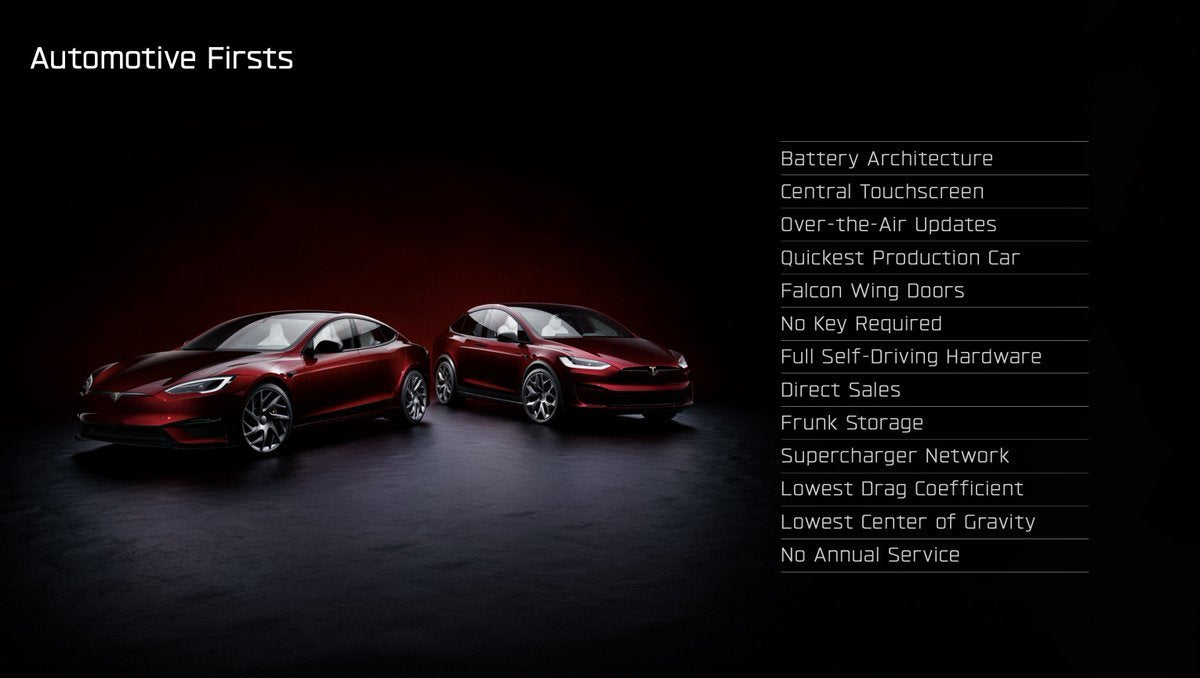
Primicias para la industria
La empresa recapituló numerosas primicias en la industria. El Model S se convirtió en el primer vehículo eléctrico en alcanzar una autonomía de 400 millas. Fue el primer coche de producción en acelerar de 0 a 60 mph en menos de 2 segundos, y el primer sedán de producción en completar un cuarto de milla en 9.23 segundos.
La resistencia de su techo era tan alta que rompió la máquina de pruebas de la NHTSA.
El Model X también estableció puntos de referencia, convirtiéndose en el SUV de producción más rápido y el primero en no volcar en las pruebas reglamentarias.
Según Tesla, los actuales Model S y Model X utilizan un 40% menos de piezas que las primeras versiones y, a pesar de su apariencia familiar, ahora solo comparten el 3% de sus componentes originales.
El Model S y el X cambiaron la historia de la automoción para siempre al demostrar que un VE podía ser el mejor coche posible, de cualquier tipo.
— Tesla (@Tesla) 21 de mayo de 2026
Al inspirar a otros fabricantes a creer en los VE, impulsaron a la industria de un total de 50 mil coches en 2011 a 21 millones vendidos por año.
Muchas primicias automotrices:
Model S… pic.twitter.com/F5iPkPMhmN
Diseñado con amor en una tienda de campaña
Los oradores recordaron los modestos inicios del coche que definió la marca. El Model S original fue moldeado por un pequeño grupo que trabajaba en una tienda de campaña detrás de una instalación de SpaceX, moviendo un modelo de arcilla para juzgar su forma bajo diferentes tipos de luz.
— Elon Musk (@elonmusk) 21 de mayo de 2026
Mientras que Lotus fabricó gran parte del Roadster original, el Model S fue el primer vehículo que Tesla diseñó desde cero. El principio rector del equipo fue construir exactamente lo que ellos querían conducir: autonomía, velocidad, manejo, lujo y suspensión neumática.
El Model S de 2012 estrenó una pantalla táctil de 17 pulgadas y fue pionero en actualizaciones de software inalámbricas para que el coche pudiera mejorar después de la entrega. Muchos vehículos Founder Series de 2012 siguen en circulación; Elon y Lars comentaron que condujeron sus propios coches Founder Series hasta el evento.
Conquistando lo imposible
En su lanzamiento, un vehículo eléctrico de largo alcance fue calificado por muchos como imposible. En aquel entonces, la mayor parte de la producción mundial de litio se destinaba a los teléfonos, pero dar vida al Model S requería 80 veces esa oferta global.
La apuesta tuvo éxito. El Model S fue nombrado posteriormente el mejor coche jamás fabricado por Motor Trend. Le siguió el Model X, un esfuerzo descrito por Elon y el equipo de ingeniería como un acto de arrogancia y el "huevo de Fabergé" de la línea.

Los ejecutivos atribuyeron el éxito de estos modelos emblemáticos al cuidado puesto en cada detalle, incluidos los elementos ocultos que los propietarios nunca verían. Ese enfoque obsesivo ayudó a expandir la adopción de vehículos eléctricos 270 veces, llevando la cuota de mercado total de los vehículos eléctricos del 0.1 por ciento al 17 por ciento anual.
Incluso a medida que la producción disminuye, los coches siguen siendo avanzados. Los actuales Model S y Model X contienen un 40 por ciento menos de piezas que las iteraciones anteriores, y solo el 3 por ciento de los componentes son compartidos con el diseño de 2012.
Ningún otro vehículo puede hacer lo que el Model S y el Model X pueden hacer hoy.
Transición a la autonomía y Optimus
Musk y otros líderes explicaron la jubilación de los modelos reiterando su convicción de que el futuro es totalmente autónomo y que la conducción autónoma pronto será la norma. Terminar con estos modelos ahora deja espacio para la próxima ola.
Ese cambio ya ha comenzado. Tesla dijo que la producción del Cybercab ha comenzado oficialmente, con una producción a pleno volumen a partir de la próxima semana. El Cybercab se describe como el vehículo eléctrico más eficiente construido hasta la fecha, con 165 vatios-hora por milla.
El legado del Model S y el X perdurará en nuestra visión de la autonomía pic.twitter.com/u5jAKT6aiM
— Tesla (@Tesla) 21 de mayo de 2026
La huella de fabricación de la empresa también está cambiando. Tesla planea entregar los primeros robots Optimus en la antigua área de final de línea del Model S/Model X. Fremont se está posicionando como una instalación de automatización líder, con el objetivo de una producción inicial de un millón de robots humanoides por año.
Tesla dice que ahora está aplicando la misma intensidad que puso en sus coches emblemáticos al diseño de los mejores robots del mundo.
Al concluir la sesión, Lars Moravy resumió el momento: aunque Tesla suele tener un coche mejor preparado para el futuro, para el Model S y el Model X, este es el final: sus mejores versiones hasta la fecha.
Ver la repetición
La repetición del evento de entrega de la Signature Edition está disponible a continuación. La presentación comienza en el minuto 1 hora y 8 minutos y dura unos 20 minutos.
Evento de entrega del Model S y X Signature https://t.co/mKTu2ytY33
— Tesla (@Tesla) 21 de mayo de 2026


Compartir:
Tesla ahora monitorea las fallas de carga en los Cybertruck y ofrece Supercharging gratuito
El primer lanzamiento de la Starship V3 de SpaceX es hoy: míralo en vivo