

Tesla has introduced manual battery preconditioning for fast charging with software update 2026.44.3.1, which began rolling out on November 26. The feature was originally included in update 2026.44.3 but did not become publicly available until 2026.44.3.1.
The feature was previously spotted in a decompile of Tesla app 4.63.0 and arrives ahead of the holiday update. It could shorten Supercharger waits and reduce congestion on busy travel days, including around the Thanksgiving holiday in the United States.
Using the Vehicle Controls
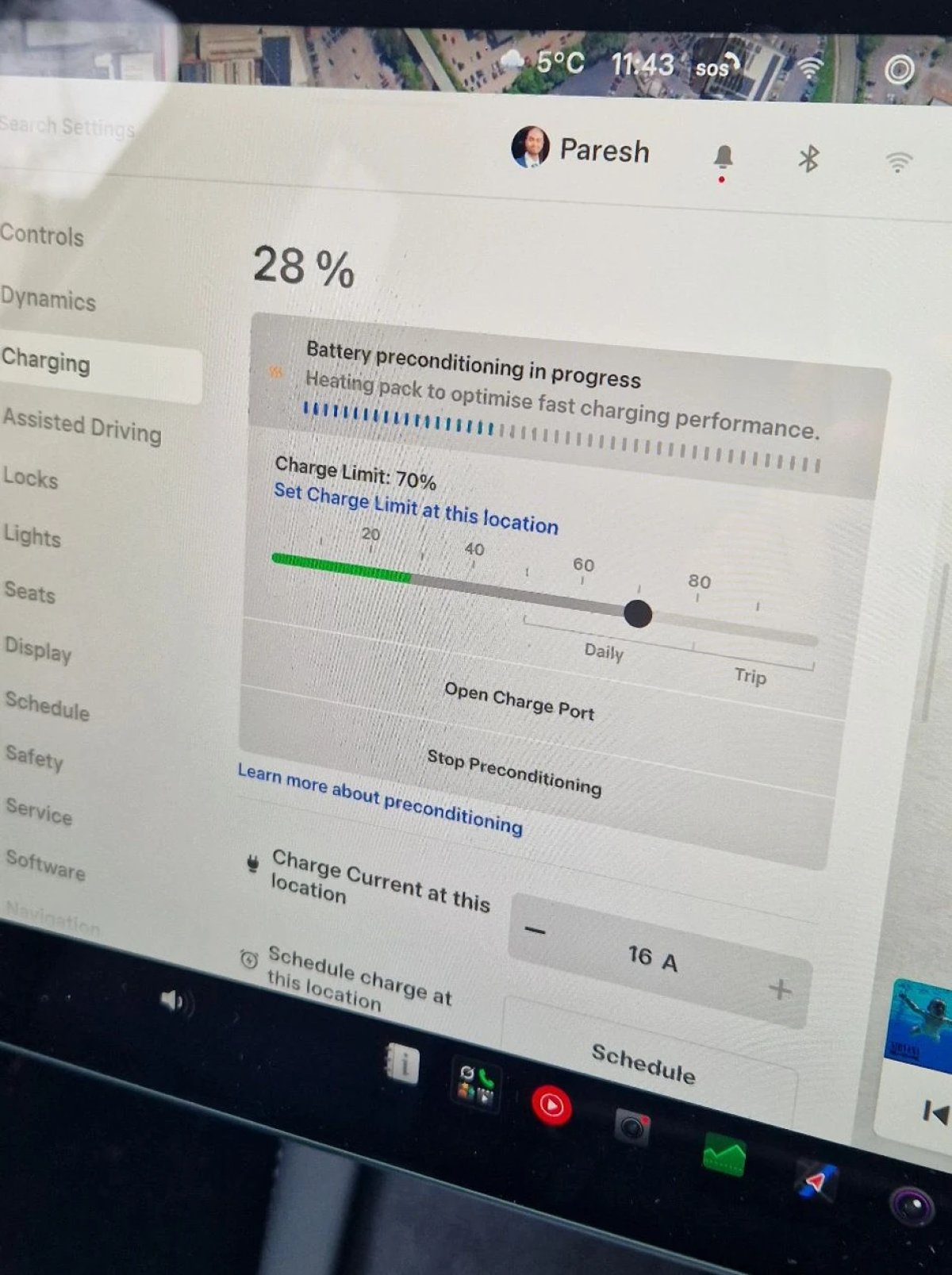
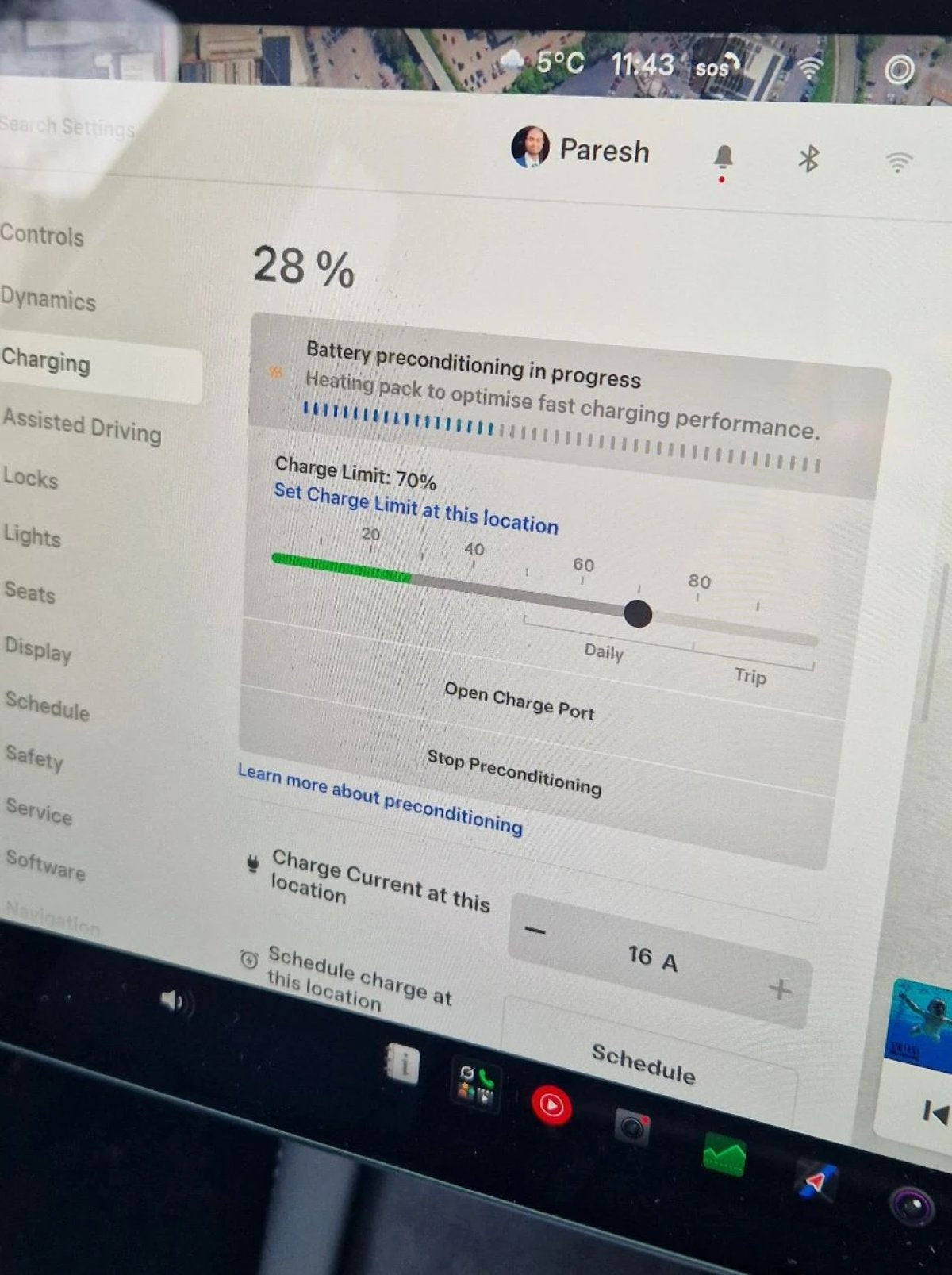
Drivers can start preconditioning at any time from Controls > Charging. The Precondition for Fast Charging button appears below Open Charge Port. A progress meter appears once preconditioning is enabled. Paresh provided the photos.
Preconditioning is needed for DC charging. For home charging, it generally makes no difference unless the vehicle has been left in extreme cold.
Using the Tesla App
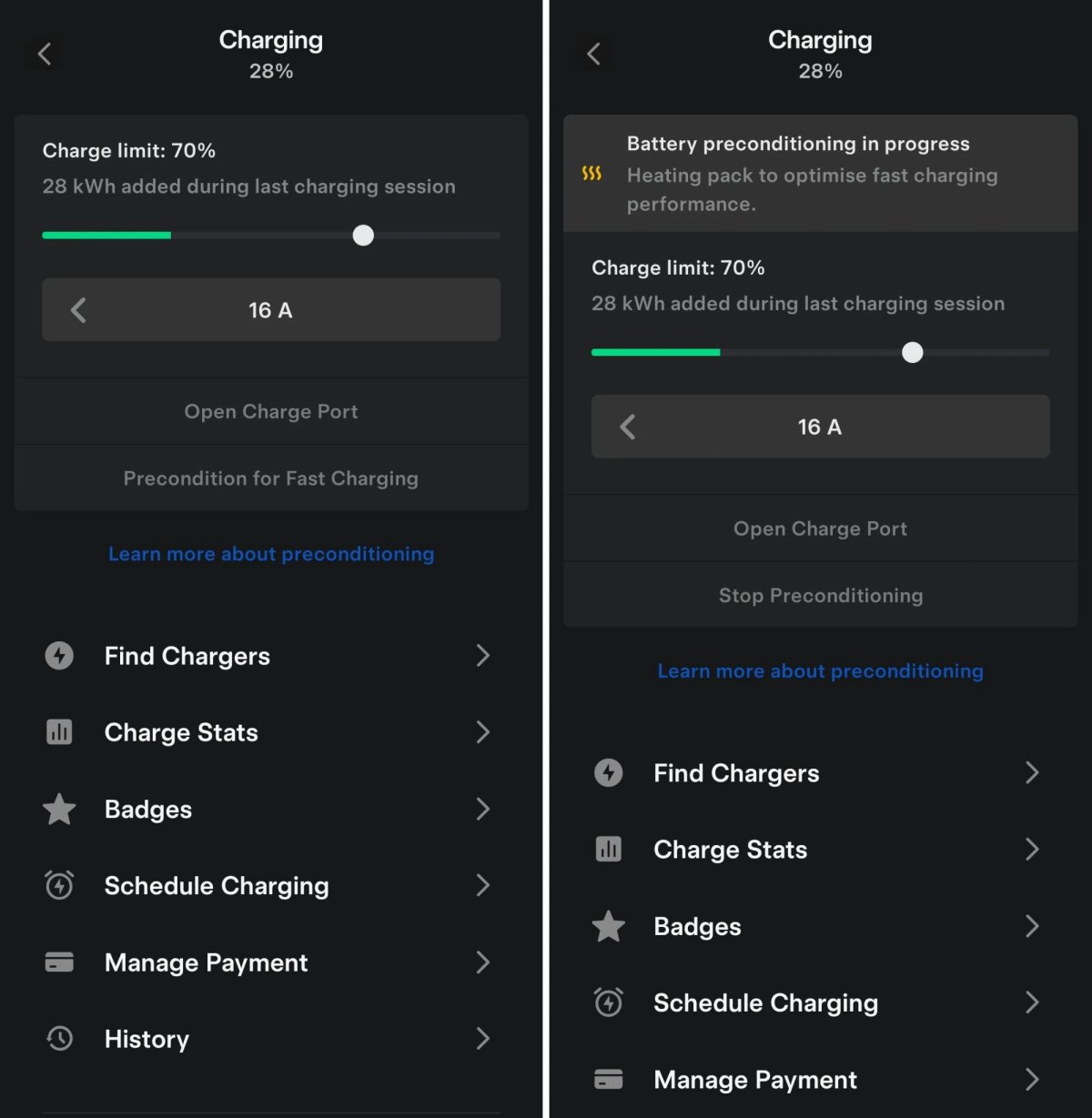
The Tesla app also lets drivers start or stop preconditioning under Charging before heading to a charger, but it does not show a progress meter.
The feature requires app version 4.63.0 or newer and vehicle software 2026.44.3.1 or newer. Updating the app by itself will not enable it.

By the way
For third-party charging stops, the OmniVolt adapter lets a Tesla with a NACS charge port use CCS1 DC fast chargers and J1772 stations. Fits every Tesla with a NACS charge port.
Tesla recommends starting preconditioning about one hour before charging. After the battery reaches its target temperature, the vehicle maintains that temperature for 30 minutes.
How Preconditioning Helps
Preconditioning brings the battery to its optimal temperature for DC fast charging, which can reduce charging time. Tesla already preconditions automatically when a driver navigates to a Supercharger, and supported third-party fast chargers can trigger it as well.
If a Supercharger is less than an hour away, the battery may not have enough time to warm up during the drive. Manual control also helps when a third-party destination does not trigger automatic preconditioning.
Shorter charging sessions can free up occupied stalls sooner. Charging speed depends on several factors, chiefly battery charge level. A lower charge level allows the vehicle to receive much more power, which is why arriving at a Supercharger with 20% or less charge is recommended.
Vehicle Availability
The feature is available on all vehicles and hardware, including legacy Model S and Model X vehicles and the Cybertruck. It can help drivers who use nearby Superchargers or third-party chargers charge more quickly.



Teilen:
Tesla’s 2026.44 Update Groups Charger Map Pins [VIDEO]
SpaceX Plans Rooftop Microcells to Extend Starlink Mobile Indoors