
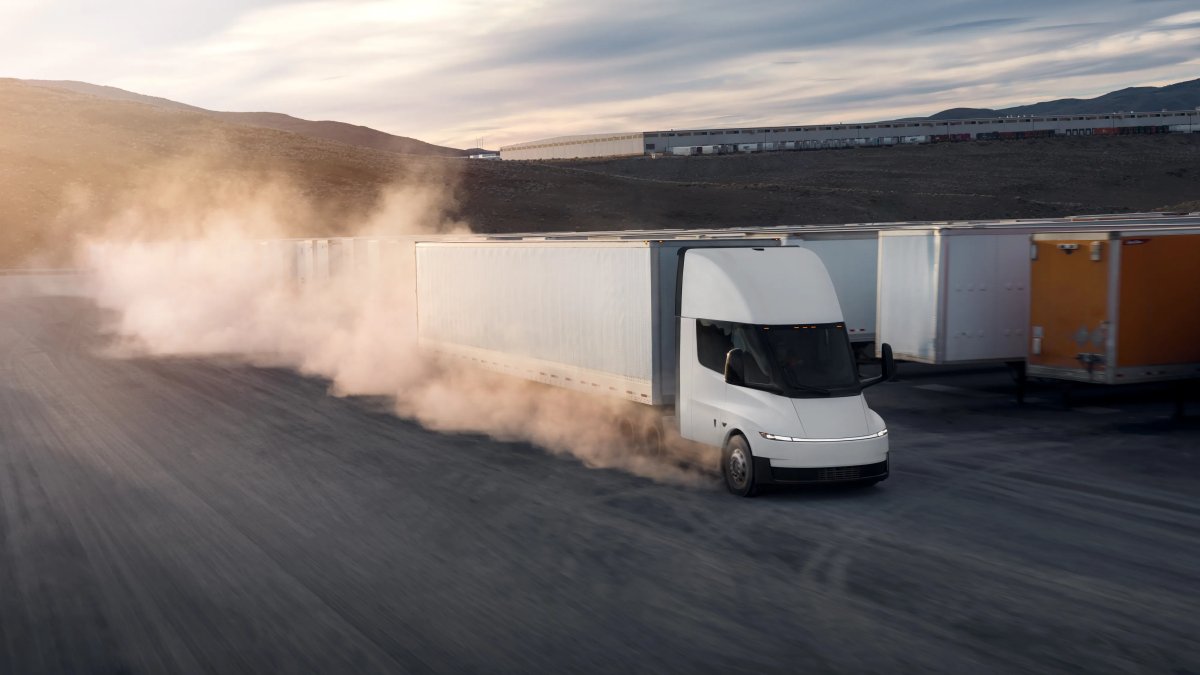

Im Schwerlastverkehr sind die Margen extrem gering, wobei bereits Bruchteile eines Cents pro Meile die Profitabilität beeinflussen. Während Nachhaltigkeitsbemühungen das öffentliche Ansehen verbessern können, hängt die breite Einführung von emissionsfreien Lkw von klaren wirtschaftlichen Vorteilen ab.
Nach einer erfolgreichen Demonstration unter Praxisbedingungen hat ein Logistikkunde, der über Forum Mobility agiert, einen Auftrag über 40 Tesla Semis erteilt.
Elektrischer Güterverkehr
Die Gesamtbetriebskosten (Total Cost of Ownership, TCO) sind das Hauptargument für diesen Kauf von 40 Einheiten. In der Vergangenheit standen Flottenbetreiber vor zwei großen Hürden bei der Elektrifizierung: hohe Anschaffungskosten für die Fahrzeuge und die Herausforderung, eine Ladeinfrastruktur im Megawatt-Bereich zu installieren.
Forum Mobility begegnet beiden Herausforderungen durch ein umfassendes „Truck-as-a-Service“-Modell, ähnlich dem kürzlich von Alyath vorgestellten Angebot. Die Kombination aus niedrigeren, berechenbareren Stromkosten mit effizienter Hardware kann die Preisvolatilität von Dieselkraftstoff dauerhaft übertreffen.
Die Einsparungen gehen über die Energie hinaus. Das regenerative Bremssystem und der Drei-Motoren-Antrieb des Tesla Semi reduzieren den Verschleiß, was zu weniger Wartungsaufwand und mehr Zeit auf der Straße führt.


Skalierung: Serienproduktion für wachsende Nachfrage
Jahrelang war die kommerzielle Markteinführung des Tesla Semi durch die Verfügbarkeit von Batteriezellen und Kapazitätsbeschränkungen in der Pilotphase begrenzt. Während Tesla die Serienproduktion in seinem speziellen Werk in Nevada aktiv hochfährt, gehen große Logistikunternehmen zu Flottenintegrationen mit höheren Stückzahlen über.
Frühe Tests durch große Betreiber haben die Hardware unter anspruchsvollen, realen Bedingungen bestätigt. Die Betreiber haben die Daten ausgewertet und die versprochene Reichweite von 500 Meilen sowie die starken Vorteile bei der Fahrerbindung durch ein leiseres, ergonomischeres Fahrerhaus bestätigt.
Da die Fahrzeuge nun in größerer Zahl das Montageband verlassen, erhöhen große Flottenbetreiber ihr Engagement, um die breite Einführung zu unterstützen.
Megawatt-Infrastruktur

Fortschrittliche Fahrzeughardware ist nur so effektiv wie das dahinter liegende Ladenetz. Um einen Einsatz im Flottenmaßstab zu ermöglichen, wird eine dedizierte depotbasierte Ladung schnell zum Standard. Der Bau eines gewerblichen Ladestandorts erfordert die Bewältigung komplexer Netzanschlüsse, die Sicherung erheblicher Kapazitäten durch lokale Versorgungsunternehmen und Investitionen in Millionenhöhe.
Forum Mobility übernimmt einen Teil dieser Herausforderung, indem es sich auf die Entwicklung von Hochleistungs-Ladedepots in der Nähe wichtiger Frachtkorridore und großer Seehäfen konzentriert.
Neben dem kürzlich eingeführten Basecharger für langsameres Laden des Semi über Nacht baut Tesla das Ökosystem für den Semi auf. Sobald die Komponenten verfügbar sind, können Logistikbetreiber mit der Integration fortfahren.
Der unvermeidliche Übergang zur E-Mobilität
Der Abschied von Verbrennungsmotoren im Schwerlastsektor (Class 8) wird nicht durch Umweltauflagen oder staatliche Subventionen vorangetrieben werden. Er wird durch Flottenbetreiber vorangetrieben, die erkennen, dass elektrische Lkw Kosten senken und einen Wettbewerbsvorteil gegenüber anderen Flotten bieten können.
Da die Serienproduktion das Angebot erhöht und zusätzliche Lademodelle die lokalisierte Infrastruktur adressieren, werden Aufträge wie dieser über 40 Einheiten zur Normalität werden.













Teilen:
Tesla sieht sich in Europa mit einer Sammelklage von Besitzern des HW3 FSD konfrontiert
Tesla fügt Visualisierungen für europäische Sattelzugmaschinen hinzu