
Tesla-Patent offenbart elektromagnetische Federungssitze

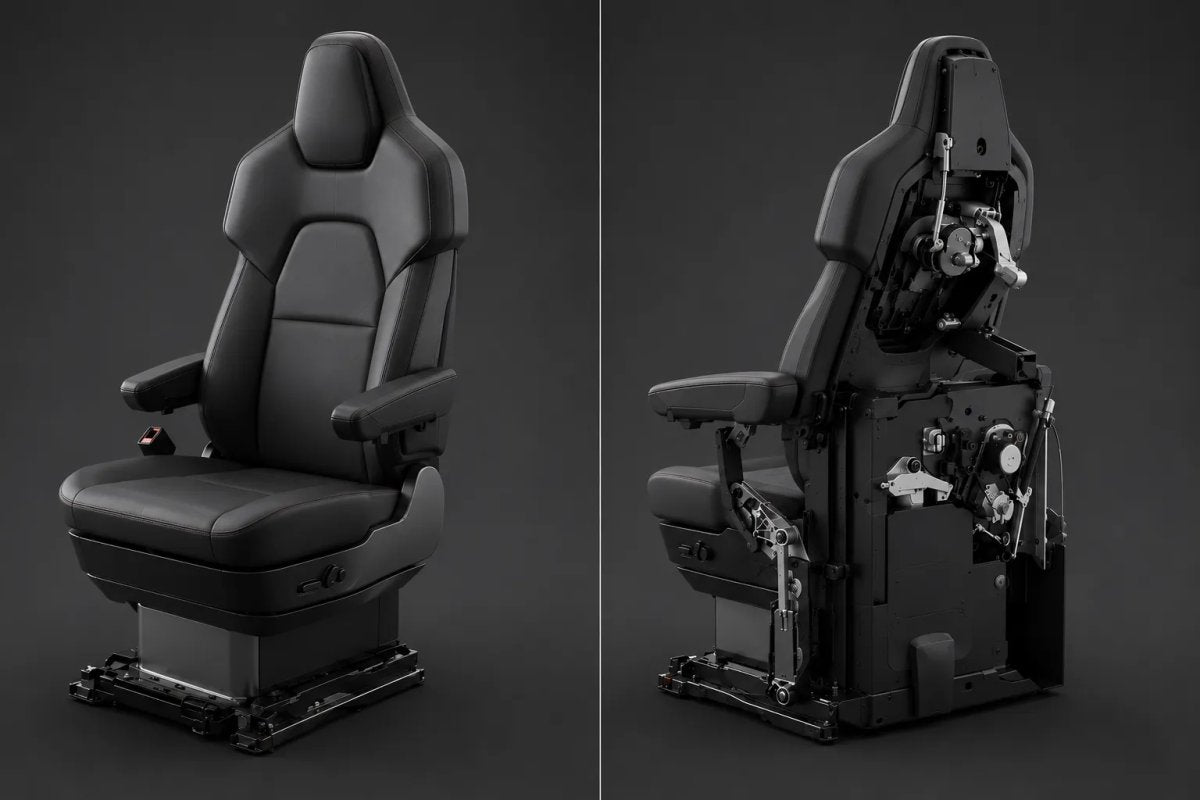
Ende letzten Monats erteilte das US-Patent- und Markenamt Tesla ein Patent für Fahrzeug-Hardware. Unter dem Titel „Vehicular Seat Suspension System for Belted Seats“ (Fahrzeugsitz-Federungssystem für Sitze mit Sicherheitsgurten) präsentiert die Anmeldung eine umfassende Neugestaltung der Scherenhub-Federungssitze, die üblicherweise im gewerblichen Lkw-Verkehr eingesetzt werden.
Der Ansatz verwendet ein vertikal gleitendes Sitzmodul, das von elektromagnetischen Federn gestützt wird, um Stöße zu absorbieren und die Insassen bequem in Position zu halten, egal ob sie eine volle Ladung transportieren oder mit Kaltgasdüsen beschleunigen.
Der Scherenmechanismus
Herkömmliche Federungssitze in Nutzfahrzeugen verwenden Scherenhubmechanismen, um einen vertikalen Federweg zu ermöglichen. Das Patent besagt, dass diese veralteten Konstruktionen unter mangelnder Seitenstabilität und hoher Verformung bei Crashtests leiden.
Die vorgeschlagene Konstruktion eliminiert den Scherenhub. Stattdessen gleitet ein bewegliches Innenelement vertikal innerhalb eines statischen Außenelements, das direkt am Fahrzeugboden montiert ist.

Um die strengen Federal Motor Vehicle Safety Standards für schwere Lasten zu erfüllen, enthält das System hochbelastbare Crash-Verriegelungen. Ein T-förmiges Element und ein C-förmiges Bauteil greifen bei hohen Längskräften ineinander und fungieren als Notbremsmechanismus, um zu verhindern, dass der sich bewegende Sitz bei einer schweren Kollision auseinanderbricht.
Integrierte Sicherheitsgurte
Bei herkömmlichen Nutzfahrzeugsitzen ist der Sicherheitsgurt oft an der Kabinenwand verankert, während sich der Sitz unabhängig bewegt, was zu einer unangenehmen Relativbewegung zwischen Rückhaltesystem und Fahrer führt.
Tesla löst dies, indem der Gurtstraffer im beweglichen Innenelement untergebracht wird. Wenn sich der Sitz vertikal bewegt, bleibt der Gurt synchron zur Schulter des Fahrers.
Elektromagnetische Federn
Die vertikale Auslenkung wird durch ein Federsystem gesteuert. Das Patent weist darauf hin, dass eine pneumatische Luftfeder verwendet werden könnte, die von einem elektronischen Ventilblock gesteuert wird, und hebt zudem das Potenzial für ein elektromagnetisches Federungssystem hervor, um Straßenunebenheiten unmittelbar auszugleichen.
Auch für den Roadster?
Während die hochbelastbaren Crash-Verriegelungen und integrierten Gurte auf den Tesla Semi als primäre Anwendung hindeuten, ist auch der kommende Roadster ein starker Kandidat.
Ein Hypercar, das zu rekordverdächtiger Beschleunigung fähig ist, erfordert absolute Stabilität, um den Fahrer sicher und konzentriert zu halten. Ausgestattet mit SpaceX-Kaltgasdüsen wird der Roadster der nächsten Generation wahrscheinlich multidirektionale G-Kräfte bei Beschleunigung, extremen Kurvenfahrten und starkem Bremsen erfahren.
Herkömmliche feste Sportsitze würden diese Kräfte direkt auf den Insassen übertragen. Ein elektromagnetischer Gleit-Federungssitz könnte ihnen stattdessen in Echtzeit entgegenwirken.
Indem der Gurtstraffer auf Schulterhöhe des Fahrers gehalten und Elektromagnete zur Abfederung von Manövern mit Schubunterstützung eingesetzt werden, zielt das System darauf ab, den Komfort bei intensiver Fahrt aufrechtzuerhalten.


Teilen:
Tesla baut eine spezielle Robotaxi-Waschanlage in Las Vegas
Tesla-App-Update 4.57.0