
Tesla HW3 Computers Are Overheating on FSD V14 Lite

As Tesla extends its latest self-driving features to older vehicles, a growing number of owners are reporting heat-related problems under the dashboard. After the public rollout of Full Self-Driving (Supervised) v14 Lite, reports indicate that Hardware 3 (HW3/AI3) Autopilot computers are running dangerously hot, triggering thermal warnings and, in some instances, failing.
FSD v14 Lite originally debuted to early access testers back in June. A new version with additional features was released last month and began reaching the broader fleet. As v14 Lite expanded to more vehicles, thermal complaints spiked on social media.
Several owners have observed Autopilot ECU temperatures exceeding safe thresholds. On X, @TexasTSLA wrote, “Be careful with FSD 14 Lite. ECU is hitting a temperature of 102 Celsius!” He added that the “Start Self-Driving” button disappeared from his vehicle after the FSD computer started overheating.


What Happens When Your FSD Computer Overheats
FSD v14 Lite is a distilled, compressed model derived from the main v14 software stack. It is intended to deliver the modern autonomous capabilities available on Hardware 4 (HW4/AI4) vehicles to older vehicles. However, HW3 computers possess roughly 15% of the memory bandwidth found on HW4 configurations. Running a significantly heavier model than FSD v12 (which HW3 vehicles had until FSD v14 Lite) on older chips forces them to work harder, generating more heat.
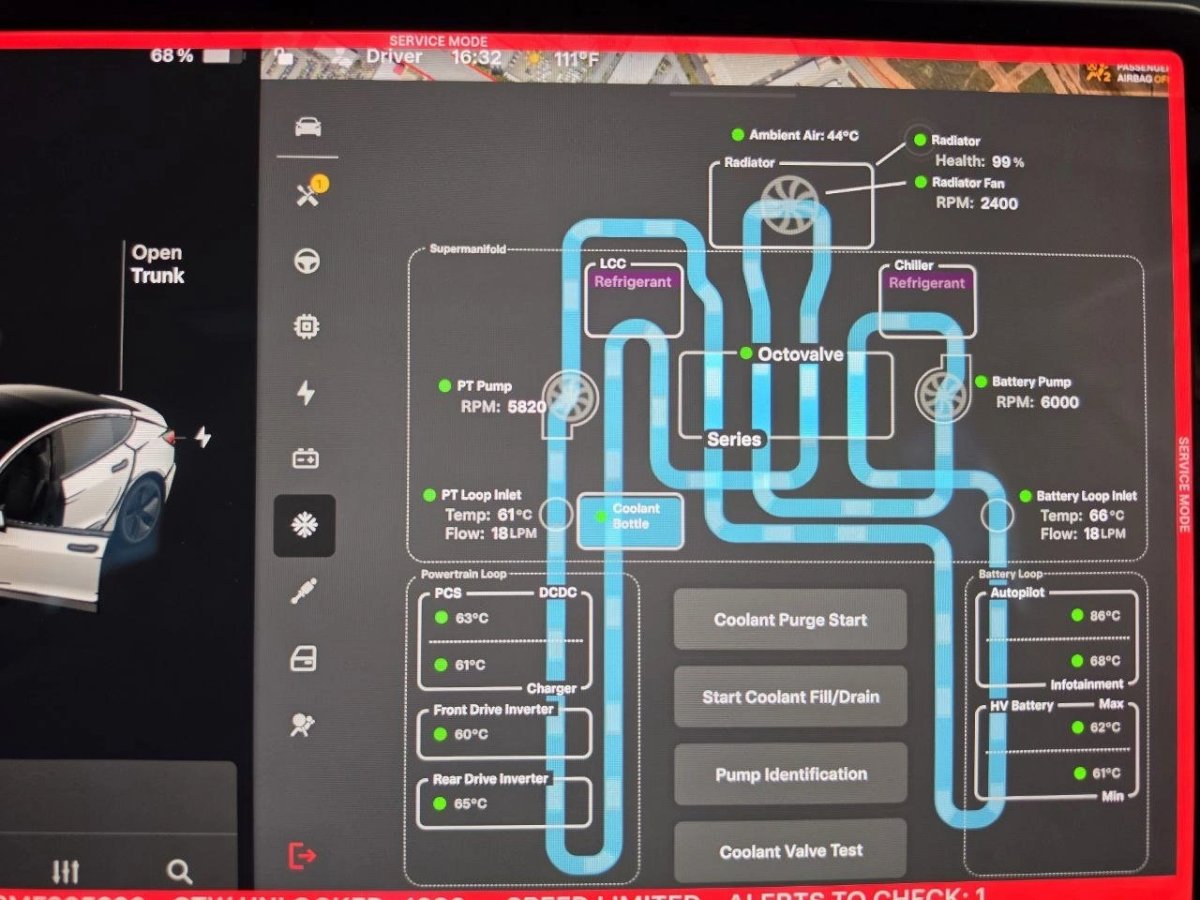
According to Service Mode alerts observed by affected HW3 owners, normal operating temperatures for the HW3 Autopilot computer range between 0°C and 90°C. Once temperatures exceed 90°C, the system throws a thermal fault. On screen, the vehicle forces an FSD disengagement, disables the “Start Self-Driving” button, and displays red steering wheel alerts until the unit cools down.
V14 Lite threw up the red hands and refused to re-engage several times.
— The Michigan Tesla (@Michigan_Tesla) July 23, 2026
Checked service mode and it’s due to the AP ECU overheating. pic.twitter.com/szCo26YWRm
In more severe cases, sustained heat is damaging boards and forcing owners to pay for replacements. Well-known FSD tester @ChuckCook recounted an issue on X affecting a family member’s 2022 HW3 Model Y, stating:
“They took it to Tesla Service while on the road in Boston and they said the HW3 computer was failing or had failed. Now they are on the hook for a new HW3 computer.”
This is another sourcing info from the crowd post about HW3 computer failures.
— Chuck Cook (@ChuckCook) August 3, 2026
I have some family members that I encouraged to buy a Tesla several years ago. They have been driving a 2022 Model Y. They have loved the vehicle, and I finally encouraged them to start subscribing…
Summarizing feedback from third-party service centers, @Tutrifour posted on X: “Saw a lot of posts about Autopilot computers overheating today. Have a customer who has the same issue. Looks like FSD Lite is running hotter and can’t keep up the cooling with the heatwave?”
Thermal Loops and Hardware Limits
The situation appears tied to compute workload and the liquid cooling layout. The HW3 Autopilot ECU sits at the top of the vehicle’s coolant loop, making it the furthest component from the radiator. Any inefficiency in the system affects this area the most, suggesting the root cause may be a combination of factors, not solely FSD v14 Lite driving HW3 computers harder.

Offering one theory on X, @ChinaEV_Eng_Lif suggested the cooling loop could be “transferring heat energy from the cabin into the battery [loop],” which includes the Autopilot computer, and it might not be receiving sufficient cooling as a result.
If a vehicle has low coolant levels, air pockets in the Octovalve, or a radiator fin clogged with road debris, the loop may be unable to shed heat quickly enough. Running high-compute software on aging cooling systems can push chips beyond thermal limits. Because HW3 vehicles are already several years old, they may no longer operate at maximum cooling capacity. If the HW3 Autopilot ECU truly cannot handle FSD v14 Lite unless the cooling loop is operating at its peak, an oversight may need to be addressed.
This thermal issue is another setback for the long-anticipated “Lite” software branch. FSD v14 Lite has also been reported to have trouble seeing objects while reversing, increasing low-speed collision risk. With computers now overheating or failing outside warranty, pressure is mounting to address the compute ceiling on older vehicles.




Teilen:
SpaceX Partners With Nvidia For Starmind AI Satellites
Tesla Model Y L Accessories Expected to Arrive in North America