
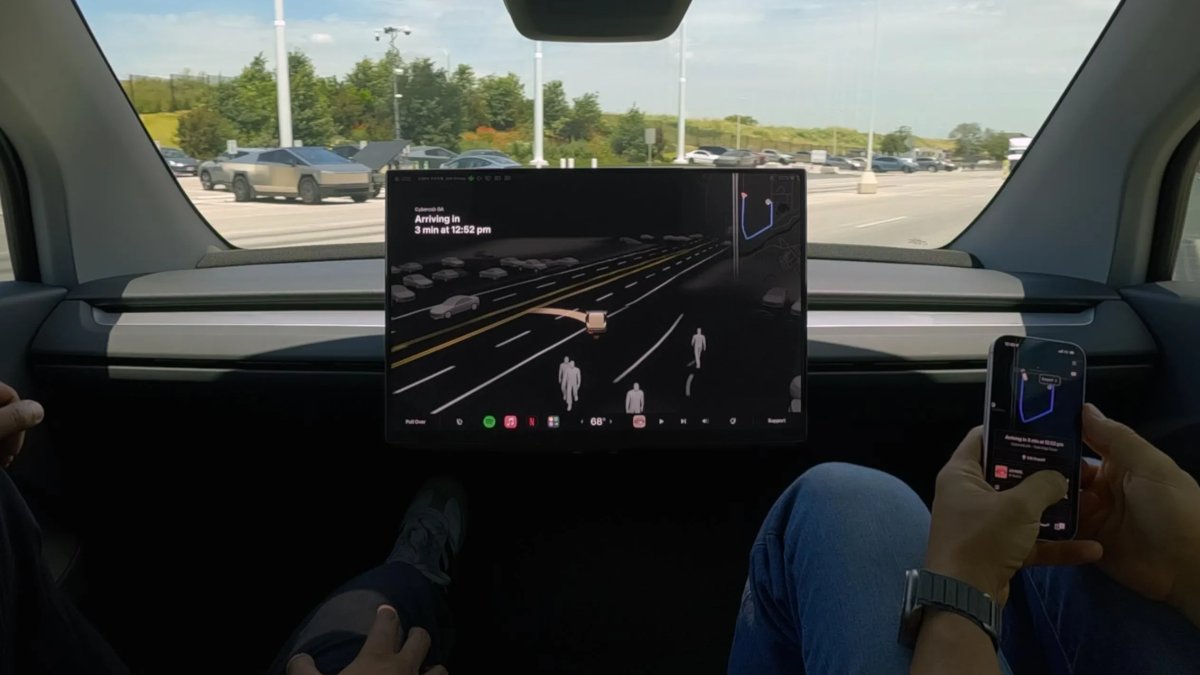

Tesla appears to be quietly preparing to take its autonomous ride-hailing network beyond the U.S., with new job postings suggesting South America could be among the first international markets for the company’s Robotaxi service.
Spotted by longtime Tesla observer @tslaming, the company is hiring AI Safety Operators in Colombia and Chile. These roles combine oversight of day-to-day operations of an autonomous ride-hailing network with ongoing data collection.
What the Job Listings Reveal
The postings advertise full-time engineering positions in Bogotá and El Poblado in Colombia, as well as Las Condes in Chile. According to the descriptions, AI Safety Operators will drive engineering vehicles 6 to 8 hours per day to gather camera and audio data, write drive reports, and debug software equipment.
The duties also explicitly note that operators will "oversee daily operations of ride-hailing services including driver/rider management."

While the positions center on vehicle testing and data collection for the Full Self-Driving (Supervised) team, the inclusion of ride-hailing management indicates Tesla is establishing the framework for autonomous fleet operations in those locations.
Early Stages of International Expansion
This development coincides with Tesla’s Q2 2026 earnings call, where it disclosed that its Robotaxi fleet has crossed 380,000 unsupervised miles. At the same time, the company outlined its next official expansion targets, naming only Las Vegas, Nevada, and Phoenix, Arizona as upcoming U.S. markets with launch preparations underway. There has been no official announcement regarding Robotaxi in South America.
That contrast points to an early validation phase in South America, focused on mapping and data collection rather than an imminent public launch. Even so, these job listings represent the first concrete indication of the Robotaxi service extending beyond U.S. borders.
In the U.S., Tesla recently launched unsupervised Robotaxi rides in Orlando and Tampa after a Miami rollout earlier this month. Tesla has confirmed Robotaxi vehicles are already running FSD v15, which it had positioned as a prerequisite before really ramping up Robotaxi deployment, so the network’s growth is expected to accelerate. International rollouts, however, are likely still some time away.
As public testing of steering wheel-less Cybercabs continues, the purpose-built vehicle is expected to replace the current Model Y robotaxis to support rapid scaling across the U.S. and globally. For now, collecting localized driving data in Chile and Colombia will help the Robotaxi software learn regional road layouts and traffic patterns ahead of any official launch.







Teilen:
Tesla Acquires AI Hardware Company for $2 Billion
Tesla Adds Model Y Camera Washers to Parts Catalog