
Tesla Cybercab Gets New Charge Port, Wheelchair-Height Seats
Tesla is nearing the Cybercab launch, and recent production vehicles show notable refinements, including a substantially updated charge port and an emphasis on accessibility.
With volume production targeted at Gigafactory Texas next month, the design appears to be shifting from experimental ideas toward production-ready hardware.
A New and Improved Charge Port
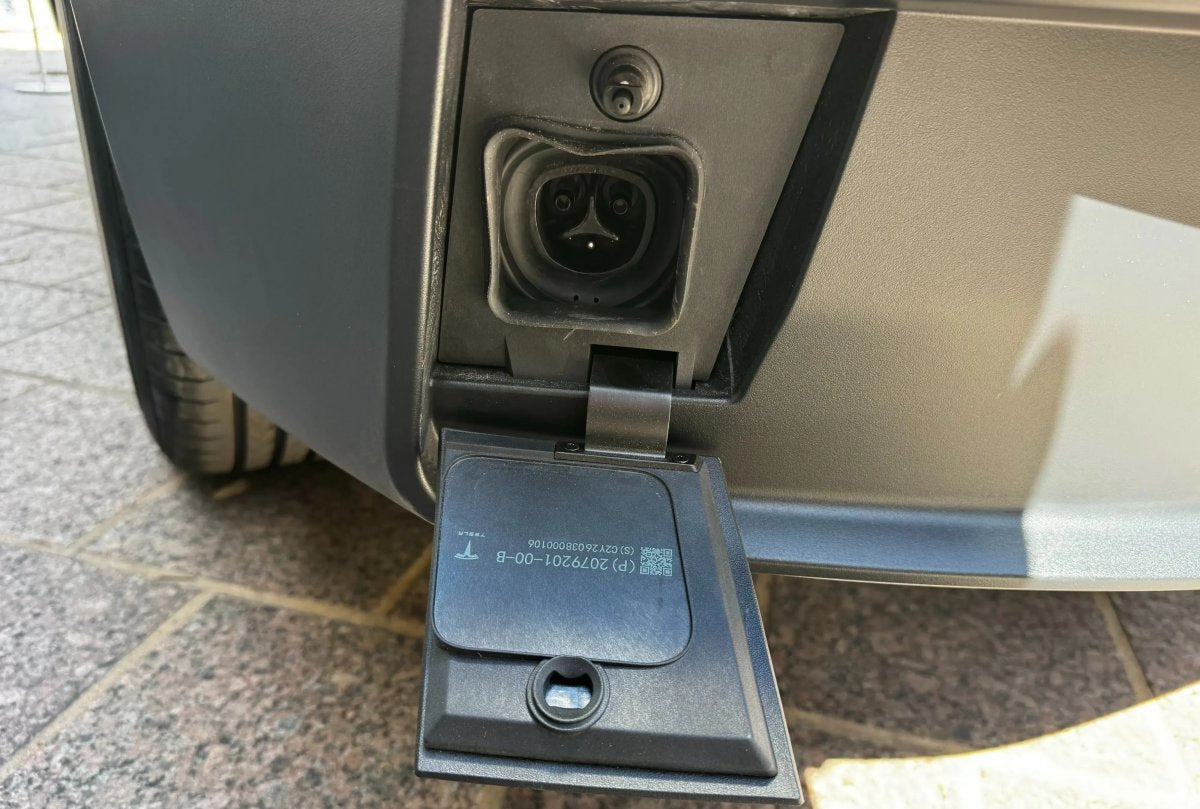
Although Tesla had previously signaled that the Cybercab could rely on wireless induction charging, recent production units have been seen with a more “finished” physical charge port.
According to JoshWest247 on X, the updated port brings several “huge changes” versus earlier prototypes: the assembly is fully integrated with a simpler door, a full surround gasket, and a flexible housing that removes the need for a weather plug. It is significantly different and more polished than the prior iteration.

The flap on the new charge port is not motorized. Given the timing ahead of the April production start, the rollout is expected to begin with traditional plug-in charging using a native NACS port. While Tesla recently won FCC approval for the Ultra Wideband technology needed for wireless charging, that capability now appears destined for a later upgrade rather than being required on day one.
Built for Accessibility
Eric E., the Cybercab Engineering Lead, confirmed that accessibility is central to the design.
“We built the seat height to be inline with standard wheel chair seat height. Accessibility is very important in autonomous vehicles, freedom of transportation for everyone is critical,” said on X.
Matching the seat height to a standard wheelchair is intended to make transfers easier. The combination of the seat height and the butterfly doors allows a wheelchair to align parallel with the seat, leaving ample space to maneuver between them.
Production Refinements and Features
The first production Cybercab has already come off the line. Sightings in Austin point to larger front-facing cameras, an interior trunk camera to help ensure passengers do not leave items behind, and ambient lighting throughout the cabin.
To keep the Full Self-Driving system operating in varied conditions, each external camera is paired with a high-pressure washer system. This level of redundancy has not appeared on consumer Teslas and is necessary for a vehicle intended to eventually ship without a steering wheel or pedals. Inside, nearly all functions are handled by a 21-inch touchscreen, with physical buttons limited to the doors and windows, plus a hazards button that also serves as an emergency stop.
As April mass production approaches, the Cybercab’s hardware and accessibility updates indicate a vehicle being prepared for service in a broad Robotaxi network.


Teilen:
Tesla Update 2026.8 Lets You See Who's Driving in the Tesla App
Digital Optimus Will Run on Your AI4 Tesla