
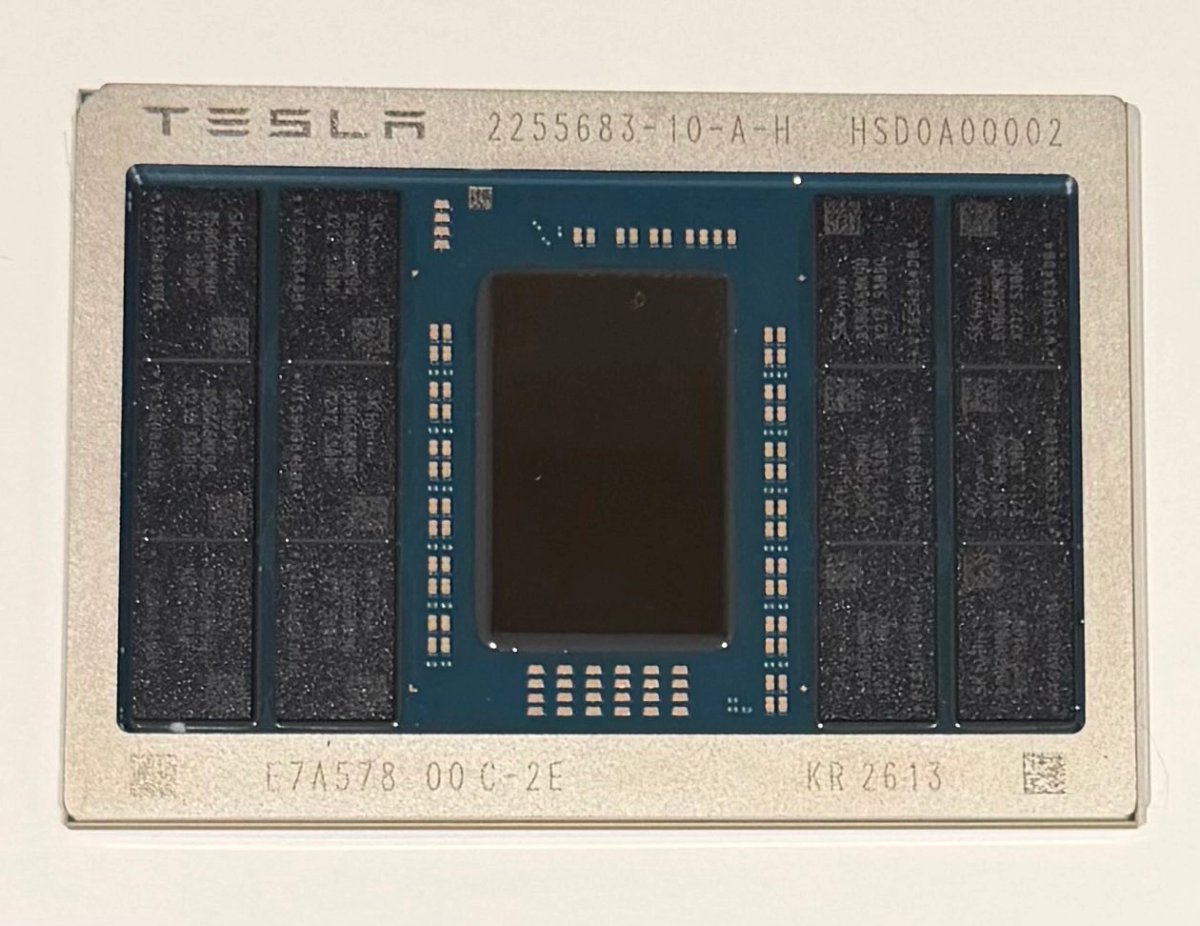

Tesla beschleunigt seine Halbleiterbemühungen und sein bislang leistungsstärkster Chip hat einen wichtigen Meilenstein erreicht. Elon Musk hat am Mittwoch offiziell angekündigt, dass der „AI5“-Chip der nächsten Generation seine Designphase abgeschlossen hat, was auch als „Tape-out“ bekannt ist und einen bedeutenden Fortschritt für das interne Hardware-Team des Unternehmens darstellt.
In einem Beitrag auf X gratulierte Musk dem KI-Chip-Designteam und merkte an, dass sich „AI6, Dojo3 & weitere spannende Chips“ bereits in der Entwicklung befinden. Auf die Frage, ob das neue Silizium zuerst in Autos oder Robotern zum Einsatz kommen würde, sagte er, der anfängliche Fokus für AI5 liege auf „Optimus und unseren Supercomputer-Clustern“. Er sagte außerdem: „AI4 reicht aus, um eine deutlich höhere Sicherheit als die eines Menschen beim FSD zu erreichen.“
Optimus und unsere Supercomputer-Cluster.
— Elon Musk (@elonmusk) 15. April 2026
AI4 reicht aus, um eine deutlich höhere Sicherheit als die eines Menschen beim FSD zu erreichen.
Ein 5-facher Sprung an Rechenleistung
Musk bestätigte, dass eine einzelne AI5-Einheit über die fünffache nutzbare Rechenleistung von zwei AI4-Chips verfügt. Dieser Leistungssprung soll den Ingenieuren Spielraum geben, größere und komplexere KI-Modelle zu entwickeln, ohne an Hardwaregrenzen zu stoßen.
Ingenieure arbeiten heute um die Speicherbeschränkungen des AI4-Computers herum und passen Modelle an, um sie an die aktuelle Hardware anzupassen. Ein Modell mit 10 Milliarden Parametern – ursprünglich für FSD v14 vorgesehen – wurde auf FSD v15 verschoben, das noch einige Zeit auf sich warten lässt. Es wird erwartet, dass AI5 diese Einschränkungen im Laufe der Zeit lindert, aber der humanoide Roboter Optimus und die Trainingscluster des Unternehmens werden bei den ersten Siliziumchargen priorisiert.
Der Zeitplan für Tesla-Fahrzeuge
Obwohl Musk die Bedeutung von AI5 für Autos derzeit herunterspielt, wird erwartet, dass es auf lange Sicht zum Standard für die Fahrzeugpalette wird. AI5 wurde als Schlüssel zur Ermöglichung einer Autonomie präsentiert, die „sicherer als der Mensch“ ist, und der aktuelle Schwerpunkt auf AI4 scheint ein vorübergehender Schritt zu sein, der auf Liefer- und Fertigungszeitpläne abgestimmt ist.
Es wird nicht erwartet, dass Verbraucherfahrzeuge vor 2027 mit AI5 ausgestattet werden, nachdem Samsung und TSMC die Massenproduktion aufgenommen haben. Das Cybercab-Robotaxi, dessen Serienproduktion diesen Monat anlaufen soll, startet mit AI4-Hardware und wird wahrscheinlich eines der ersten Produkte sein, das nach Verfügbarkeit ein Mid-Cycle-Refresh mit AI5 erhält.
Jenseits von AI5: Der 9-Monats-Zyklus
Das Unternehmen strebt einen neunmonatigen Entwicklungszyklus für seine Chips an. Mit Blick auf die Zukunft ist der Produktionsstart des AI6-Chips für 2028 geplant, wobei Samsung die Fertigung exklusiv in den USA übernimmt.
Unterdessen wird der Dojo 3 (D3)-Chip für orbitale Rechenzentren im Weltraum optimiert. Durch die Verlagerung der Rechenleistung in den Weltraum könnte das Unternehmen die Einschränkungen des Stromnetzes auf der Erde umgehen.




Teilen:
Tesla FSD endlich in Europa zugelassen: Was das für Besitzer bedeutet (und warum HW3-Nutzer frustriert sind)
US Mobile bündelt Starlink-Internet und unbegrenzten Mobilfunktarif für unter 50 Dollar