
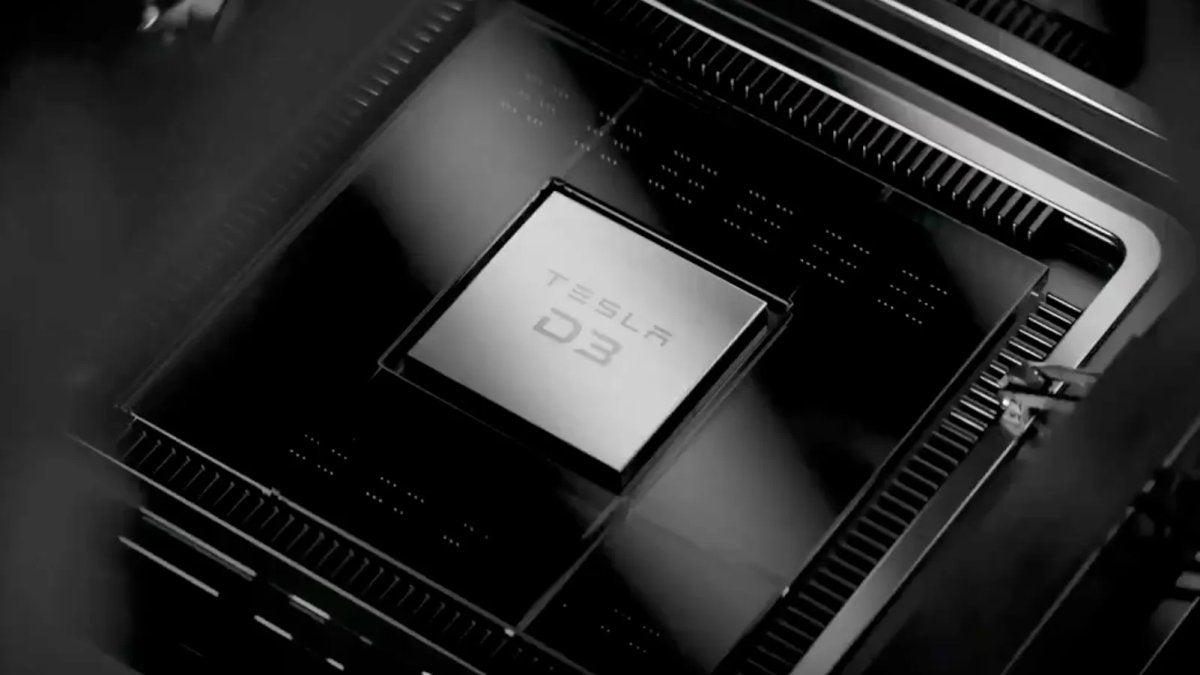

Auf der TERAFAB-Auftaktveranstaltung in Austin skizzierte Elon Musk eine Silizium-Roadmap, die den kombinierten Bedarf von Tesla, xAI und SpaceX im kommenden Jahrzehnt decken soll. Während AI5 und AI6 als einheitliche Gehirne für Millionen von Robotaxis und Optimus-Humanoiden die meiste Aufmerksamkeit auf sich zogen, erschien ein dritter, hochspezialisierter Chip auf der Präsentationsfolie und im Video des „Lunar Mass Driver“: D3.
D3, kurz für Dojo 3, markiert eine Neuausrichtung des kundenspezifischen Siliziumprogramms von Tesla. Anstatt mit NVIDIA bei terrestrischen Supercomputern zu konkurrieren, ist die Dojo-Architektur darauf ausgelegt, den Großteil der menschlichen Rechenleistung im Weltraum auszuführen.
Der Schwenk von der Erde in den Orbit
Das Dojo-Projekt begann mit dem D1-Chip und dem Dojo-Supercomputer, die auf einen erdgebundenen Videotrainings-Cluster für FSD abzielten. Als der D2-Chip später in die Massenproduktion ging, lieferte er erhebliche Leistungssteigerungen.
Da die Architekturen für FSD und den Optimus-Roboter unter den kommenden AI5- und AI6-Prozessoren zunehmend konvergierten und xAI massive, Gigawatt-skalierbare Cluster unter Verwendung kommerziell erhältlicher GPUs aufbaute, kamen viele Branchenbeobachter zu dem Schluss, dass Dojo faktisch am Ende sei.
Die TERAFAB-Präsentation zeigte jedoch, dass das Programm nicht endet; es hat sich verlagert, um eine größere Einschränkung anzugehen: die begrenzte Stromversorgung der Erde für die sich beschleunigende KI-Welle.
Weltweit werden nur etwa 100 bis 200 Gigawatt an Rechenkapazität pro Jahr hinzugefügt, begrenzt durch lokale Stromnetze, Kühlung und physischen Platzbedarf. Um ein Terawatt und schließlich ein Petawatt zu erreichen, muss die Hardware in den Weltraum verlagert werden. Genau hier setzt D3 an.
Frei von irdischen Grenzen
D3 unterscheidet sich von AI5 und anderen bodengestützten Prozessoren, da er für die rauen, aber vorteilhaften Bedingungen im Weltraum konzipiert ist.
Auf der Erde muss das Chipdesign enorme Anstrengungen in die Wärme- und Leistungsabfuhr stecken. Im Weltraum, mit einer quasi unendlichen Wärmesenke und ohne Abhängigkeit von einem fragilen lokalen Stromnetz, kann D3 ein Chip mit weitaus höherer Leistung sein, der sicher bei Temperaturen arbeitet, die über denen typischer terrestrischer Prozessoren liegen.
Die Architektur ist zudem stark strahlungsgehärtet. Außerhalb des Erdmagnetfeldes kann intensive kosmische Strahlung Bit-Flips und katastrophale Hardwareausfälle in Standard-Silizium verursachen. D3 ist von Grund auf so gebaut, dass er in dieser Umgebung zuverlässig arbeitet.
Die Ökonomie von Weltraum-Rechenzentren
Warum D3 in eine Umlaufbahn bringen? Musk prognostizierte, dass es in wenigen Jahren tatsächlich günstiger sein wird, Chips in den Weltraum zu schicken, als ein traditionelles Rechenzentrum am Boden zu errichten.
Der Plan kombiniert D3 mit der Schwerlastkapazität von SpaceX. D3-Prozessoren werden in großen 100-Kilowatt-Orbital-Server-Racks – „AI Sat Minis“ – installiert, die jeweils etwa eine Tonne wiegen und von Starship in den Orbit gebracht werden.
Einmal in der Umlaufbahn, sinken die Betriebskosten drastisch. Da diese Satelliten für rund um die Uhr ununterbrochenes Sonnenlicht positioniert sind, benötigen sie keine schweren, teuren Backup-Batterien, um die Systeme am Laufen zu halten. Solar-Arrays im Weltraum sind zudem deutlich günstiger in der Herstellung als terrestrische Paneele, da sie kein schweres Glas oder dicke Aluminiumrahmen benötigen, um Wetter und Schwerkraft zu widerstehen.
Gründung einer galaktischen Zivilisation
D3 dient als wichtiges Bindeglied zwischen Teslas KI-Zielen und den interplanetaren Ambitionen von SpaceX.
Während AI6 Fahrzeuge steuern und durch Optimus körperliche Arbeit antreiben wird, liefert D3 das unsichtbare Rückgrat. Große Konstellationen von D3-gestützten AI Sat Minis, die im Orbit operieren, werden die immense Rechenleistung übernehmen, die erforderlich ist, um die Intelligenz von xAI zu skalieren, ein marsianisches Internet zu unterstützen und letztlich die Expansion in den tiefen Weltraum zu steuern.




Teilen:
Teslas 6-sitziges Model Y L erreicht 8 neue Märkte in Asien
Was ist Starlink? Geschwindigkeiten, Preise und das Ende der Funklöcher