

Legacy automakers are being squeezed as Tesla and fast‑growing Chinese brands capture more market share, forcing incumbents to consider measures that would have seemed unlikely only a few years ago.
The Most Radical Overhaul in 89 Years
Germany’s Manager Magazin reports that Volkswagen plans to eliminate 100,000 jobs and wind down production at four German plants over the coming years (via CNBC). The shake-up would be the company’s most significant in its 89-year history, amounting to roughly 15% of its global workforce. The plan calls for ending vehicle production in Hanover, Zwickau, and Emden, as well as Audi’s Neckarsulm site. Volkswagen also intends to cut planned five-year investments by 15% to about €130 billion ($148.2 billion).
The move would surpass earlier labor agreements that limited domestic job reductions to 50,000 through 2030. While the executive board did not comment on confidential materials, a spokesperson said the Group, including its brands and subsidiaries, must undergo major changes. Labor representatives pushed back. Volkswagen’s General Works Council and IG Metall issued a joint statement:
“If such plans were to be pushed forward, we would prevent them with all our might.”
Caught in a Tight Competitive Squeeze
Falling market share amid competition from newer, leaner manufacturers is driving the pressure in Europe. In 2022, the Tesla Model Y broke VW’s 53-year-old record for the most single-model registrations in a calendar year in Norway. Tesla continues to top monthly car sales in Norway’s EV-focused market by a wide margin.

In Germany, the gap is also narrowing. In Q1 2026, Volkswagen sold 131,012 vehicles domestically for an 18.7% market share, a 5.3% year-over-year decline even as the overall German market grew 5.2%. Over the same period, Tesla’s sales in Germany rose 160% to 12,601 vehicles, and BYD’s climbed 644.5% to 9,120 units. Notably, VW’s volumes span multiple brands and numerous models, while Tesla relies largely on the Model Y and Model 3.
The Regional Picture
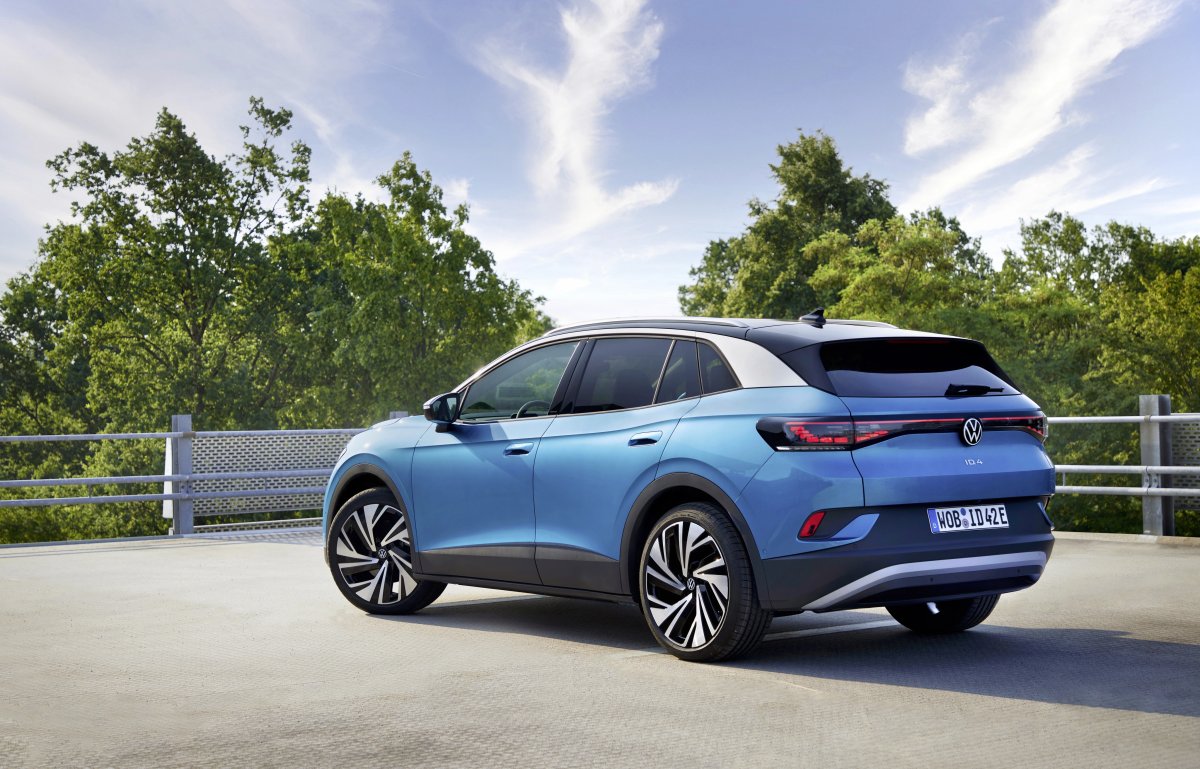
Across Europe, the Volkswagen Group delivered 983,800 vehicles in Q1 2026, up 4.7%. Tesla delivered 78,336 vehicles over the same period, a 44.9% increase year-over-year. By model, the Model Y ranked as the second best-selling vehicle across all powertrains in Europe with 51,468 units in Q1. VW’s top seller, the T-Roc, recorded 48,700 sales, while the ID.4 and ID.5 together reached just over 25,000 units.
To address software and battery integration challenges, Volkswagen previously pursued a joint venture through a $5 billion stake in Rivian. However, with Chinese automakers aggressively pricing and scaling production, high-cost domestic manufacturing is becoming harder to justify as the transition to all-electric vehicles accelerates.




Condividi:
Tesla Plans New Factory Building and Rail Hub at Giga Berlin
Tesla Cybercab Patent Reveals Unique Wheel Design