
Tesla's LFP Batteries Hold Up Best Over Time in New Study

Long-term battery durability is a key consideration for electric-vehicle buyers. Real-world results now indicate that modern EV battery packs retain capacity far better than early expectations.
A study by Swedish online marketplace and dealership Carla analyzed 9,954 battery tests conducted on Swedish EVs between 2022 and 2026. The assessment tracked how battery health changes after 10,000 Swedish miles, equal to 100,000 kilometers (about 62,000 miles).
Kia and Hyundai models led the rankings, with the Kia e-Niro, Hyundai Kona, and Kia EV6 taking first, second, and third, each retaining well above 95% capacity. Tesla placed four models in the top 20. Full rankings:
| Rank | EV Model | Avg. battery health retained past 62,000 mi (%) |
|---|---|---|
| 1 | Kia e-Niro – 64 kWh | 97.25 |
| 2 | Hyundai Kona – 64 kWh | 97.18 |
| 3 | Kia EV6 – 77.4 kWh | 95.95 |
| 4 | Volvo XC40 Recharge – 69 kWh (CATL) | 94.70 |
| 5 | Polestar 2 – 78 kWh (CATL) | 94.35 |
| 6 | BMW i3 – 120 Ah | 93.77 |
| 7 | Polestar 2 – 78 kWh (LG Chem) | 93.53 |
| 8 | Tesla Model 3 – 60.5 kWh (CATL LFP) | 93.34 |
| 9 | Audi e-tron 50 – 71 kWh | 93.02 |
| 10 | Audi e-tron 55 – 95 kWh | 92.93 |
| 11 | Skoda Enyaq iV – 77 kWh | 92.88 |
| 12 | Tesla Model 3 – 78.8 kWh (LG Chem) | 92.83 |
| 13 | Tesla Model S – 96 cells | 92.80 |
| 14 | Volkswagen ID.4 – 77 kWh | 92.77 |
| 15 | Skoda Enyaq iV – 77 kWh | 92.60 |
| 16 | Tesla Model X – 96 cells | 92.52 |
| 17 | Volkswagen ID.4 – 77 kWh | 92.27 |
| 18 | Tesla Model Y – 78.8 kWh (LG Chem) | 92.18 |
| 19 | Audi Q4 e-tron – 77 kWh | 92.18 |
| 20 | Volkswagen ID.3 – 58 kWh | 91.79 |
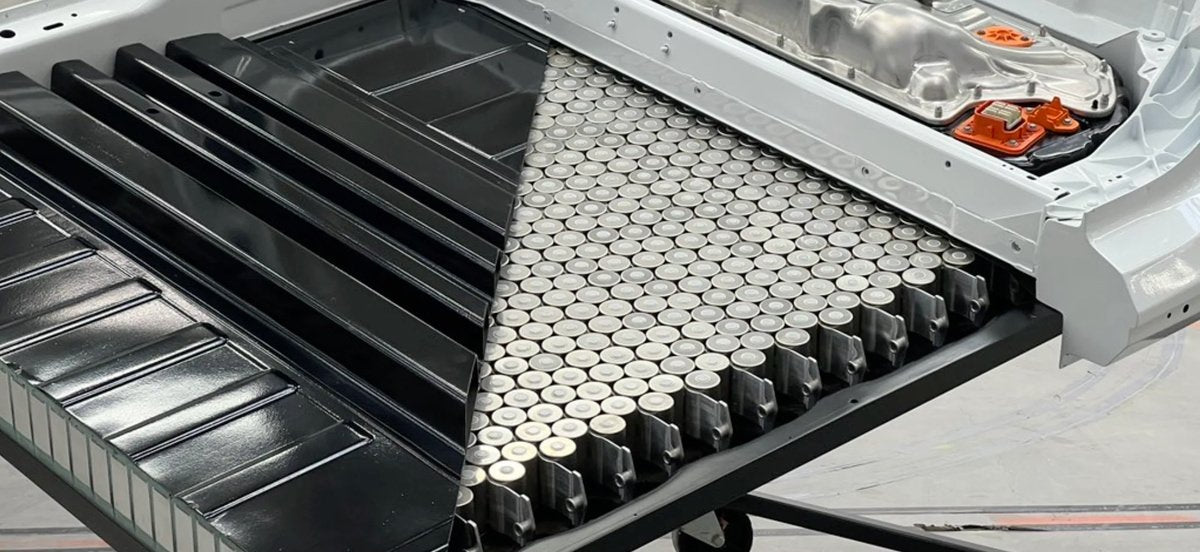
The results indicate that Tesla’s Lithium Iron Phosphate (LFP) variants outperform its nickel-based packs. The CATL LFP Model 3 led Tesla’s entries in 8th at 93.34%, the LG Chem Model 3 followed in 12th at 92.83%, the older Model S placed 13th at 92.80%, the Model X ranked 16th at 92.52%, and the LG Chem Model Y was 18th at 92.18% after about 62,000 miles.

The Chemistry Breakdown
The study also compared Model 3 variants under similar usage and climate conditions. Model 3 units with a 60.5 kWh LFP pack from CATL averaged 93.34% battery health after roughly 62,000 miles.
Nickel-based versions of the same vehicle showed more degradation. Model 3 cars with an LG Chem Nickel Manganese Cobalt (NMC) pack measured 92.83%, while long-range Panasonic packs using Nickel Cobalt Aluminum (NCA) cells were lower, between 88.2% and 89.8%.
| Tesla Model 3 Battery Variant | Battery Chemistry | Avg. battery health retained past 62,000 mi (%) |
|---|---|---|
| CATL | LFP | 93.3 |
| LG Chem | NMC | 91.5 |
| Panasonic 77.8 kWh | NCA | 89.8 |
| Panasonic 52.4 kWh | NCA | 88.2 |
LFP cells are chemically stable and tolerate frequent 100% charges better than nickel-based chemistries. The top three EVs in this dataset use NMC cells, and their cell compositions and battery management systems appear tuned for longevity rather than peak performance or charge speed.
Tesla initially adopted LFP cells to reduce manufacturing costs, with owners benefiting from durability as a side effect. Supplier CATL has since unveiled its third-generation Shenxing LFP battery with very fast charging speeds. Tesla is also doubling down on LFP in the U.S., including a $4.3 billion deal with LG for an LFP battery factory in Michigan.

What This Means for Used EV Buyers
In the U.S., the average driver covers about 13,500 to 14,500 miles annually, so it typically takes more than four years to reach the study’s mileage threshold.
Overall outcomes are encouraging: many modern EVs retain a large share of capacity at higher mileages. Usage drives most degradation, but habits like frequent DC fast charging, leaving the pack near 0%, consistently charging to 100%, and poor conditioning can accelerate loss. For more guidance, see a detailed round-up of Tesla’s battery health tips.

Battery degradation is a smaller concern today than earlier in the decade. Typical EV ranges exceed 300 miles, many packs include buffer capacity to absorb wear, and batteries commonly retain more than 90% capacity after years of ownership. The data suggests the battery pack will likely outlast the vehicle chassis.
It still makes sense to check battery health when purchasing a used EV, especially on models with older chemistries. Accessing this information on a Tesla’s screen became more difficult after the battery health test feature was quietly removed from the in-car Service menu last year.





Condividi:
Tesla Launches New Balance Bike for Kids
Tesla Releases Q2 2026 Earnings Estimates from Analysts