
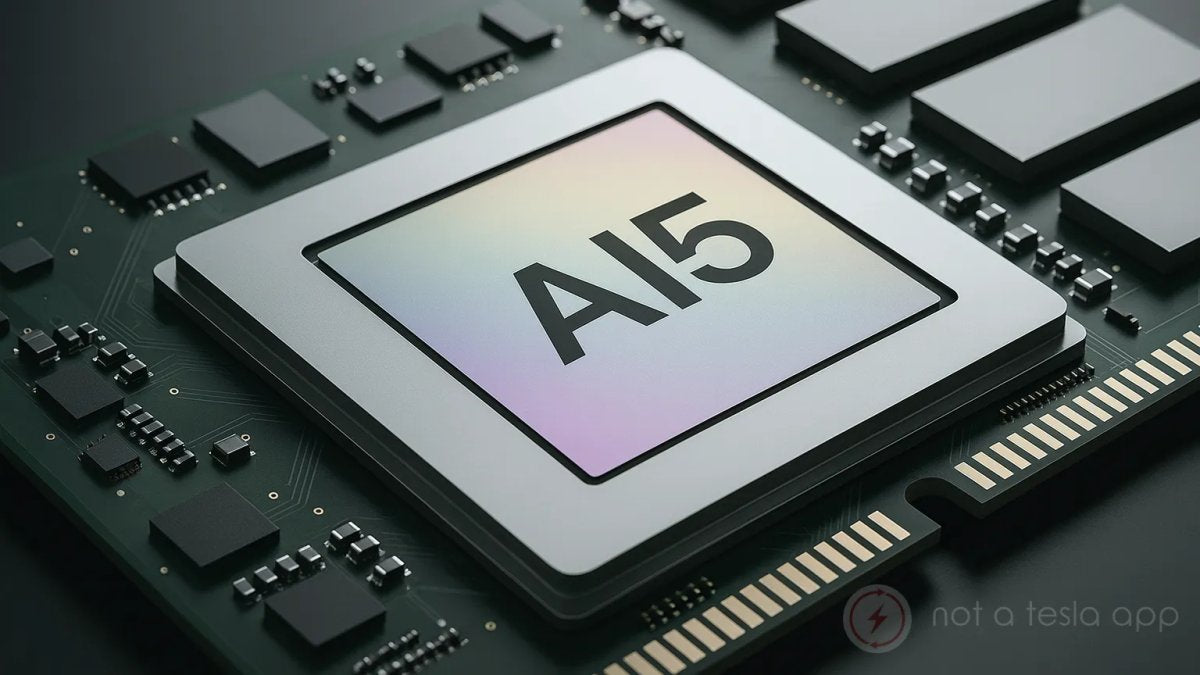
Tesla Sets AI5 RAM at 96GB and AI6 at 144GB to Scale Output
Tesla has reduced the planned memory configurations for its next-generation AI5 and AI6 chips to improve production volume, with priority on the Optimus humanoid robot.

What Musk Said About AI5 and AI6 RAM
Elon Musk shared earlier this week that Tesla initially cut AI5’s RAM in half to 72GB of LPDDR5 and reduced AI6’s RAM by a third to 144GB of LPDDR6. He described the change as “the only way to get enough volume for Optimus production,” adding that it also significantly lowers cost.
On performance, Musk said Tesla expects “a negligible effect on Optimus performance,” noting that memory bandwidth is the limiting factor rather than total capacity, and overall bandwidth remains unchanged.
He later adjusted the plan by increasing AI5 to 96GB, explaining that “Tesla would otherwise be the only company using the min RAM version of LP5.” With that change, AI5 now has roughly a third less memory than originally planned rather than half, similar to AI6.
How That Compares to Current Hardware
AI4 computers ship with 32GB of GDDR6, composed of 16GB per chip across two chips on each mainboard. By comparison, Hardware 3 included 8GB of LPDDR4 RAM per chip, but bandwidth was the main constraint there, at roughly 15% of AI4.

Tesla is also preparing a mid-generation AI4+ (or AI4.5) update with more memory and compute, expected to double AI4’s memory to 32GB per chip and 64GB total. AI5, AI6, and later platforms are anticipated to use a single chip per board, so all onboard memory serves one SoC.
Industry-wide memory supply remains tight amid surging AI demand, and “RAMageddon” shows no sign of easing. DRAM maker Micron estimates each humanoid robot may require around 200GB of RAM. Trimming gigabytes per chip improves build volume, but it also means Tesla must make Optimus operate with less than half the memory the industry projects.
Where AI5 Stands
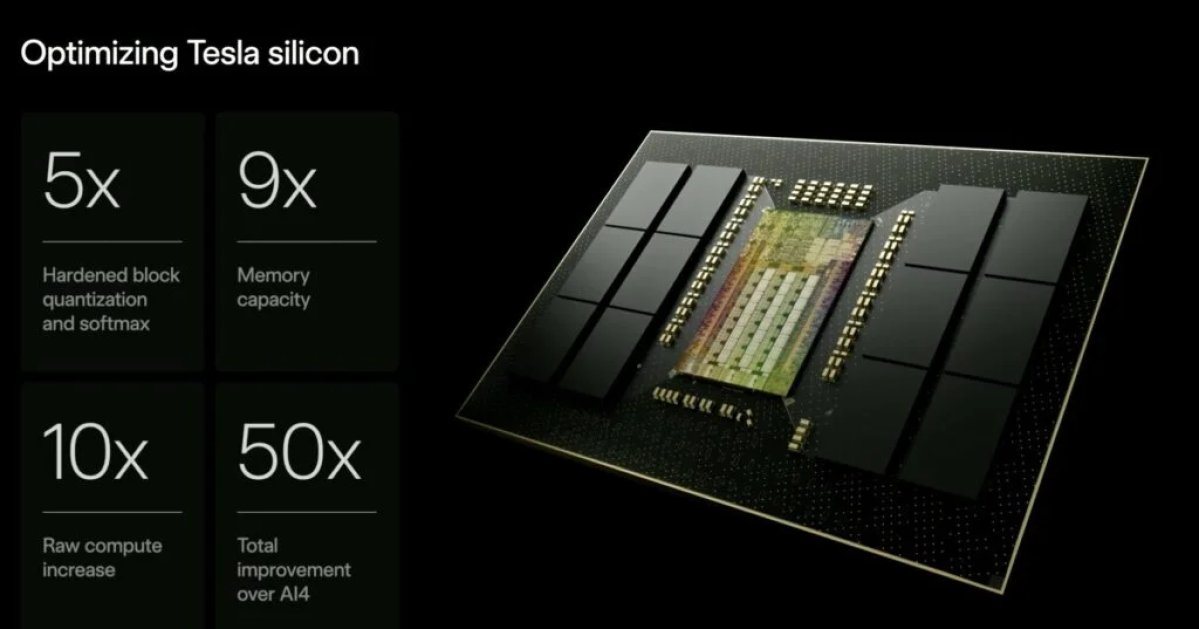
Samsung recently began trial production of AI5 at its Taylor, Texas fab, with mass production targeted for 2027. In terms of compute, Musk has said a single AI5 chip delivers five times the performance of a full two-chip AI4 computer.
AI5 will not debut in vehicles. Musk has said AI5 isn’t coming to vehicles first, with Optimus and Tesla’s AI training clusters prioritized before the hardware potentially moves into passenger cars.
Musk has long maintained that the current AI4 hardware is sufficient for unsupervised autonomy. Tesla is already operating driverless (and steering wheel-less) Cybercabs and Model Y robotaxis without AI5, although the Cybercab does include more powerful FSD hardware than AI4 cars, even if that hardware isn’t AI5.
If Musk is correct about bandwidth, the smaller memory pools should not hinder Optimus, and the revised configurations help Tesla produce more chips at a lower per‑unit cost when volume manufacturing begins next year.



Condividi:
Musk: FSD v15 Focuses on Nighttime Pet Avoidance Before 24/7 Robotaxi