
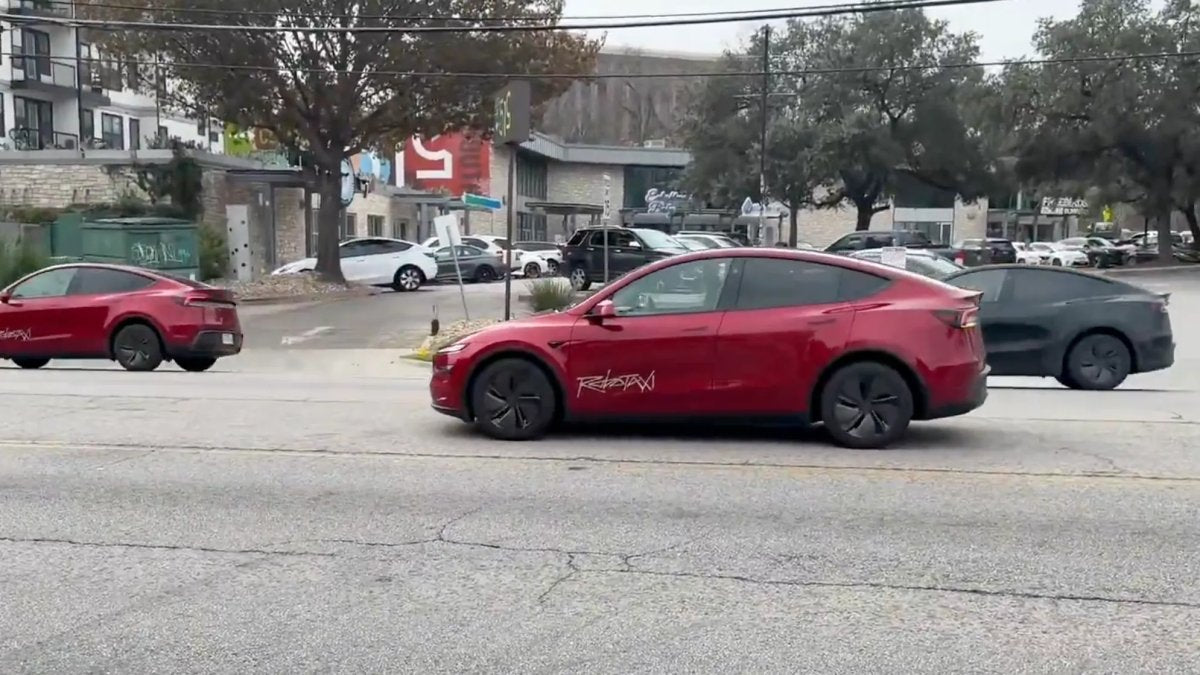

After nearly a decade of anticipation, Tesla has begun offering fully unsupervised Robotaxi rides to the public in Austin, Texas.
As of Thursday, January 22, 2026, customers who request a Tesla Robotaxi in Austin may be picked up by a Model Y with no one inside.
I am in a robotaxi without safety monitor pic.twitter.com/fzHu385oIb
— TSLA99T (@Tsla99T) January 22, 2026
No Safety Monitor
Until now, Robotaxi trials in Austin always included a human safety monitor in either the passenger seat or the driver’s seat, supervising the car. These monitors did not steer or accelerate but could stop the vehicle or have it pull over at the press of a button.
For a short time in December, employees received fully unsupervised rides, and empty Robotaxis were spotted operating autonomously around Austin. That program didn’t expand—until today—when the safety net was removed for select rides.
The launch was confirmed by Tesla’s VP of AI, Ashok Elluswamy, who commented on the first video shared. He said Tesla is mixing a limited number of unsupervised vehicles into the broader Robotaxi fleet that still uses safety monitors, with plans to gradually phase monitors out over time.
With this mixed-fleet approach, riders within the Austin geofence may receive one of the new unsupervised units. Without a safety monitor, passengers can now sit in the front seat as well.
These vehicles are standard Tesla Model Ys running the latest Robotaxi FSD builds.
Trailing Vehicles
My first unsupervised @robotaxi ride here in Austin! Come along with me on this 1st experience of driving around Austin with just me in the car and in the back seat!
— Joe Tegtmeyer 🚀 🤠🛸😎 (@JoeTegtmeyer) January 22, 2026
Congrats to the @Tesla_AI team! 🤠👍 pic.twitter.com/YVJ19zp2qZ
Although these Robotaxis arrive with no one on board, Tesla is still visually monitoring them for now. Multiple Tesla vehicles trail behind, presumably observing from farther back, as seen in the video above.
The trailing vehicles likely have controls similar to those of a safety monitor, enabling them to stop the Robotaxi in place or direct it to pull over.
It’s reasonable to have a safety net at launch; time will tell how long these trailing vehicles remain part of the operation.
The Big Moment
This rollout places Tesla among the few companies offering truly driverless public rides, alongside Waymo and Zoox.
However, Tesla’s approach differs significantly. While Waymo depends on costly LiDAR arrays and carefully pre-mapped HD geofences, Tesla aims for the same outcome using only cameras and AI. If the Austin pilot scales without major incidents, it would validate Tesla’s strategy and likely lead to broader deployment across Texas and, eventually, other U.S. states.

Condividi:
Tesla FSD Hardware 4.5 Appears: A 3-Chip Upgrade Before AI5?
Tesla Update 2026.2 - Release Notes