
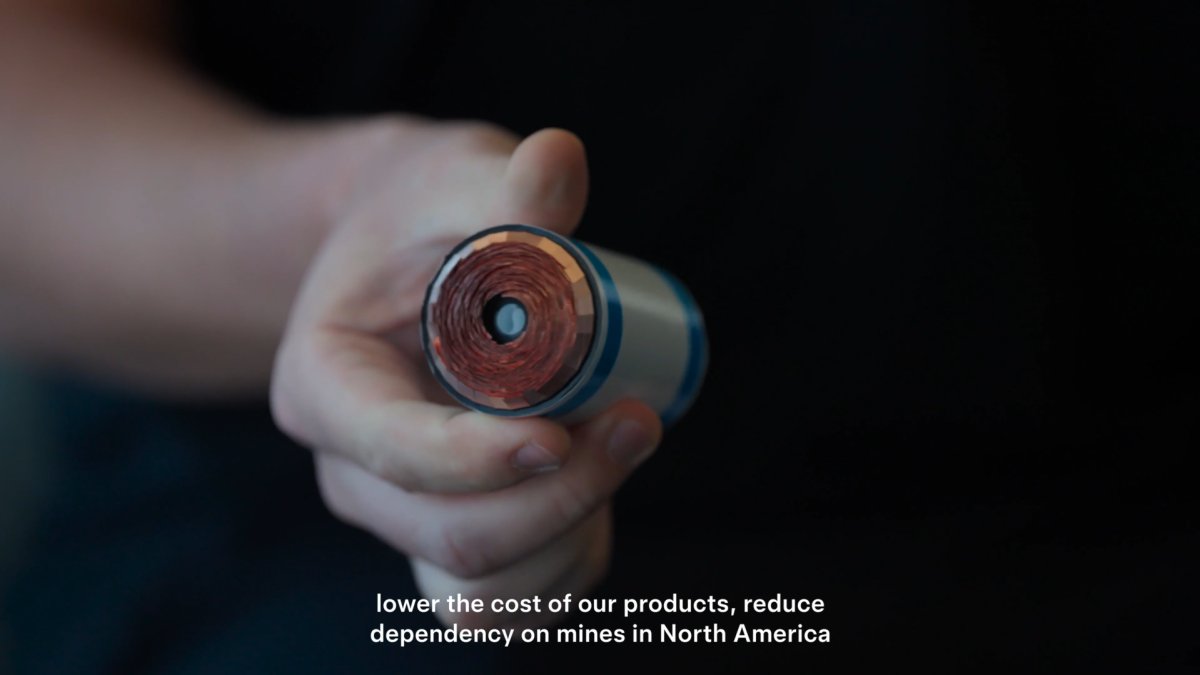
Tesla Battery Recycling to Rival North American Mining Output

Closing the loop in battery manufacturing is central to a sustainable supply chain. Instead of allowing degraded packs to accumulate in scrap yards, Tesla is scaling closed-loop recycling across the United States to reclaim critical raw materials before any waste reaches a landfill.
On X, @tesla_na shared an update on the company’s current recovery performance:
“Our goal is for no Tesla battery to end up in a landfill. Across our US operations, we’re recovering more than 90% of key battery materials like nickel & cobalt from cells that we recycle.”
Zero Landfill Goals and Current Processing Volume
Tesla recycles 100% of its scrapped lithium-ion batteries, with none sent to landfills. Scrap from factory lines, R&D labs, and end-of-life vehicles is routed to dedicated recycling facilities in Nevada and Texas. There, technicians disassemble and process material to recover more than 90% of essential metals such as lithium, cobalt, and nickel, which are then returned to the battery supply chain.
These sites are already managing substantial throughput. In 2025, the Nevada facility recycled over 3,000 metric tons of battery material, roughly equivalent to 9,000 Model Y Rear-Wheel Drive battery packs. The newer Texas facility is expected to handle another 3,000 metric tons of battery material this year.
Including external recycling partners, Tesla recycled 14,000 tons of batteries in 2025, demonstrating that closed-loop processing is viable at commercial scale.
Matching North American Mining Output by 2030
As recycling capacity increases, the long-term objective is to match raw material extraction rates. By 2030, Tesla expects recycled material output to rival the total production from mines across North America.
For context, domestic lithium extraction remains limited today. Existing operations, centered largely around Silver Peak, Nevada, produce roughly 5,000 metric tons of lithium carbonate equivalent (LCE) per year. Meanwhile, major projects like Phase 1 of the Thacker Pass development in Nevada are slated for completion in late 2027, targeting an additional 40,000 metric tons of battery-quality LCE annually. Expanded recycling reduces reliance on new mining sites.
By processing manufacturing scrap and end-of-life vehicle packs internally, Tesla is building a self-sustaining materials pipeline that lowers battery costs and reduces supply chain emissions with every vehicle produced.








Condividi:
Tesla app update 4.59.5
Tesla Files Plans for $10.1B Solar Cell Factory in Texas