
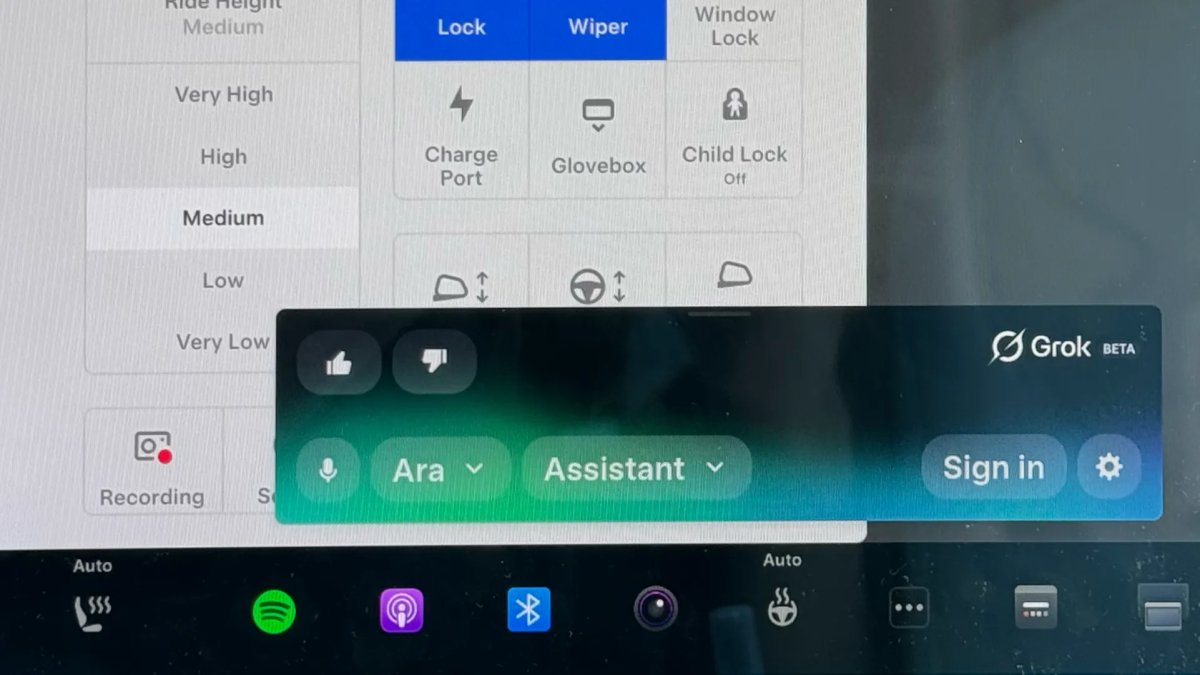

Tesla owners have been using Grok in their vehicles since last year, and the next step is far more conversational control. Beyond music search or setting navigation, drivers are poised to direct how Full Self-Driving (Supervised) behaves using natural language.
The Three-Month Timeline
The timing comes from Elon Musk. After an X user shared a wishlist for controlling FSD via the in-vehicle AI, Musk replied with a specific estimate, stating, “This functionality will be there in about 3 months or so.” Musk had previously said FSD integration for Grok was being developed, and this response provides the first clear launch window. If the estimate holds, these advanced voice features could begin reaching vehicles in the fall.
This functionality will be there in about 3 months or so
— Elon Musk (@elonmusk) June 18, 2026
Moving From Chatbot to Co-Pilot
Grok first appeared in cars in the U.S. last summer as a beta assistant before arriving in Canada, Europe, and additional regions. Availability expanded to more countries earlier this month, building a larger global user base for the upcoming capabilities.

Vehicle integration has increased over time. The 2025 Holiday Update added Grok navigation commands, enabling drivers to add waypoints or reroute trips smoothly. More recently, the Spring 2026 feature drop (software update 2026.14 and later) introduced a hands-free “Hey Grok” wake word and location-based Navigation Reminders, allowing requests like "remind me to pick up orange juice when I’m near home.”

Extending control to the actual FSD stack is the logical next step. While newer FSD (Supervised) versions can sometimes be nudged to take specific turns by using the turn signal at an intersection, tying Grok into the system would let drivers replace physical input with plain English (and potentially other languages later).
Solving the Destination Parking Problem
Parking is where this integration could be most impactful. FSD v14.1 introduced Park at Destination options, but on-screen choices remain limited, and you still can’t specify the exact spot. With Grok as the interface to the neural net, drivers could issue precise instructions on the fly, such as "Navigate to the hardware store and back into a parking spot near the door," or "Take me home and pull into the driveway."
Looking ahead, the same conversational layer could eventually manage cabin functions at a deeper hardware level. For example, after exiting the car, saying "Hey Grok, enable Pet Mode," or requesting particular climate profiles by voice could become possible. For now, the prospect of directing FSD by voice as early as this fall is the next step.


Condividi:
Il segreto di Tesla è svelato: cosa significano gli avvistamenti di Cybercab per il tuo futuro
Musk Exercises Stock Options Worth $114B, Now Owns More of Tesla