
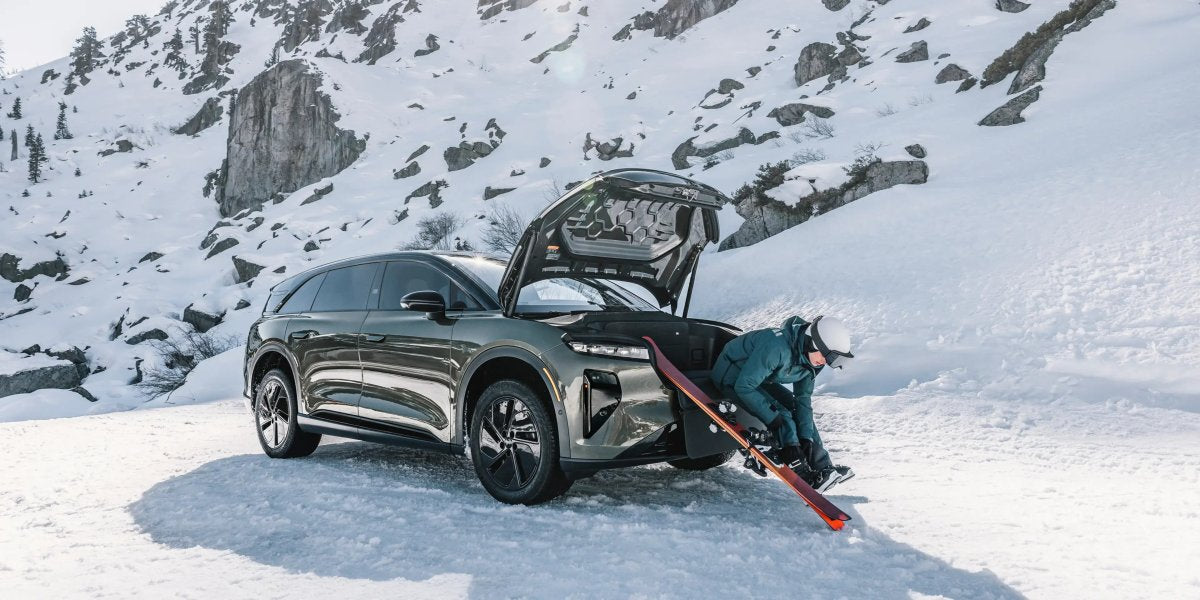


In 2024, I spent time driving the Lucid Air Touring, an experience that highlighted what a startup can achieve when it focuses on driving dynamics and interior luxury.
At the 2026 Canadian International Auto Show in Toronto, I finally sampled its long-awaited sibling, the Lucid Gravity. I didn’t drive it, but I rode along on public roads in the Gravity Touring and had hands-on time sitting inside the flagship Grand Touring trim.
* Lucid has noted that a Press Vehicle will be available for Canada later in 2026.
Coming from daily use of a Cybertruck, previously a Model Y and before that a Mercedes-Benz GLC, with extensive time in the Model S and Model X, I wanted to see how this new three-row SUV stacks up against Tesla’s halo models. Here are my first impressions.
The Cabin: Luxury Defined
The first thing that stands out isn’t the exterior but the interior, where Lucid once again excels. Moving between the Touring and Grand Touring, the seats front and rear are exceptionally comfortable; heating and cooling activate very quickly, and front-seat massage is a big plus for long trips.
Lucid successfully translated the Air’s design language to the larger Gravity. The cabin feels spacious and premium. By comparison, a Model X or Cybertruck surrounds you with stark minimalism, which has its own appeal when the vehicle drives itself. The Gravity, however, aims for a carefully crafted luxury-lounge feel instead of minimalism for its own sake.
Leather & Materials
The rich tactile feel I appreciated in the Air carries over. Whether you choose premium leather or the PurLuxe alternative, the seating and dashboard feel opulent.
Tesla’s vegan leather is durable, spill-resistant, and easy to clean, but it can feel slightly rubbery and less plush. Lucid’s use of full hides across the instrument panel, combined with soft textiles and textured Alcantara accents, imparts notable warmth.
Clean Lines & Lighting
Although the Gravity’s dash is busier than Tesla’s, the overall lines remain clean and sweeping. Dynamic, customizable ambient lighting ties the interior together, as it does in the Air.
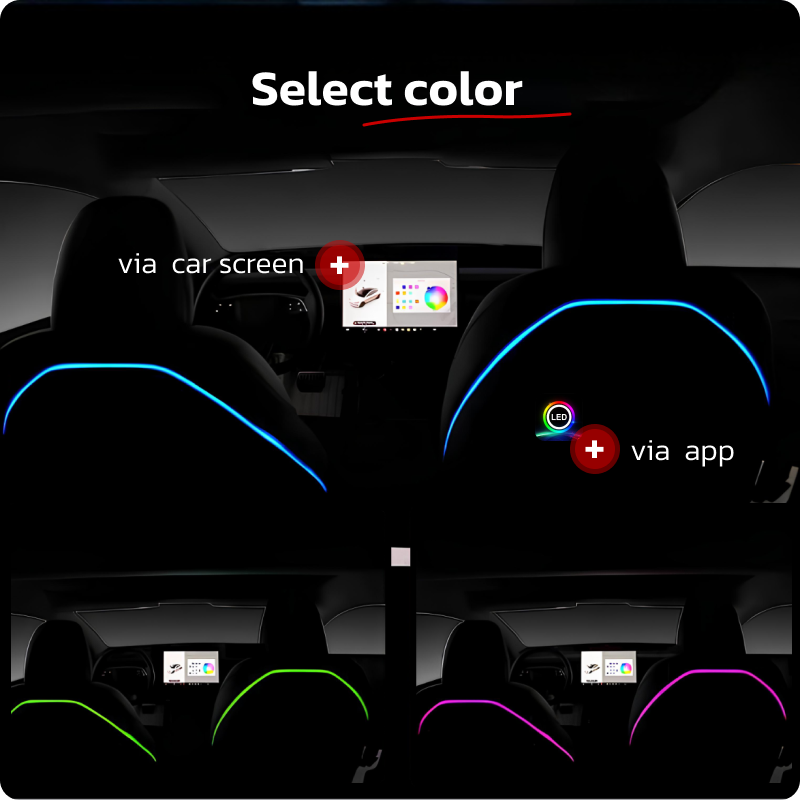
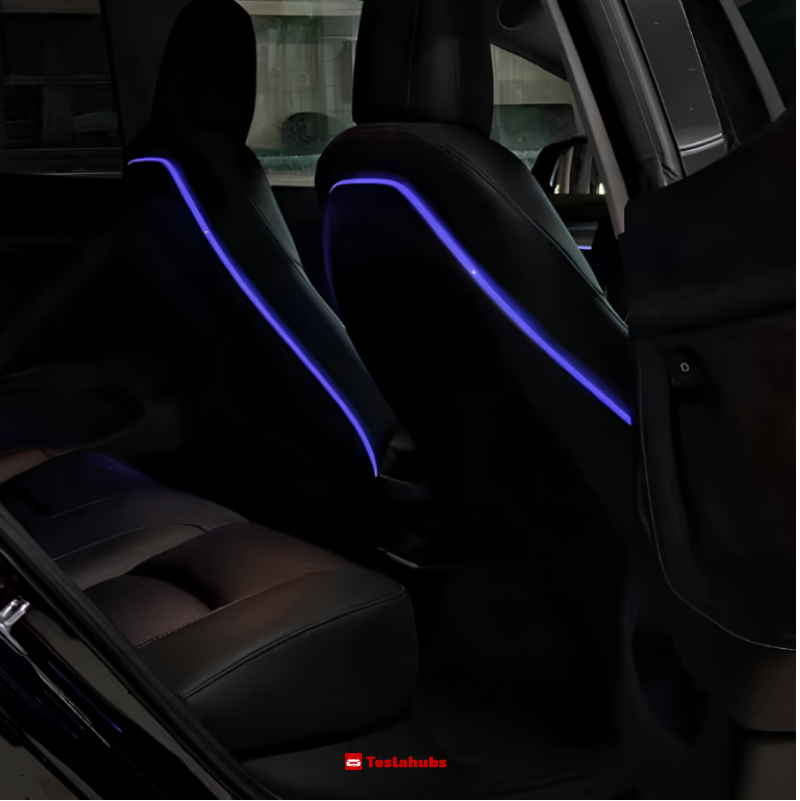
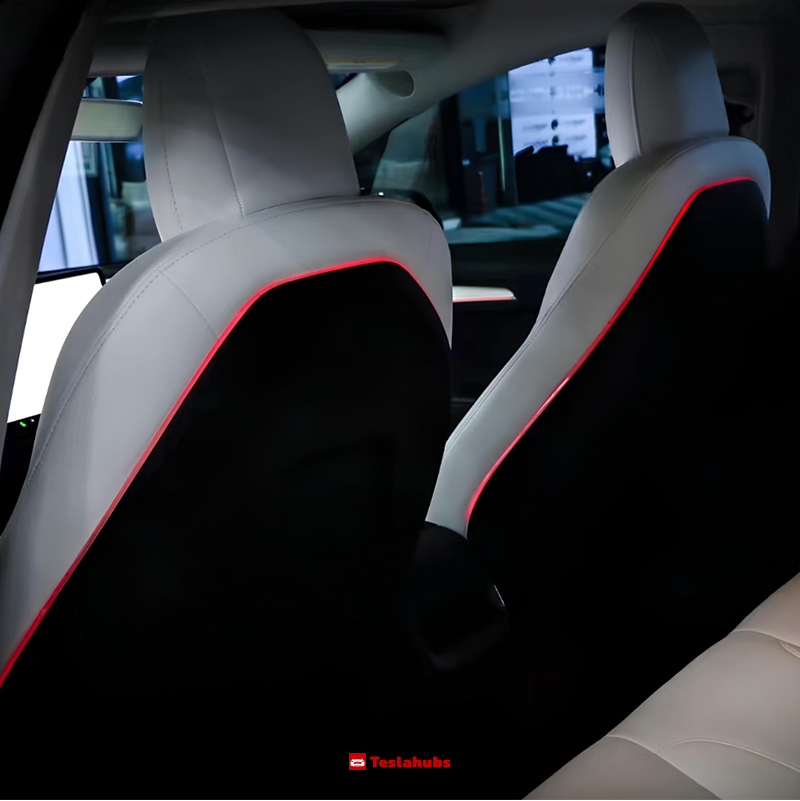
Tesla recently added RGB light strips across the lineup, which is a welcome touch. Lucid’s implementation appears more integrated—you see light emanating from under or around cabin elements, similar to the new Model Y’s taillight—so it feels purpose-built rather than like a late add-on.
Fit & Finish
Tesla has made major gains in build quality, particularly with the Model 3 and Model Y—those two vehicles come off the line perfect every time.
However, the Model S and Model X still have fit and finish issues as their production run winds down. In the Gravity GT, the assembly appears meticulous: panel gaps are essentially absent, stitching is arrow-straight, and the buttons and touch surfaces feel substantial. There are no creaking Falcon Wing Doors or grinding Model S handles—issues that still show up even on new Teslas.
Storage: Frunk & Trunk
With the second and third rows folded completely flat, the Gravity offers 120 cubic feet of total cargo capacity.
The power-operated frunk is the highlight for many Tesla owners. At 8.1 cubic feet, it surpasses the Model X’s 6.6 cubic-foot frunk. Like the Cybertruck, the Gravity’s frunk can double as a tailgating bench, with an optional fold-out cushion.
The frunk also seems to lift farther out of the way than the Cybertruck’s. In my Cybertruck, I often need to duck to sit in the frunk area; that wasn’t an issue with the Gravity.
The Exterior: Not a Minivan
Although some early photos prompted minivan comparisons, in person it doesn’t come across that way.
The Gravity’s curves and sharp lines fit Lucid’s design language and give off fast-SUV vibes. On 22” wheels with a sloped, coupe-like rear, it looks every bit the sport SUV.
A full glass roof and expansive windshield carry over from the Air and suit the Gravity’s concept. The front end looks smoother than the Air’s yet remains consistent with Lucid’s established aesthetic. The frunk’s ability to serve as exterior seating makes it a strong road-trip companion.
Lucid refined the Gravity’s aerodynamics to a 0.24 drag coefficient, delivering notable efficiency for its size. For a vehicle larger than the Model X—which also sits at 0.24—that’s an impressive result.
The Ride: Suspension Sweet Spot
Unlike the Air’s traditional coil springs, the Gravity uses a fully adaptive air suspension like Tesla’s flagships, and it’s a step up in comfort.
From the passenger seat in the Touring, it dispatched winter potholes, paver stones, and rough surfaces in downtown Toronto with ease. The tuning hits a sweet spot.
It rides softer and more forgiving than Tesla’s grounded, driver-focused setups, yet avoids the floaty feel often found in the Rivian R1S. It feels planted yet plush.
I still prefer the Cybertruck’s ride, likely due to its massive tires and air suspension erasing bumps so completely. The Gravity also offers optional 4-wheel steering.
The Cockpit: 34” of Glorious OLED
Lucid’s software historically lagged behind Tesla’s smooth UI, but the Gravity’s operating system (UX 3.0, now on 3.4) is a major upgrade—snappy, responsive, and very clean.
A 34-inch curved OLED with 6k resolution anchors the dash, placing key driving info directly ahead—an improvement over the Air.
On the Air, blind-spot repeater camera pop-ups were effectively blocked by the steering wheel, and combined with the A-pillar blind spot, made some maneuvers challenging. In the Gravity, those views appear farther outward from the wheel, which makes them much more usable.
The squircle steering wheel returns, and new haptic touch and swipe controls integrate with the UI so you can navigate menus and adjust settings without tapping the screen.
Specs & Pricing
Charge Specs
The Gravity uses a new 900V+ architecture, while the Model X and Cybertruck rely on 400V and 800V systems, respectively.
It includes a NACS port from the factory and can hit a 400kW peak at a 1000V DC charger, adding 200 miles in just 11 minutes.
Even on a legacy V3 Supercharger, it sustains the full 250kW through most of the session, matching and surpassing the Model X’s charge curve.
Touring & Grand Touring Trims
The Gravity Touring is the entry trim with an 89kWh battery and dual-motor AWD rated at 560 horsepower. It does 0–60 in 4.0 seconds and carries an EPA-estimated 337 miles of range.
The Gravity Grand Touring is the flagship with a 123kWh pack. Dual motors deliver 828 horsepower and 909 lb-ft of torque, dropping 0–60 to 3.4 seconds. EPA range reaches 450 miles.
Final Pricing
Pricing targets Model X buyers, with trims aligning closely to Tesla’s current figures.
Gravity Touring starts at $79,900 USD ($113,500 CAD), identical to the Model X Long Range before the Luxe Package, which sits at $99,990. The Gravity Ground Touring starts at $94,900 against the Model X Plaid’s $114,990. While the Plaid’s 1,020 horsepower delivers a 2.5-second 0–60 versus 3.4 seconds for the Gravity, the Gravity counters with 124 more miles of range, a superior charging architecture, and an interior that feels appropriate for a six-figure price.
While the Model X includes non-transferrable FSD, the Gravity includes DreamDrive, which remains mostly highway-only rather than today’s point-to-point autonomy seen with FSD.
If maximum straight-line speed or autonomy is your priority, the Model X remains the leader while it’s still being sold.
If space, genuine luxury, and road-trip-conquering range matter most, the Lucid Gravity is no longer merely an alternative; it could be the new benchmark.
For the Future: DreamDrive, Handling, Driver UX, 4-Wheel Steering
I haven’t yet driven the Gravity Touring or Grand Touring. I’ve requested a press car, expected later in 2026, to assess DreamDrive’s usability, handling, and overall driver user experience.
Once I can get behind the wheel, I’ll see whether the Gravity drives as well as it rides.









Condividi:
Tesla Semi Is Finally Ready for Mass Production — Here’s What’s Changed
Elon Musk Teases New Tesla SUV: 'Way Cooler Than a Minivan'