
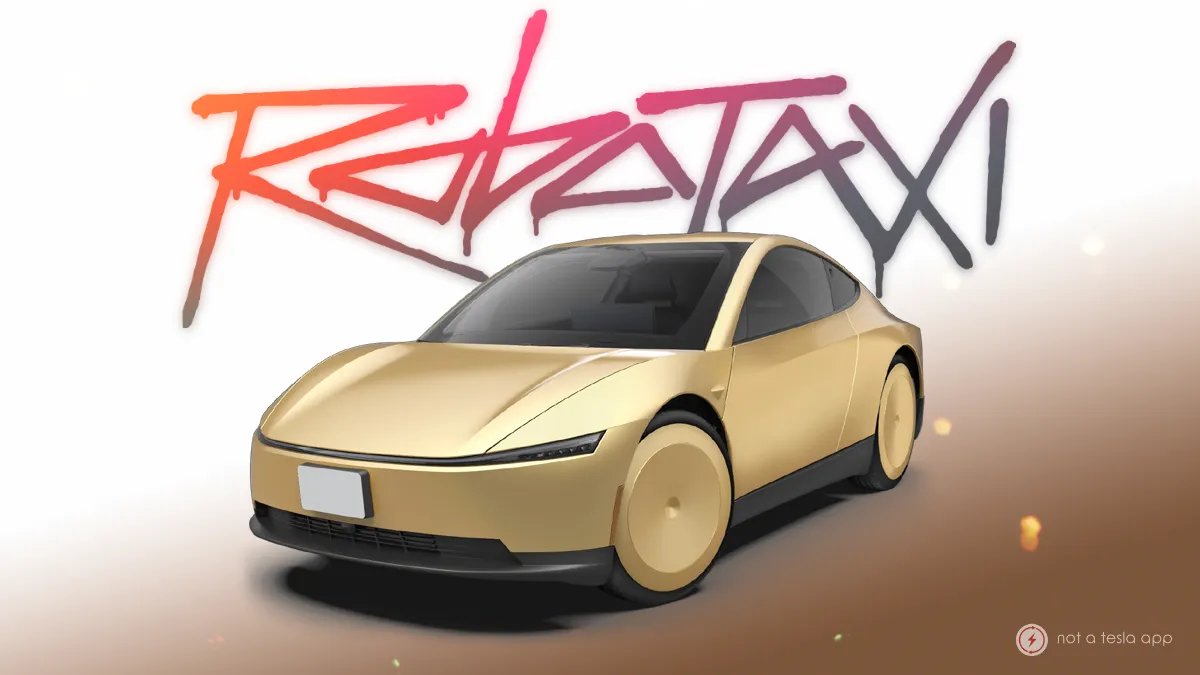

Tesla is outfitting its purpose-built robotaxi with top-tier silicon. Beyond removing conventional interior controls in the Cybercab, new information indicates the vehicle’s computing platform has received a substantial upgrade over the hardware used in the standard consumer lineup.
A highly reliable source reports that production Cybercabs are running a more capable version of Tesla’s Full Self-Driving computer than the unit available in a Model 3 or Model Y. With Cybercab mass production beginning at Gigafactory Texas in April, this provides new insight into what powers the vehicle.
More RAM to Eliminate Memory Bottlenecks
The primary change in this driving computer is memory capacity. According to the source, the configuration includes more RAM than the Hardware 4 (HW4/AI4) systems currently shipping in customer vehicles.

It remains uncertain whether early Cybercabs use a pre-production version of the upcoming AI4+ chip announced during the Q1 2026 earnings call, whether two current-generation AI4 boards have been combined into a single setup, or if the platform is an early iteration of the AI5 chip, which is not expected to enter mass production until sometime in 2027.
For context, Tesla’s AI4 chips each pair with 16GB of RAM. Because one FSD computer contains two of these chips, the effective total is 32GB of RAM. While the exact memory capacity of the Cybercab’s computer has not been disclosed, it exceeds that 32GB threshold.

Additional RAM enables the system to run larger self-driving models. As Tesla advances FSD toward full autonomy, model sizes have grown, creating memory constraints on current consumer vehicles. With AI4+ previously announced to double the total package memory of standard AI4 to 64GB of RAM, equipping Cybercab with a version of this hardware ahead of broader rollout gives the driverless fleet headroom for next-generation AI models.
Built for SAE Level 4 Autonomy
This extra compute aligns with how the vehicle is intended to operate. Tesla’s first responder documentation for the Cybercab states that the vehicle is equipped with an SAE Level 4 ‘Autonomous Mode.’ The Cybercab is designed to function without human intervention, and it uses a stronger computer than Tesla’s current consumer models to achieve that.

Tesla started testing Cybercabs without steering wheels or pedals on public roads in Austin last week. “We plan to deploy Cybercab as the primary vehicle in our Robotaxi fleet. It eliminates the need for a steering wheel, pedals and traditional controls, freeing up cabin space and ultimately reducing weight and operational costs,” Tesla said about the Cybercab in the 2025 annual impact report it released this week (more to come on that — stay tuned).



Condividi:
Tesla Robotaxi App Now Tells You If Your Ride Has a Safety Driver
Slate, the Modular, Customizable EV Starts at $25K